Forthcoming

News!

Cover preview: 1980s Zine-style graphics

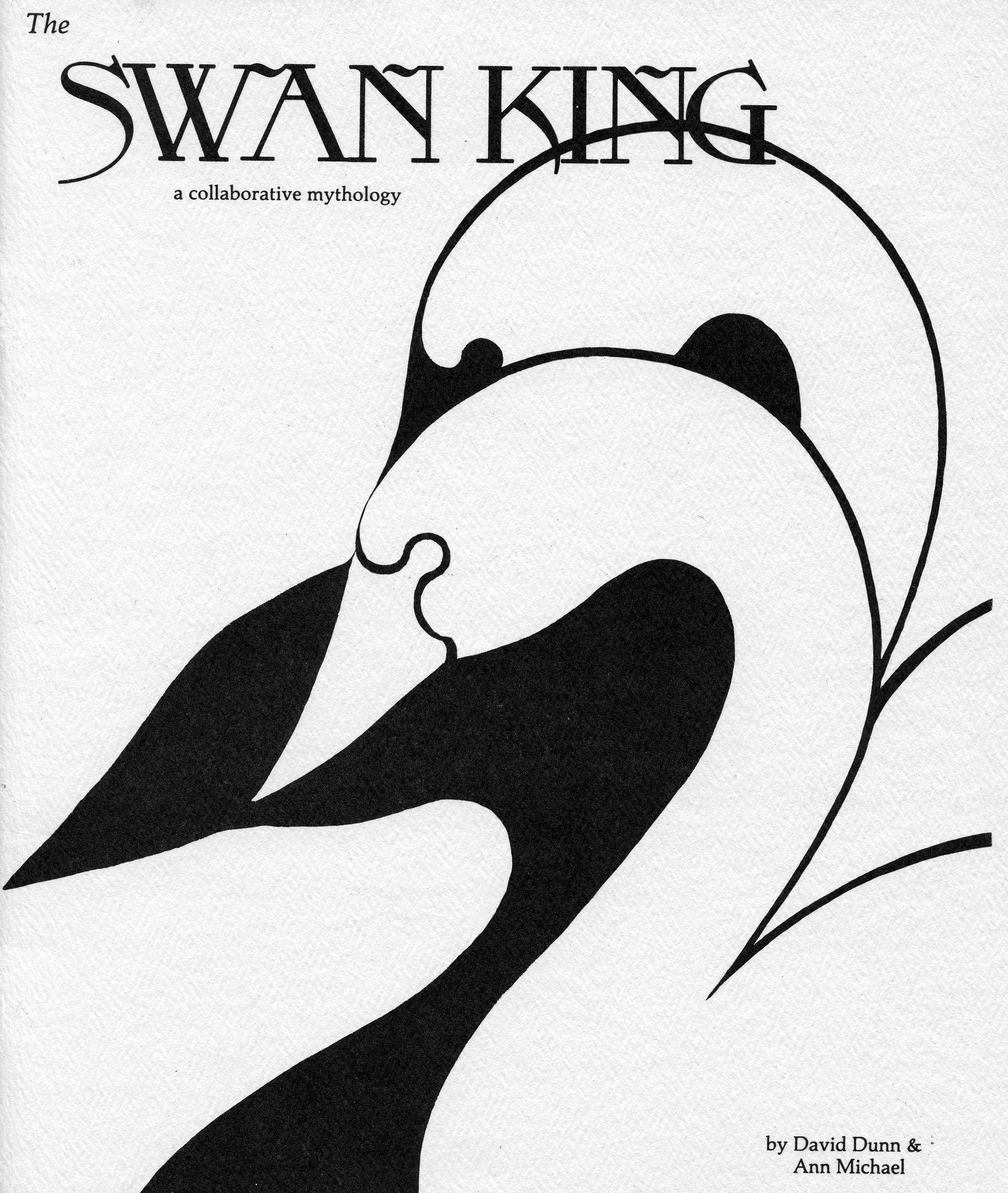
Okay, I’ve had some setbacks in the area of publishing recently. But–another chapbook is in the works, and here is the cover reveal, a graphic throwback to the early 1980s when photocopied zines were abundant and eccentric, which suits the eccentricity of the collection.

Many thanks to the folks at Moonstone Press in Philadelphia, especially to Larry Robin, who has been the resident angel of poetry events, books, and publishing in Philadelphia for decades (and I do mean decades). I almost referred to him as a poetry maven, but he’s more of a guide and stalwart in many ways. (However, I love this definition from Vocabulary.com’s dictionary: The word maven comes from the Yiddish meyvn, meaning “one who understands.” But to be a maven you have to more than just understand a topic, you have to know its ins and outs… You don’t become a maven overnight. That kind of expertise comes with an accumulation of knowledge over the years.) At any rate, after closing Robin’s Bookstore–an indie-publishing-supportive bookstore he operated for many years–Larry started the Moonstone Poetry reading series, the Moonstone Arts Center, and has been behind many other benefits to the poetry-loving community, including virtual and in-person readings and a press that publishes anthologies and single-author collections.

More about the publication date, where to reserve copies, readings, and about the book’s theme and histories will come later. In the meantime, excitement and gratitude.

Prose starts

In a recent post, I mentioned that one of the challenges of writing a speaker in lyric or lyric narrative poetry is that readers assume the voice, experience, or perspective of the speaker completely aligns with that of the poet. It’s especially confusing if the writer reveals that one poem does arise from or act as memoir/lived experience when other poems by the same author–that seem like memoir–are fictions.

I admit to being among said poets: my collection Barefoot Girls contains poems based on memories of my teen years in the 1970s, yet the stories therein are invented. Sometimes a poem starts as something that “really happened” but does not work well as a poem when I stick to the truth as I recall it. Journalism is not poetry (usually). Thus, in the revision process, the so-called truth gets reimagined…in order to craft lines that are better as poetry. I know that people who don’t write poems find this fact difficult to grasp.

I keep a journal–have done so for decades–and I tend to start poems one of two ways, either from image-based phrases I jot down or from prose entries. The latter approach, from prose, may indeed have a basis in lived experience. Here, I offer a concrete example.

The draft below started as prose but may evolve into a prose poem, may evolve into free verse, or may end up as metrical or formal, blank verse or pantoum. Or it may end up in the “Dead Poems” folder of forgotten drafts. Right now it consists mostly of lived experience, though I’ve already begun to fictionalize a few moments, blur a few lines about the ride in the car (there was another passenger), what he may really have said (heck, my memory’s not that accurate) and where my thought process went. I’ve also played around with line breaks and indents to help me visualize phrasing and rhythm. This is the way I often work.

I believe models and examples of creative working methods help to clarify what artists do. Yet some of it–especially among geniuses–is inspired, mysterious, and cannot be described. I wish I felt that inspiration more often. But I do not mind doing the work of rethinking, reimagining, revising.

~

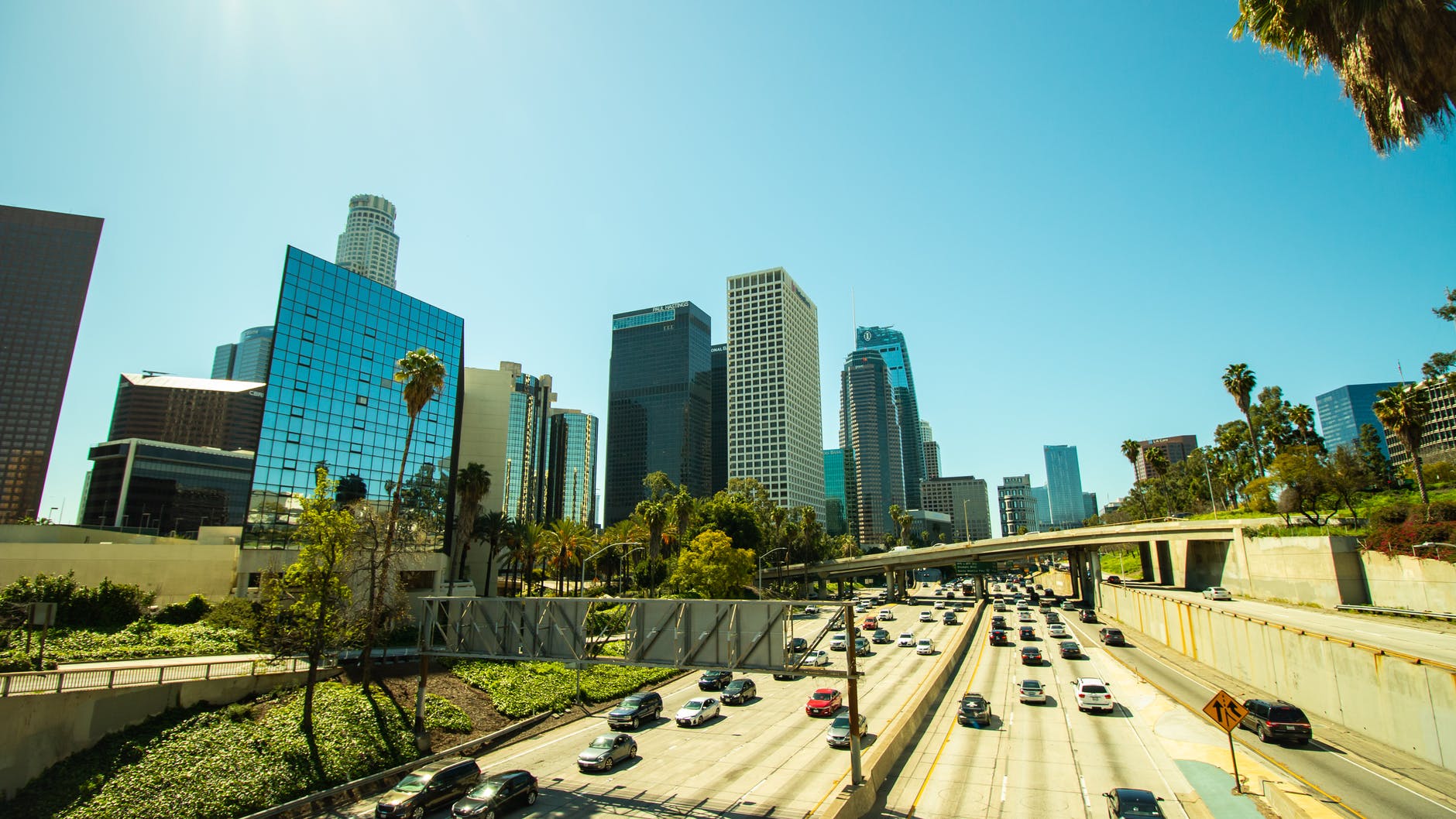
My Son Drives Me from West LA to Pasadena
 
…talking the whole way about the job he loves,
new friends, old friends, how he spends
            his leisure time; where we can eat,
what he thinks about social movements and
government policies, whether it’s worth buying
            patio furniture, what we should do
next time I visit
 
and I’m listening, honest I am, but I’m also observing—
I can’t call it a landscape, really, as the view’s
            a swath of highway many lanes wide and
city blocks for untold acres dotted by walls of vivid
bougainvillea, beige buildings, tall palms under a sky
            perfectly cloudless, flat.
 
Then, a shift of geographic formation leads into
scrub brush, spotty suburbs, highway narrowing to
            a mere six lanes, and he says I’ll notice
real change once we get into the hills; the weather’s
usually predictable here, it’ll be a fine day. I’m listening,
 
but I’m also recalling times—many times—I sat
behind the wheel when he was far too young to drive,
            watching the road through the windshield
of the family car and listened to him tell me the thoughts
that flashed through his mind like a summer field of fireflies.
            Those trips I was privy to a newly-forming
perspective on the world, it was as though I listened to his
young mind crackling with ideas,
listened, and listening, with a joy I’ve never abandoned.
 
~


Photo by Anthony Celenie on Pexels.com

Memoir-ish

When a poem uses a lyric approach, readers tend to assume initially that the poet is the speaker of the poem; in this respect, a reader might think of the poem as a personal revelation or–if the circumstances of the poem seem to warrant it–as a kind of memoir. People who have more experience with reading poetry (or who have been assigned to write a literary criticism of the work) may change their assumptions once they read more closely. That’s one of the reasons I enjoy poetry. It challenges my assumptions, surprises me, informs me of new facts and perspectives.

Prose memoirs, most of us assume, are less metaphorical and more “truthful,” at least from the writer’s perspective. Though there’s room for the unreliable narrator in memoirs, readers tend to feel betrayed if they determine the memoir writer hasn’t been honest with them (then we end up with controversies like James Frey’s). I find the blurring of genres rather fascinating, but generally, the folks I know who read memoirs want a mostly-unvarnished truth.

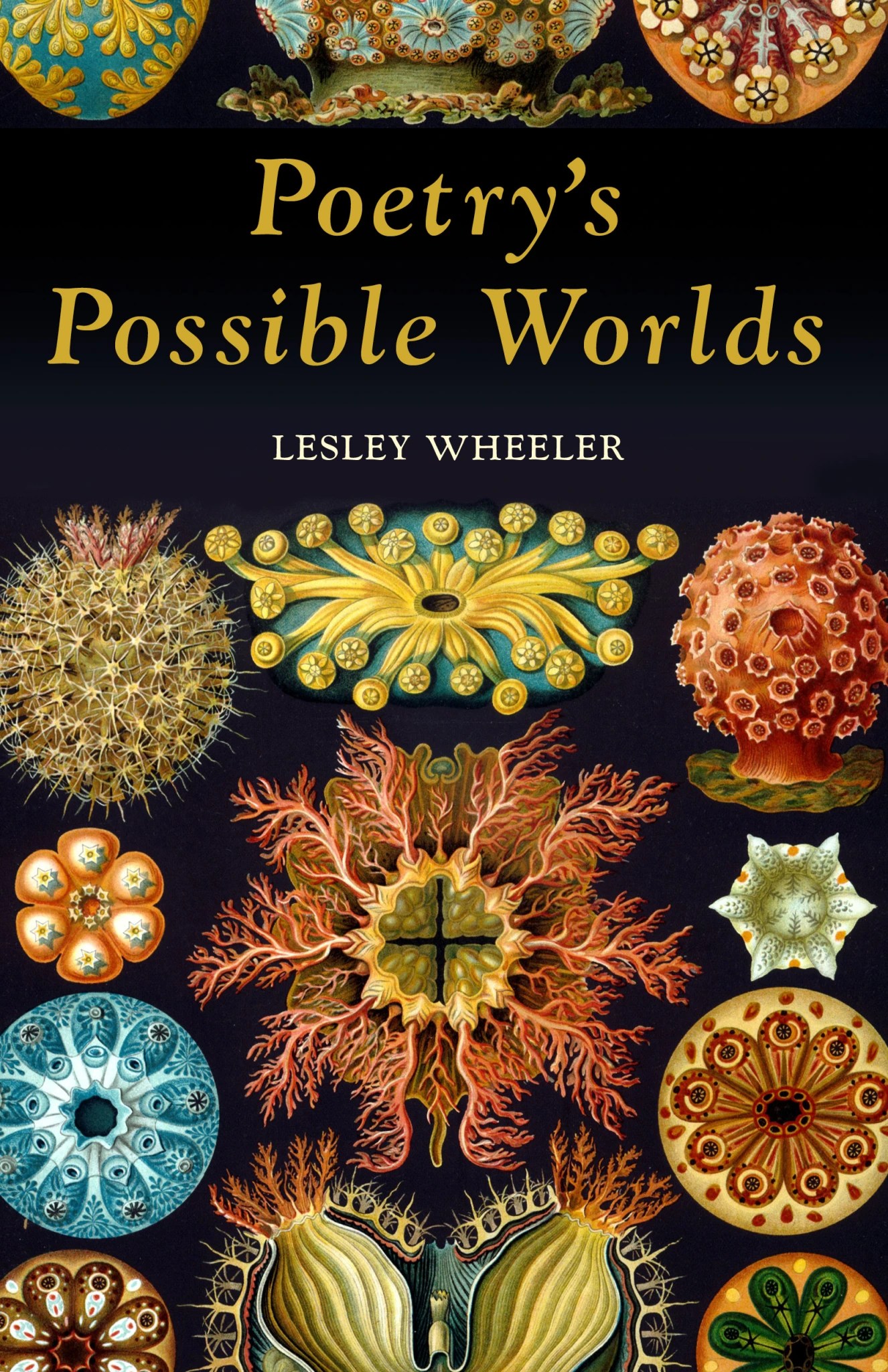
What about taking the memoir in a different direction: instead of blending or blurring toward fiction, into poetry? There are poetic memoirs in print, but they tend to be writers’ experiences expressed in poetry they’ve written themselves. Lesley Wheeler has opted for something different in her book Poetry’s Possible Worlds. Here, she uses the idea of “literary transportation” as a reader of poems, demonstrating how close reading can evolve into a form of reflection on, well, everything. She chooses 12 poems to examine, works that were not only resonant for her but that drew her into some understanding of why and how poetry manages to infect our gut feelings, exert its magic on the reader’s mind. She makes an interesting decision, too, in presenting 12 contemporary poems and avoiding the classic canonical works, a choice that focuses the reader on the newness of the text rather than on its famous backgrounding. It’s fascinating to me how this approach shook up my expectations. In this way, too, she does the readers and the poets whose work she’s curated a great favor: we get introduced to one another through a sensitive, penetrating interlocutor: Lesley Wheeler.

But the book does more than critique 12 poems; if anything, that’s the least part of Wheeler’s purpose. The book “qualifies” as memoir, in its genre-mixing way, because Wheeler explores her response to the poems through the lens of a difficult few years in her own life–here’s the memoir part. But instead of a prose memoir in chapters, each section acts as an independent essay centered around the poem she is reading and, as she revels in and puzzles through each poem, we learn about the challenges in her life. In this book, those challenges come largely from her unreliable, difficult father, whose betrayal(s) of the family snowball into messy misfortune. For Wheeler, poetry offered–still offers–transportation through the grief and anger and ways to navigate the gaps that all lives contain. I couldn’t agree more, and this book reminds me once again of poetry’s necessity.

Limbo

Many years back–let’s say decades–my friend David Dunn and I briefly became small press chapbook publishers. It was not an easy task at the time, and expensive; but I worked at a type shop and could get the type set for free and a discount on the printing. We dubbed our concern LiMbo bar&grill Books. It was decidedly a labor of love, but we published four chapbooks and two broadsides before packing it in. The name emerged from David’s postcards and letters to me, in which he’d sometimes begin “Greetings from the Limbo Bar & Grill.” We were poets in our early 20s, underemployed during a recession, without any network to universities or well-connected writers. It felt like limbo.

Forty years later, dear David is dead; I have had modest success as a published poet since then–not enough to move me past avocation status–and the entire globe spins in limbo as pandemic, climate crisis, war, and oligarchies combine to keep things as interesting and unsteady as ever they were. It feels like limbo.

Feels like limbo on the publication side, too. Because my poetry collection that was supposed to be in print by 2020 seems to be indefinitely on hold. Covid interfered, the contract never arrived, and I’m beginning to wonder whether my emails are ending up in the publisher’s SPAM filter. It’s not surprising that a small independent press–in most cases underfunded and understaffed–might lose track of, say, a manuscript or two during the hassles of the pandemic protocols and all that has wrought.

Or perhaps the press has decided not to publish my book after all. The oft-rejected writer who lives inside my head supposes that could be the case and mourns, assuming the worst.

Now, I’m in a quandary. I wonder whether to resubmit the manuscript elsewhere. Is that okay to do, since there hasn’t been a written contract? Clearly the book is publishable, since it was accepted in the first place. I have a much newer manuscript I’ve been re-compiling and re-ordering (and revising). Do I focus on that, instead? I don’t quite know how to proceed. Yep: limbo all over again.

~

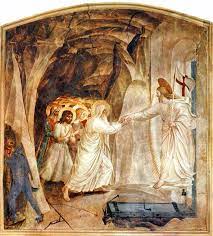
[LiMbo’s first chapbook, ca 1982; Fra Angelico’s “Christ in Limbo,” ca 1441] https://www.wikiart.org/en/fra-angelico/christ-in-limbo-1442

Revision revisited

National Poetry Month comes to a close this week, as does my experiment with revising someone else’s poem. It was a fascinating practice, because it involved a kind of interpretation and re-imagining, taking–in this case–a poem written in Portuguese in 1928, and seeing whether through revising, I might make it mine (if not make it new). In slightly less than a month, I reworked the poem ten times. That’s a pace much quicker than I generally revise my own work. Which also made for an interesting process.

No judgment on the outcome, such as it is. The purpose of the prompt was to keep me writing and to remind me to get revising my poems, and it did have the intended effect. When emotional, physical, job or life obstacles clutter the writer’s terrain, attending to a writing project–however arbitrary–can have a salubrious effect. Or at least grease the wheels a bit.

The initial piece: I randomly chose the following poem by Pessoa in the heteronym of Ricardo Reis, in Honig & Brown’s translation:

"Whatever stops is death, and is our death"

Ricardo Reis (Pessoa)

Whatever stops is death, and is our death
If it stops for us. That very shrub now
    Withering, takes with it
    Part of my present life.
In everything I saw, part of me remained.
With all I saw that that moves I too move.
    Nor does memory distinguish
    What I saw from what I was.
~~

That was my ground zero. Perhaps I chose it because it reminds me a bit of Dickinson’s “Because I could not stop for Death.” I will not reproduce all ten ‘versions’ I drafted, though that might interest someone (who exactly, I don’t know…). Here, however, is the tenth version, which sounds much more like me:

Revision
            after a poem by Ricardo Reis {Fernando Pessoa}
                        “Whatever stops is death…”

Hurrying to wait,
I contemplate
the final cessation
which
like the intersection
of Lanark Road and Rt. 309
lies up ahead:
red light, stop sign.
 
At a less determinable
distance, death does its duty—
part of me goes dying daily
each fallen leaf
dry stalk and road-killed
grey squirrel
pulls me closer
to my own departure
the way
a mother grasps her
child’s hand while running
to catch a crosstown bus—
hurrying.
 
I imagine memories
will dissipate, and freeze—
slowness and blur
will burgeon
until I can’t discern
the glistening new cicada
from its static husk
or morning’s gleam from dusk’s
cluttered, cloudy smog
or red lights from yellow
 
change will be stopped
at that intersection because
I will no longer know who
or what it is I was.
 

~~

One of the things I take away from this effort is that I do have a recognizable voice in my work. That was something I fretted over for many years, the concept of possessing a poetic voice. I have written in so many styles and taken different approaches to work and, for awhile, topic, that younger me worried that I had not developed a voice. Apparently someone long ago convinced me of the importance of having a recognizable voice; now, I barely recall why lacking it would feel like such a terrible thing. But reading my revision of Pessoa’s original, I sense his idea but hear my voice and my interpretation of his idea.

I’m not sure this is the final draft–whether this poem is finished or not, or whether it ever will be. I thank Pessoa for providing the starting point for the experiment and for making me stop and consider whether memory distinguishes who I am from who I was.

~

Finally, a recent brief poem in One Art Poetry Journal: https://oneartpoetry.com/2022/04/21/passover-by-ann-e-michael/

Process parallels

The weather warmed and got windy, and that bodes reasonably well for garden prepping even if the last frost date is still almost a month away. I got digging, sowed more spinach and carrots, cheered on the lettuce sprouts, and–with some help from Best Beloved–pried most of the winter weeds out of the veg patch and set up a raised bed or two.

While I was out there pulling creeping charlie and clover and reviewing my garden plan for this year, it occurred to me that my process in gardening parallels my process in writing. My approach to each has similarities, probably due to my temperament though perhaps due to the way I go about problem solving. The process is part habituation or practice and part experiment, with failure posing challenges I investigate with inquiry, curiosity–rather than ongoing frustration. And sometimes, I just give up and move on without a need to succeed for the sake of winning.

I have no need to develop a new variety of green bean nor to nurture the prize-winning cucumber or dahlia. My yard looks more lived-in than landscaped; on occasion, we’ve managed to really spruce the place up, but it never stays that way for long. I admire gorgeous, showy gardens but am just as happy to have to crawl under a tree to find spring beauties, mayapples, efts, rabbit nests, mushrooms. My perennials and my veg patch grow from years of experimentation: half-price columbines that looked as though they might never recover, clumps of irises from friends’ gardens, heirloom varieties I start from seed. The failures are many, but I learn from them. Mostly I learn what won’t grow here without special tending I haven’t energy to expend, or I learn which things deer, rabbits, groundhogs, and squirrels eat and decide how or whether to balance my yearning for food or flora with the creatures that live here and the weather I can’t control. There are a few things I’ve learned to grow reliably and with confidence–ah, the standbys! But the others are so interesting, I keep trying.

Writing poems? Kind of similar. After so many years of working on free-verse lyrical narrative, I feel confident in my control of those poems and can usually tell when they’re not operating the way I want them to. Then I wait and revise and rethink, but there’s a familiarity to the process. Whereas I am far less confident with sonnets–nonetheless, sometimes a poem really works best in a form like that. So I know I have to expend more energy on it. Other times I find myself needing to experiment. I try mimicking another poem, tearing apart my line breaks, or revising in a form I barely know. I play with puns or alliteration, alter punctuation to stir up the rhythm or surprise the reader (or myself). Breaking my habitual approach to starting or revising a poem leads to curious results, sometimes intriguing ones.

But, like my garden ambitions, my writing ambitions exist more as a means to learn and experiment. I do not set out to produce the decade’s best poem or to develop a unique style or form that academics will admire and study. (I just made myself chuckle.) Heck, most of my work has not yet seen print–and with good reason. Not every rose is an RHS Garden Merit award winner.

For now, here’s a poem I wrote over a decade ago, one that will be appearing in a forthcoming chapbook. More on that when I know more myself.

~

STILL LIFE WITH WOMAN

Loose sleeve envelopes her brown hand
which rests upon an apple or a secret 
cupped beneath; only the stem shows,
fruit’s oblate body intimated by
the solidity of her skin against
the table’s plane.
This is a moment undiscovered,
a painting by Vermeer—
blue, white, quince-yellow, poised—
her palpably-dimpled wrist sloping
toward the precise, thumbnail shadows of
her relaxed fingers. We know
blood imperceptibly alters the shape of her veins
every second her heart beats, we know her womb
continues its cyclical pulse, that she inhales
and exhales, a living form, yet—
still: an inclination of the white, loose sleeve,
half an eye open, she covers some promise.
This is only one second before
surprise or boredom, a miniature:
one of those moments we find ourselves
in parity with every other thing,
equal in being to quince, fan, mirror,
that pitcher of water on the sideboard,
that window, full of light.

~

Reading poetry

In March, I made a pledge to read more poetry than I had been. A poetry book a week, either a new one or a re-read from my stacks (because, yes, I have too many books…). And then I attended the AWP conference, which features an amazing book fair; you can guess the outcome of that.

Now that it’s National Poetry Month, I have plenty of books in which to immerse myself. I chose mostly contemporary writers this time, and the work of some poetry colleagues I have met through past conferences and social media. Here’s my by-the-bedside reading for the next month or two.

Two by Tim Seibles, because his work is such fun to read as well as thoughtful, sensual, and deep–and because he’s my age and his memory-based poems are packed with things I can relate to. I just read his 2012 book Fast Animal and have One Turn Around the Sun in the reading pile.

Eleanor Wilner’s early and uncollected, Gone to Earth. Kim Stafford’s Singer Come from Afar. Susan Rich’s new collection Gallery of Postcards and Maps. Cieve, by B. K. Fisher.

I’m browsing through the anthology Here: Poems for the Planet, edited by Elizabeth J. Coleman–a lovely selection of “ecopoetry.” I discovered a White Pine Press collection called Dreaming of Fallen Blossoms, Tune Poems of Su Dong-Po, that informed me about a type of poem I’d never heard of, the tune poems or song poems of 11th-c. China. Translated and prefaced by Yun Wang, and presented with original text on facing pages, it’s a fascinating set of poems for historical reasons but also offers really delightful poetry. I’m also awaiting the arrival of Emily Rose Cole’s Thunderhead. Emily went to high school with my son, and I am thrilled at her development as a really serious and talented poet. I can say “I knew her when…”

I’m going to sign off, post this update, and read a book. Happy National Poetry Month! Reading is the best way to acknowledge the art.

~

Revision practice

It is National Poetry Month again, and this year, in recognition of the celebration, I have started a practice to experiment with, just out of curiosity and to give myself a nudge. Many of my poetry colleagues invest a month in writing a poem a day or reading a poetry book each week or posting a poem daily on their social media platforms. It’s important to remind ourselves why we treasure and delight in poetry.

I chose a simple project that requires frequent re-imagining/re-imaging. For my starting point, I picked a poem at random from a collection of Fernando Pessoa’s work. I copied the poem, by hand, into my journal and re-read it a few times. Then I turned the page and rewrote it, “revising” it in the way I might revise a poem of my own. My plan is to repeat this process after a day or so, each time revising from the most recent version. In a short time, the poem will have moved away from being Pessoa’s piece–perhaps bearing little to no resemblance to the original…a sort of whisper-down-the-lane approach. The intention is to consciously alter image and voice in each re-imagining of the draft, though I’m not sure how well I can hew to my intentions. We shall see.

from City Lights Books.

Why I decided on Pessoa for this project, I don’t really know; but I think there’s something perfect about using one of his pieces as springboard. Because Pessoa was kind of a springboard for himself–he created several writer-selves who wrote poems and critical prose: heteronyms, he termed them. The poem I used was “by” his persona named Ricardo Reis. Adam Kirsch wrote a good introduction to Pessoa’s peculiar obsession with being a non-person in a 2017 New Yorker article. By revising something by Pessoa in my own voice and through my own images, perhaps I nurture his pursuit of dissolving the self.

It occurs to me now that the poems of several contemporary writers may have induced me to try this writing prompt, most recently Daisy Fried in The Year the City Emptied (which I highly recommend). Her collection consists of “loose translations” of Baudelaire, reimagined in Philadelphia during the covid outbreak while her husband was dying. It’s not a cheerful read–but then, neither is Baudelaire–nevertheless, the resulting poems are powerful and vividly interesting.

So, back to my little project for April: I figure this need not be a daily practice, though I have managed to get to revision three by now–so it is moving apace. The deepest challenge is not the revision, as I enjoy revising and wish I had more time and energy for it. The challenge is just that: time and energy! As the semester sidles past mid-terms into the final stretch, I get busier at work; in addition, my chronic health conditions have moved into a frustrating flare lately, leaving me fatigued and feeling as though my brain were swaddled in cottonwool and embroidery floss. The news from Ukraine drags on sadly in the background of my day-to-day. My mother’s aphasia worsens. I am dealing by plodding away, sometimes without much brilliance, at the revision challenge. Also by watching the goldfinches as they molt into their yellow plumage… and urging my tomato seedlings to flourish in their little indoor pots.

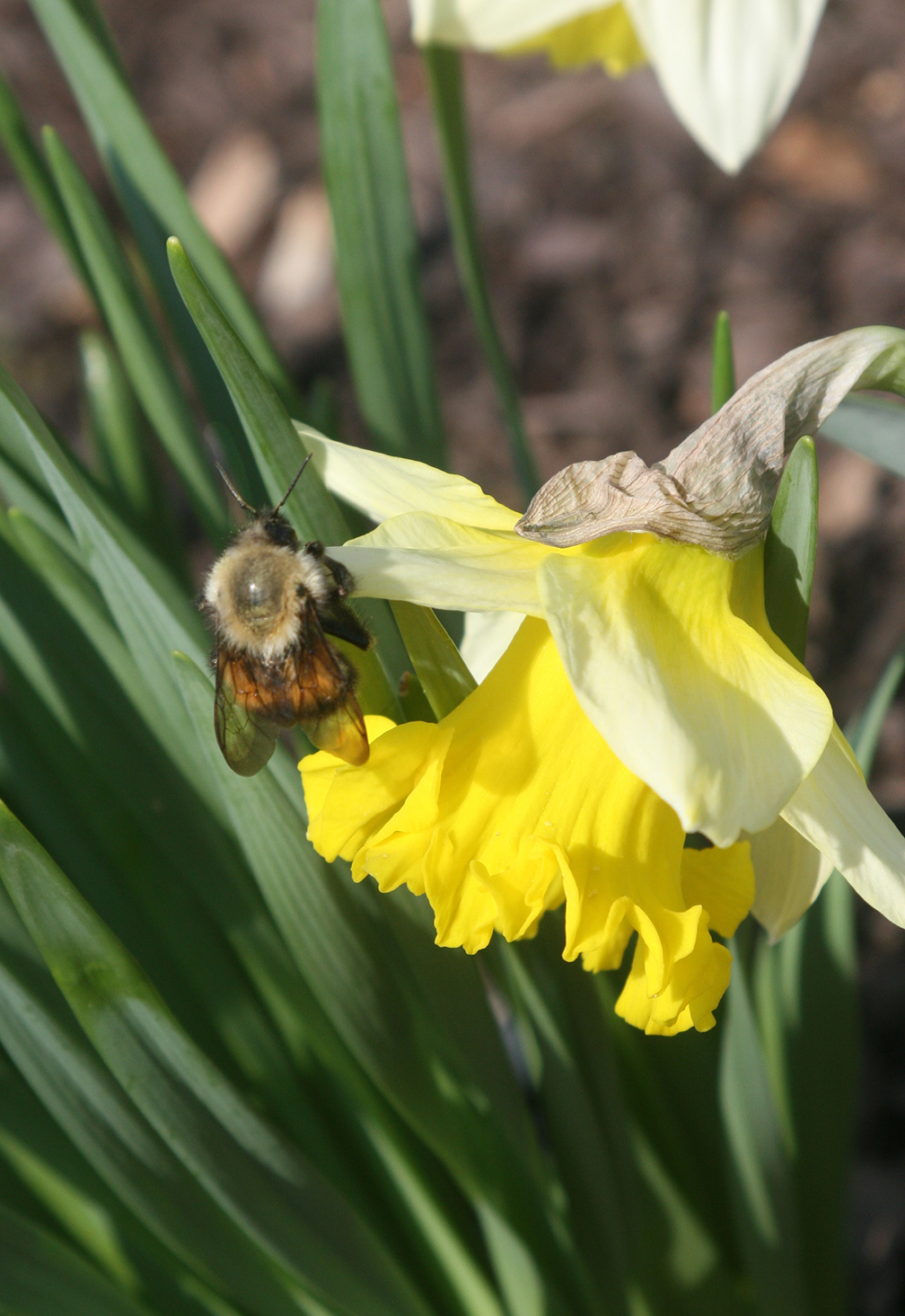
Then I pluck daffodils and set them in vases. There’s nothing like fresh flowers on the dining table to cheer a low mood. Onward to revision four…

~

daffodil photo Ann E. Michael

Synthesis

“The current moment” has a way of inserting itself into poetry I write, not just these past weeks but always. I look at my poems written in the wake of the 9/11/01 attacks and can see reflected in their pacing, tension, or imagery some aspects of the anxiety of those days. Not that I wrote much poetry that employed that current moment as a topic or narrative…just that the numb dread, surprise, and confusion managed to enter in. Poetry can contain and convey those hard-to-describe emotional tensions. Ambiguities. Conflicted feelings. Multitudes.

Poetry, by its nature, requires synthesis. For example, metaphor is one type of synthesis. In Carl Sandburg’s poem “Good Morning America,” he famously says that “Poetry is the achievement of the synthesis of hyacinths and biscuits.” (But then, he also says “Poetry is a pack-sack of invisible keepsakes./ Poetry is a sky dark with a wild-duck migration./ Poetry is the opening and closing of a door,/ leaving those who look through to guess about what is seen/ during a moment.”) Make of it what you will.

A few posts back, I mentioned my dad has been showing up in my poems recently. That’s still occurring. This one doesn’t have a title yet, as I’m still mulling it over and will probably revise the whole poem down the road. The initial impulse for the poem had nothing to do with my father or the war in Europe, and we do not have any daffodils in bloom right now. But there they are.

~

[Verge]

On the road’s verge, geese stand looking unctuous,
	vaguely irritable as I pass them
going 50 on the route I’ve taken for decades
and this time I recall two years back, when my dad
	was failing, how eagerly I sought any sign
of seasonal change—
	early-flowering witch hazel, or crocuses, quince,
swells in daffodils’ green emergence 
while inside myself the slow emergency of his dying
	began to open from probable to imminent.
I drove south idly; through the windshield I 
	looked forward to nothing, as my mother
talked of nothing when he floated in his haze of pain
and Dilaudid while holding one hand over his head
	as though he could, with his fingertips, pull
the ache from his left ear over his head and into the room
	where it might exit.
Now, the exodus occurs elsewhere, in refugee waves
of people whose minds and bodies lug their different pains
	across other kinds of borders.
My father’s experience of earth has ended,
	his baptism complete. His birthday was in April.
	See there, along the roadside? Daffodils.


~~

Relevant, possibly

~~

Of note: I’m happy to have a poem in Scoundrel Time, a journal I enjoy reading for work that’s relevant to the contemporary moment. Here it is; please read it, and read the other wonderful poems in Scoundrel Time: “A Brief History of Kyiv.”

~~

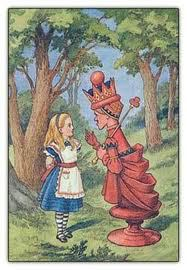
This poem also came to mind, for different though possibly related reasons. It will appear in The Red Queen Hypothesis when that book (my second full-length collection) gets into print. I was writing many poems in various forms at the time. The poem’s story is second-hand, the we a personified plural community of human beings, one repeated line taken from, you’ll recognize, A Tale of Two Cities–there’s a reason for the allusion as well.

Somehow, may all be well. Somehow, may each of us find some happiness.

~~

Variations on a Line of Dickens
			(Belarus, 1985)

It was the best of times, it was the worst
of times, when nothing seemed to go our way,
though happiness is what we wanted. First

we stood in endless queues, outside, and cursed
the lack of cheese or bread; our pals would say
it wasn’t the best of times, it was the worst.

We’d swill cheap vodka, harshening our thirst,
highlighting deprivations of each day,
when happiness was all we wanted. First

we’d press our bodies close enough to burst
the paper bag of lack. Kisses could not stay
our own best times, but it was the worst

thing to let go. Our lips still pursed,
the tastes of sex would linger and relay
that happiness is what we’d wanted; first

times were the best, solid, immersed
in flesh and heat—forget the fray—
those were the best of times, and yes, the worst.
Happiness was what we wanted first.

~~


Sir John Tenniel, of course.