Volunteers

This evening, a steady rain at last, one I hope continues for hours. It is too late to save my vegetable garden but will help trees, shrubs, flowers as they set seeds, birds as they migrate.

Earlier today, I harvested a few remaining veggies. I cut some zinnias for bouquets and watched as a newly-emerged monarch butterfly unfurled its antennae and proboscis and dried its new wings. As often happens in the late-summer weeks, I pondered what to do for the next year’s garden. A surprising thought took shape: letting the garden go fallow for a year. After all, the patch has been working hard for over two decades now–shouldn’t it get a break?

My thought process then admonished me about weeds. The majority of the weeds that would crop up in a fallow patch well-composted over the years will be non-native plants. Those are what mostly come up in our meadow, though we do have many natives as well. But the meadow isn’t rich soil like the garden is. True, I have nurtured some natives even in the vegetable garden. I grow three varieties of milkweed as well as native asters, rudbeckia, and goldenrod (not to mention the native vine poison ivy, despite my best efforts to eradicate it). The milkweed was, this year, much appreciated and eagerly consumed by monarch caterpillars. Still, if I do nothing in spring but let the patch go fallow, I’m likely to find it has been claimed by white clover, dandelion, purslane, Canadian thistle, mugwort, garlic mustard, Japanese knotweed, Amur honeysuckle, and other common weeds that originated in Europe, the Caucasus, or Asia.

Okay, but I’m a champion at weeding in the springtime. I could pull out many of the invaders just as they are getting started. What if, however, I allowed some sprouts to grow? The volunteers, as gardeners call them, that come up on their own after wintering as seeds in the ground or in the compost–I could let them stay wherever they popped up. In this way, the garden would design itself, instead of me being the designer. It would be a year of surprises! I like that idea. I love a good experiment…why not find out what my garden wants to do, after 25 years of me trying to tell it what to do?

Hasn’t yet taken its first flight!

I can make some good guesses as to what I might find: morning glories, zinnias, some variety of squash, tomatoes of mixed parentage, nicotiana, sunflowers. Basil, possibly; chives and cilantro and dill, almost certainly.

Anything else really would be surprising, but this year I had a cantaloupe volunteer, and its fruit was quite tasty. It gets below freezing here for months in winter, and I have never had lettuce volunteer; however, I haven’t let it go to seed, either. It might survive, as the radishes seem to do.

The more I mull it over, the more I like the idea. I like the experimental aspect of it, and the speculation and the surprise. It means that instead of preparing the soil in spring, all I’ll do is spread the compost out as usual–but not dig it in. I’ll water if the spring is dry, but mostly pay attention to the things that sprout and determine as early as possible whether those are edible or ornamental, or just weedy. The downside is that I’ll get all those marvelous seed catalogs and…will I be able to resist? Also, my spouse will complain. He likes a well-laid-out, well-delineated garden so he knows where he can step and where he shouldn’t, what to water, and what to pull out. He may also object initially to the aesthetics of an unplanned truck patch. But around mid-June, I will be admiring my volunteers. It will be beautiful.

~

Always I find metaphors and analogies between the gardening process and the writing process. The way I put my recent chapbook (Strange Ladies) together was similar to the theory of an all-volunteer garden. I drafted those poems at different times over many years and let them sprout even though they did not seem to fit in with my other writing projects or plans. After awhile, I realized they made their own kind of peculiar and surprising design.

I recognize that experimentation is a big part of my writing process. I love just playing around with words and ideas; when I first started writing more purposefully, my poems were often a bit surreal and strange. Over the decades, I’ve experimented with craft, prompts, natural world imagery, poetic form, philosophical and speculative concepts, and memory. It’s hard for me to say where my style or genre of poetry fits. I experiment, but most of my poems are not “experimental.” Much of my work uses observations of the natural world as major image and motivation, but I am not quite a “nature poet.” It doesn’t really matter how or whether my poetry fits an identifiable description. I weed as I go along, and I let anything that looks interesting (or familiar) show me its stuff.

That’s a natural process that reflects the way I think, the way I experience the world, and the various ways I find to express myself to readers. [Crafting and revising–that’s less spontaneous, though it can have outcomes just as surprising.]

As with my garden idea…wait and see.

Pebble in the well

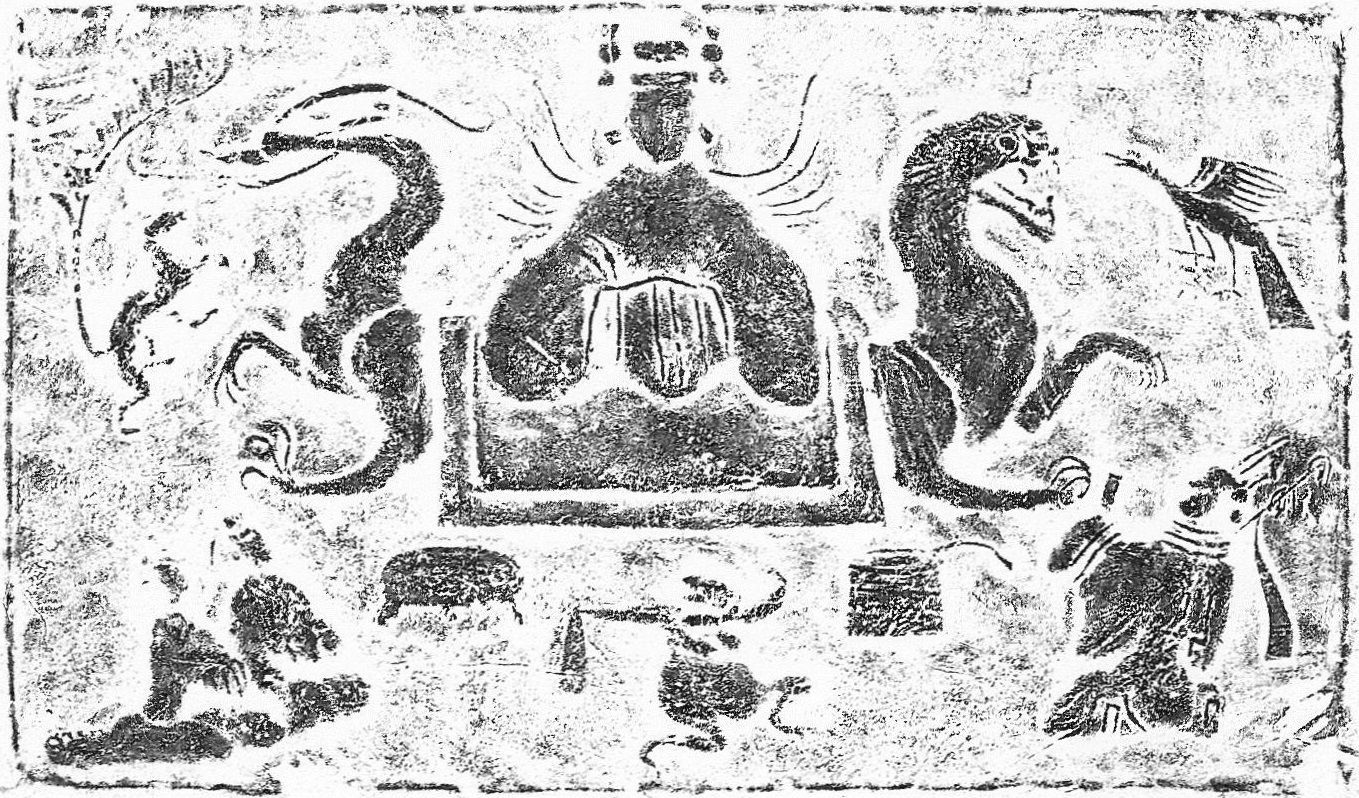
Thanks to WordPress for its “Hokku” image.

A pebble is dropped into a deep well, and 3.0 seconds later the sound of a splash is heard as the pebble reaches the bottom of the well. The speed of sound in air is about 340 m/s. (a) How long does it take for the pebble to hit the water? (b) How long does it take for the sound to reach the observer? (c) What is the depth of the well?

https://www.physicsforums.com/threads/pebble-being-dropped-into-a-well.611630/

~

Indeed–what can we determine based upon the little we know for certain? This physics problem came to mind when I was listening for responses to, say, a short poetry collection that came out recently. (Yes, Strange Ladies.) And I recalled a visit in 1984 to Goodrich Castle in Ross on Wye, Herefordshire, England, where we did just that–dropped a small stone into the well–and waited what seemed a long time for the sound to reach us. From what I understand, tourists can’t do that anymore; the National Historic Trust has upgraded the ruins to make them safer to visit. The tourist board doesn’t want anyone falling down wells.

But I digress. I meant the metaphor to apply to how writers listen eagerly for response to their work once it is published. Will anyone review it? Will anyone read the review? Will anyone post about it on social media? Will anyone contact the writer to say those words we want to hear: “I love your book!” –?

Sometimes, yes. And for those who have done so already, a million thanks.

~

According to family records, some of my maternal grandmother’s family were related to these Goodriches; but as the castle’s later owners were Normans (and then, Parlimentarians), it’s kind of hard to be certain. I can vouch for the depth of the well, however.

There’s always a book

Many thanks to Lesley Wheeler for giving my chapbook Strange Ladies a mention on her blog! Given the circumstances of the past month or so, I have not been on the ball about promoting the publication. Word of mouth and social media platforms have helped the sales, but I have been remiss about scheduling readings, book signings, etc. These days, even well-known mid-list authors often have to be self-reliant about promoting their books. Agents for poetry are few and costly, so while getting the book into the readers’ hands may more easily happen thanks to online bookstores, finding an audience of interested readers takes effort and imagination on the part of the poet. Effort and imagination that, at present, I lack.

But–as Kurt Vonnegut reminds us in Slaughterhouse 5–so it goes. (106 times.) At the close of this quick post, I’ll try to remind myself to add the link to Strange Ladies.

As life has afforded few spare moments of uncluttered mind-time in which to write, I’m back to scribbling notes, phrases, and ideas on random pieces of paper and in my journal. This fallback method works well for me, an old-school pen & paper poet. Quite a few colleagues-in-poetry use various smart phones and electronic devices to write notes-to-self and even to draft poems, but when I resort to that–on the rare occasion that I have my cell phone but not a writing implement or bit of paper–I forget about my ideas, which are filed somewhere “in there” (on Samsung Notes’ app). It’s a good thing I am not considered a significant author whose work is worthy of preserving, because my poet-life drafts and mementos would be challenging to archive.

For the moment, my writing has a work-centered locus: curriculum, to-do lists, meeting schedules and agendas, orientation and presentation scripts, group emails to announce this or that Important Thing that likely 80% of the recipients will ignore. I get home, eat dinner, pick beans, tomatoes, zucchini, and zinnias. And I read. The one thing I always seem to have time for!

While I didn’t purposely take up the Sealey Challenge, I have continued reading poetry books more than once weekly, mixed in with creative non-fiction of various sorts, histories, and a novel or two (recently re-read Our Mutual Friend, by Dickens, to cheer myself up). Here’s a list of the recent poetry books I’ve perused: Linda Hogan’s A History of Kindness, Maggie Smith’s Goldenrod, Jill Alexander Essbaum’s Would-Land, and Sumita Omaya’s The Life and Zen Haiku Poetry of Santoka Taneda, tr. William Scott Wilson.

The least exciting was Smith’s book–I liked her previous collections Good Bones and The Well Speaks of Its Own Poison better (this is not to say Goldenrod was “bad.”) The most exciting was Alexander Essbaum’s book, which I devoured and have already read a second time. I find Hogan’s work meditative and calming, even when she writes of trauma and disturbance; it’s her style, I believe, that creates that mood in me. And I knew very little about Taneda or his standing in literary Japan, so that’s been interesting.

~

~ And, as promised, there’s always a book! Here’s my latest:

available here: https://moonstone-arts-center.square.site/product/michael-ann-e-strange-ladies/370

Why so strange?

This collection did not begin as a collection. If anything, it originated in the poems that stuck out as not belonging anywhere, poems not quite abandoned (in fact, most of them had been published in journals over the decades) but not fitting in with my other work. Which is in itself an odd statement to make, since my “style” has ever been inconsistent; I try many styles and forms when composing poems: short, long, free verse, rhyming, metrical, prose poems, telegraphic, chatty, narrative, lyric, abstract, broken, experimental, et cetera. So what do I mean when I say these poems did not fit?

From the time I began writing poetry “seriously” (with authorial and craft intent), I developed themes, tropes, and images that I have never stopped employing; but sometimes one topic or lyric current would bob to the surface and occupy my thought-flow for days, weeks, or months on end. When that occurs, I may get a collection out of it. Sometimes several collections create a sort of arc or, in some cases, a thread of resonance that results in a longer collection. Or maybe there are stylistic choices that recur, and those poems seem connected.

Then there are those impulses that just show up for one poem and vanish for a long while. Persona poems. Feminist poems. Political poems. Rants. Love poems. Dreamy poems. Surreal pieces. And so on.

For Strange Ladies, I realized that during the past 45 years I’ve written enough oddly interesting straggler poems about/in the voices of/relating to female “characters” of a mythopoetic variety that they might form a coven. Or at very least, a neighborhood. The strangeness of these women comes from their position as outsiders, exiles, shamans, rebels, goddesses, myths, heroines. A chapbook manuscript materialized, and what surprises me most about this collection is that the poems I ended up choosing date all the way back to some of the first poems I ever got into print. At that time (circa 1981), indie-lit mags were photocopied, stapled affairs often using collages of copyright-free art for graphics. My nostalgia about that era led me to go for a retro look on the cover. And yes, I wrote one of these poems in 1979 while living in New York City…but others are as recent as 2019. A span of 40 years, and yet they seem to belong together in their differences.

Here’s what one of Moonstone Press’ anonymous poetry editorial committee members had to say:

“This chapbook is like a chorus of distinct personae over time and myth and family–Hagar, Icarus’s sister, the mother, the grandmother, the daughter, each poem a character sketch, engaging, memorable. I loved lines like: ‘Women shoulder everything’ and ‘gliding brought more joy/ than soaring.’ The poem ‘Witch’ is so tight and mysterious, like a dream. In ‘Heron Heroine,’ I loved this: ‘and she who balances stands often on one leg, /as what’s precarious for others grounds her, toes clawed deep/in mud.’ Themes such as sailing, water, bones are carried through in a nice variety of forms that never got boring or repetitive. The diction is so interesting, nice use of natural terms and details, words like ‘bittern,’ ’tilth’ and ‘binnacle.’ I think my favorite might be ‘I am a Cloud,’ with its powerful ending, ‘Attached to nothing, I dance the wind.’ I vote yes, enthusiastically.”

~

I hope other readers will find this little collection of poems as rewarding, and I’m thrilled to have it out in the world. Link to purchase: https://moonstone-arts-center.square.site/product/michael-ann-e-strange-ladies/370

Forthcoming

News!

Cover preview: 1980s Zine-style graphics

Okay, I’ve had some setbacks in the area of publishing recently. But–another chapbook is in the works, and here is the cover reveal, a graphic throwback to the early 1980s when photocopied zines were abundant and eccentric, which suits the eccentricity of the collection.

Many thanks to the folks at Moonstone Press in Philadelphia, especially to Larry Robin, who has been the resident angel of poetry events, books, and publishing in Philadelphia for decades (and I do mean decades). I almost referred to him as a poetry maven, but he’s more of a guide and stalwart in many ways. (However, I love this definition from Vocabulary.com’s dictionary: The word maven comes from the Yiddish meyvn, meaning “one who understands.” But to be a maven you have to more than just understand a topic, you have to know its ins and outs… You don’t become a maven overnight. That kind of expertise comes with an accumulation of knowledge over the years.) At any rate, after closing Robin’s Bookstore–an indie-publishing-supportive bookstore he operated for many years–Larry started the Moonstone Poetry reading series, the Moonstone Arts Center, and has been behind many other benefits to the poetry-loving community, including virtual and in-person readings and a press that publishes anthologies and single-author collections.

More about the publication date, where to reserve copies, readings, and about the book’s theme and histories will come later. In the meantime, excitement and gratitude.

Prose starts

In a recent post, I mentioned that one of the challenges of writing a speaker in lyric or lyric narrative poetry is that readers assume the voice, experience, or perspective of the speaker completely aligns with that of the poet. It’s especially confusing if the writer reveals that one poem does arise from or act as memoir/lived experience when other poems by the same author–that seem like memoir–are fictions.

I admit to being among said poets: my collection Barefoot Girls contains poems based on memories of my teen years in the 1970s, yet the stories therein are invented. Sometimes a poem starts as something that “really happened” but does not work well as a poem when I stick to the truth as I recall it. Journalism is not poetry (usually). Thus, in the revision process, the so-called truth gets reimagined…in order to craft lines that are better as poetry. I know that people who don’t write poems find this fact difficult to grasp.

I keep a journal–have done so for decades–and I tend to start poems one of two ways, either from image-based phrases I jot down or from prose entries. The latter approach, from prose, may indeed have a basis in lived experience. Here, I offer a concrete example.

The draft below started as prose but may evolve into a prose poem, may evolve into free verse, or may end up as metrical or formal, blank verse or pantoum. Or it may end up in the “Dead Poems” folder of forgotten drafts. Right now it consists mostly of lived experience, though I’ve already begun to fictionalize a few moments, blur a few lines about the ride in the car (there was another passenger), what he may really have said (heck, my memory’s not that accurate) and where my thought process went. I’ve also played around with line breaks and indents to help me visualize phrasing and rhythm. This is the way I often work.

I believe models and examples of creative working methods help to clarify what artists do. Yet some of it–especially among geniuses–is inspired, mysterious, and cannot be described. I wish I felt that inspiration more often. But I do not mind doing the work of rethinking, reimagining, revising.

~

My Son Drives Me from West LA to Pasadena
 
…talking the whole way about the job he loves,
new friends, old friends, how he spends
            his leisure time; where we can eat,
what he thinks about social movements and
government policies, whether it’s worth buying
            patio furniture, what we should do
next time I visit
 
and I’m listening, honest I am, but I’m also observing—
I can’t call it a landscape, really, as the view’s
            a swath of highway many lanes wide and
city blocks for untold acres dotted by walls of vivid
bougainvillea, beige buildings, tall palms under a sky
            perfectly cloudless, flat.
 
Then, a shift of geographic formation leads into
scrub brush, spotty suburbs, highway narrowing to
            a mere six lanes, and he says I’ll notice
real change once we get into the hills; the weather’s
usually predictable here, it’ll be a fine day. I’m listening,
 
but I’m also recalling times—many times—I sat
behind the wheel when he was far too young to drive,
            watching the road through the windshield
of the family car and listened to him tell me the thoughts
that flashed through his mind like a summer field of fireflies.
            Those trips I was privy to a newly-forming
perspective on the world, it was as though I listened to his
young mind crackling with ideas,
listened, and listening, with a joy I’ve never abandoned.
 
~


Photo by Anthony Celenie on Pexels.com

Memoir-ish

When a poem uses a lyric approach, readers tend to assume initially that the poet is the speaker of the poem; in this respect, a reader might think of the poem as a personal revelation or–if the circumstances of the poem seem to warrant it–as a kind of memoir. People who have more experience with reading poetry (or who have been assigned to write a literary criticism of the work) may change their assumptions once they read more closely. That’s one of the reasons I enjoy poetry. It challenges my assumptions, surprises me, informs me of new facts and perspectives.

Prose memoirs, most of us assume, are less metaphorical and more “truthful,” at least from the writer’s perspective. Though there’s room for the unreliable narrator in memoirs, readers tend to feel betrayed if they determine the memoir writer hasn’t been honest with them (then we end up with controversies like James Frey’s). I find the blurring of genres rather fascinating, but generally, the folks I know who read memoirs want a mostly-unvarnished truth.

What about taking the memoir in a different direction: instead of blending or blurring toward fiction, into poetry? There are poetic memoirs in print, but they tend to be writers’ experiences expressed in poetry they’ve written themselves. Lesley Wheeler has opted for something different in her book Poetry’s Possible Worlds. Here, she uses the idea of “literary transportation” as a reader of poems, demonstrating how close reading can evolve into a form of reflection on, well, everything. She chooses 12 poems to examine, works that were not only resonant for her but that drew her into some understanding of why and how poetry manages to infect our gut feelings, exert its magic on the reader’s mind. She makes an interesting decision, too, in presenting 12 contemporary poems and avoiding the classic canonical works, a choice that focuses the reader on the newness of the text rather than on its famous backgrounding. It’s fascinating to me how this approach shook up my expectations. In this way, too, she does the readers and the poets whose work she’s curated a great favor: we get introduced to one another through a sensitive, penetrating interlocutor: Lesley Wheeler.

But the book does more than critique 12 poems; if anything, that’s the least part of Wheeler’s purpose. The book “qualifies” as memoir, in its genre-mixing way, because Wheeler explores her response to the poems through the lens of a difficult few years in her own life–here’s the memoir part. But instead of a prose memoir in chapters, each section acts as an independent essay centered around the poem she is reading and, as she revels in and puzzles through each poem, we learn about the challenges in her life. In this book, those challenges come largely from her unreliable, difficult father, whose betrayal(s) of the family snowball into messy misfortune. For Wheeler, poetry offered–still offers–transportation through the grief and anger and ways to navigate the gaps that all lives contain. I couldn’t agree more, and this book reminds me once again of poetry’s necessity.

Limbo

Many years back–let’s say decades–my friend David Dunn and I briefly became small press chapbook publishers. It was not an easy task at the time, and expensive; but I worked at a type shop and could get the type set for free and a discount on the printing. We dubbed our concern LiMbo bar&grill Books. It was decidedly a labor of love, but we published four chapbooks and two broadsides before packing it in. The name emerged from David’s postcards and letters to me, in which he’d sometimes begin “Greetings from the Limbo Bar & Grill.” We were poets in our early 20s, underemployed during a recession, without any network to universities or well-connected writers. It felt like limbo.

Forty years later, dear David is dead; I have had modest success as a published poet since then–not enough to move me past avocation status–and the entire globe spins in limbo as pandemic, climate crisis, war, and oligarchies combine to keep things as interesting and unsteady as ever they were. It feels like limbo.

Feels like limbo on the publication side, too. Because my poetry collection that was supposed to be in print by 2020 seems to be indefinitely on hold. Covid interfered, the contract never arrived, and I’m beginning to wonder whether my emails are ending up in the publisher’s SPAM filter. It’s not surprising that a small independent press–in most cases underfunded and understaffed–might lose track of, say, a manuscript or two during the hassles of the pandemic protocols and all that has wrought.

Or perhaps the press has decided not to publish my book after all. The oft-rejected writer who lives inside my head supposes that could be the case and mourns, assuming the worst.

Now, I’m in a quandary. I wonder whether to resubmit the manuscript elsewhere. Is that okay to do, since there hasn’t been a written contract? Clearly the book is publishable, since it was accepted in the first place. I have a much newer manuscript I’ve been re-compiling and re-ordering (and revising). Do I focus on that, instead? I don’t quite know how to proceed. Yep: limbo all over again.

~

[LiMbo’s first chapbook, ca 1982; Fra Angelico’s “Christ in Limbo,” ca 1441] https://www.wikiart.org/en/fra-angelico/christ-in-limbo-1442

Important

In his recent book Singer Come from Afar, Kim Stafford suggests the difference between great poems and important poems has something to to with the occasion of their relevance. He says important poems “are utterances written as a local act of friendship or devotion, and given to a person, shared at an occasion, or performed in support of a cause.” Such a poem may later be considered a great poem, though more often would be relegated to the status of “an expendable artifact of the moment.” Framing poems as expendable artifacts does seem accurate in many regards. A page, that can be burned or shredded; an oral performance, uttered into time and lost thereafter; a digital event, that can be corrupted or invisibly archived in the “cloud”–those fragments and unfinished pieces we let languish and eventually discard. Perhaps important to us once, these poems are ephemera.

Stafford’s recent collection celebrates the local and the relevant, even the immediate, at the risk of not being lasting, whatever that may mean. Published in 2021, the book includes a selection of pandemic-related poems, many of which appeared on his Instagram feed @kimstaffordpoetry. Few of these poems are “great” in the literary sense, in my opinion, but that doesn’t mean they are not worthy of publication; this reader appreciates the urgency in the pandemic poems, the need to connect with others sharing the predicament of “social distancing.” We should not ignore the value of local, person-centered poems, narratives of the everyday. Not every human interaction requires epics, and really–the majority of contemporary poems address the small important events and metaphors that sometimes resonate with larger aims. My own work tends that way, so I’m not one to talk about greatness.

Besides, there are a couple of poems in Stafford’s book that will hold up well to literary explication, poems I have already enjoyed re-reading, such as “Chores of Inspiration” and “Do You Need Anything from the Mountain” with its lines “Bring me that skein of fire/that hangs in intimate eternity, after//the dark but before the thunder, when/the bounty of yearning in one cloud/reaches for another…”

I guess each of us has the capacity to evaluate what it is we consider important and what we consider great. I happen to like the bounty of yearning in Kim Stafford’s clouds.

~

Revision revisited

National Poetry Month comes to a close this week, as does my experiment with revising someone else’s poem. It was a fascinating practice, because it involved a kind of interpretation and re-imagining, taking–in this case–a poem written in Portuguese in 1928, and seeing whether through revising, I might make it mine (if not make it new). In slightly less than a month, I reworked the poem ten times. That’s a pace much quicker than I generally revise my own work. Which also made for an interesting process.

No judgment on the outcome, such as it is. The purpose of the prompt was to keep me writing and to remind me to get revising my poems, and it did have the intended effect. When emotional, physical, job or life obstacles clutter the writer’s terrain, attending to a writing project–however arbitrary–can have a salubrious effect. Or at least grease the wheels a bit.

The initial piece: I randomly chose the following poem by Pessoa in the heteronym of Ricardo Reis, in Honig & Brown’s translation:

"Whatever stops is death, and is our death"

Ricardo Reis (Pessoa)

Whatever stops is death, and is our death
If it stops for us. That very shrub now
    Withering, takes with it
    Part of my present life.
In everything I saw, part of me remained.
With all I saw that that moves I too move.
    Nor does memory distinguish
    What I saw from what I was.
~~

That was my ground zero. Perhaps I chose it because it reminds me a bit of Dickinson’s “Because I could not stop for Death.” I will not reproduce all ten ‘versions’ I drafted, though that might interest someone (who exactly, I don’t know…). Here, however, is the tenth version, which sounds much more like me:

Revision
            after a poem by Ricardo Reis {Fernando Pessoa}
                        “Whatever stops is death…”

Hurrying to wait,
I contemplate
the final cessation
which
like the intersection
of Lanark Road and Rt. 309
lies up ahead:
red light, stop sign.
 
At a less determinable
distance, death does its duty—
part of me goes dying daily
each fallen leaf
dry stalk and road-killed
grey squirrel
pulls me closer
to my own departure
the way
a mother grasps her
child’s hand while running
to catch a crosstown bus—
hurrying.
 
I imagine memories
will dissipate, and freeze—
slowness and blur
will burgeon
until I can’t discern
the glistening new cicada
from its static husk
or morning’s gleam from dusk’s
cluttered, cloudy smog
or red lights from yellow
 
change will be stopped
at that intersection because
I will no longer know who
or what it is I was.
 

~~

One of the things I take away from this effort is that I do have a recognizable voice in my work. That was something I fretted over for many years, the concept of possessing a poetic voice. I have written in so many styles and taken different approaches to work and, for awhile, topic, that younger me worried that I had not developed a voice. Apparently someone long ago convinced me of the importance of having a recognizable voice; now, I barely recall why lacking it would feel like such a terrible thing. But reading my revision of Pessoa’s original, I sense his idea but hear my voice and my interpretation of his idea.

I’m not sure this is the final draft–whether this poem is finished or not, or whether it ever will be. I thank Pessoa for providing the starting point for the experiment and for making me stop and consider whether memory distinguishes who I am from who I was.

~

Finally, a recent brief poem in One Art Poetry Journal: https://oneartpoetry.com/2022/04/21/passover-by-ann-e-michael/