It is a particularly lovely autumn in the region, colorful, clear, dry and mild. This evening at 5 pm: 70 degrees F, crickets and frogs singing. My mood has, however, been unsettled–and I have not been writing much. Indeed, this feels like a good time for a hiatus on a number of fronts and in a number of ways. I recently read Katherine May’s Wintering, which was not terribly memorable but which offers the reader support for, well, resting. Resting one’s bones, mind, endeavors…seasonally apropos.
Mostly I’ve been on a Murakami kick, reading three books that a recently-departed friend had with him in his hospice room. Novels take the place of doing my own creative thinking. I get wrapped up in their worlds and can rest from my own. Thus reading is a form of wintering. (May agrees.)
My poetry output has been minimal recently, and I have hardly sent out any work; mostly, I feel tired and eager for the semester to come to a close (one month or so hence). There are reasons for this it is not necessary to go into. But I miss the writing.
I will return to the “best words in the best order” in my own time. So if you follow this blog, don’t think that I have fallen off a cliff–I have merely oriented differently, for a time.
Meanwhile, please remember that there are books for sale you can find on my ‘My Books’ tab. Support the small-business publishers of poetry now, for poetry is as necessary as ever, and not a luxury.
I have been re-reading Allen Lacy’s charming and informative book The Garden in Autumn. I first read it years ago and enjoyed his writing as much as I appreciated his useful ideas about landscaping with autumn in mind. I treasure books that offer more than information–well-written and inspirational texts which in this case includes attractive photographs, as well. I am outside in the clear, cool weekend days and doing some garden cleanup, but I don’t tidy things up as neatly as I used to: many insects and other small animals need some vegetative cover, and incautious hoeing can disturb nesting bees. I was almost 40 years old before I learned that most bees don’t live in hives and that our precious pollinators of many varieties need winter shelter.
Meanwhile, haiku drafts. Meant to kick myself back into creative writing gear. Practice/Zen practice.
~
So hot!
drinking the last of my morning coffee
with ice...


cicadas whirring.
under my bare feet
	dry grass.


Fall semester
remember to practice
resting Buddha face


Jays and chickadees call—
louder but not as constant as
crickets in the dew


four cantaloupes
on the vine
I didn’t plant!

~

In the profusion
of morning glories:
		one gold leaf


good morning, cicadas!
	at least some of us
feel wide awake

~

in the tulip poplar
red squirrel scolds
a Carolina wren


dew
on crabgrass is
still dew


farm stand:
fresh eggs for
a dying friend


late summer
six young sparrows—
empty birdfeeder


Three bats flit
at dusk the doe huffs, sneezes—
bedtime for fawns.
I don’t need the word September I see the spider’s orb
I moved to Philadelphia’s suburbs in 1982 because I needed a place to live, and my folks had a spare room. I was job-hunting and did not know anyone locally, so I sought out poetry events in the city–and there were more than I expected to find. Chris Peditto was one of the first people I met, and he was unfailingly generous about introducing me to reading venues and even driving me around sometimes when, as often happened in Philadelphia, public transportation did not exist between where I was and where things were happening.
Chris was natured like that, helpful in a mentoring way. He’d open up a few doors, drop the name of a literary journal I might want to look into or a poet I might want to read, and then leave the rest up to me. Sometimes, I needed a little more motivation–especially in those days, when I was pretty dragged down by depression. Chris nudged me into involvement with the Open Mouth Poetry Series of readings, which had aspects of critique, editorial decisions, publicity (for poetry events) and which eventually branched out to a xerox-zine and a paperback anthology. He liked my work and was happy to get me to rub elbows with the artistic, musical, literary folks in Center City and beyond. His encouragement meant more than I think I realized at the time.
It was Chris who introduced me to Rosemary Cappello and to too many poets, artists, and musicians to name in a blog post. Suffice it to say I remain grateful. He may not have thought of himself as a poetry mentor; but much of the confidence I now have in my ability to analyze my own work and the work of others, and much of my confidence in public performance, stems from those days in my early 20s–and he played a significant role.
But then, Chris understood poetry mentorship. He actively looked for it! I enjoyed his tales about leaving South Jersey for New York City as often as possible, even when he was only 16 or 17, and hanging about the haunts of Beat Poets until he finally managed to meet the last of the stragglers who hadn’t died or moved to California and beyond. He had some great Gregory Corso stories, Etheridge Knight stories, among others–and some rather alarming ones as well; I just loved that as a boy he had so much persistence. He emulated the Beat genre in poetry even when he didn’t completely embrace the Beat lifestyle (there may have been a bit of emulation there, as well…but Chris didn’t end up on Skid Row). I know he omitted a few incidents to keep conversations more tightly focused on writing and less on the lives of writers. To him, it is the writing that matters.
Though his prose ultimately received more notice and publication–reviews, literary analysis, short fiction, academic work on Italian-American authors, even a piece or two on pedagogy–Chris wrote poems and, more than that, loved to read poetry of practically all kinds. He was also an excellent educator and earned achievements for his work once he moved to North LA in the early 1990s. I am certain he became a mentor to many other people–not just writers. I was honored to be his friend and snail-mail correspondent for many years and felt the loss of his kind and encouraging presence keenly when he died in 2013.
~
Three mentors–none of them “famous,” all of them crucial to my development as a poet: they took my work, and my person, seriously. They listened critically and spoke to me encouragingly and listened. I think that’s what makes a person mentor material.
In later years, there have certainly been others who have been guides, coaches, teachers, mentors, friends-in-poetry…some of them better-known than Ariel, David, or Chris. But these three, all of whom are no longer walking about on the earthly plane, gave me so much more than I ever thanked them for. Which is why I’m doing so now.
Where do I start? With a winter solstice poetry reading in Brooklyn, in a dark room on a dark night; his poem evoking a Di Chirico painting made my head explode, the work was so much more interesting than anyone else’s. But we didn’t speak that night. I met David before the equinox the following year, at a critique workshop run by the people who had set up the solstice reading: Merle Molofsky and Les von Losberg.
David didn’t have a presence; he was a presence. He read in a growl, with a slight lisp and a Brooklyn accent, and he could quiet a room. The poems were not lyrical or narrative, nor formal, nor confessional–they were jazz-like, full of strange images that sounded like surrealism and yet were not. He wrote prose poems and free verse and tiny little aphoristic pieces that sometimes made me laugh and sometimes broke my heart. He was not famous. He had not studied with well-known poets. But he had much to teach me, I thought, from the first time we sat around a table and read our work to one another.
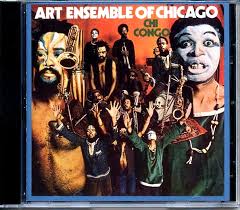
I found I listened more closely to David’s responses to my work than I did to other participants’, though as a fairly novice writer, I valued any critique. I liked that he often mentioned the work of poets he’d been reading, talked about their approaches and influences on his work. We started going to Gotham Book Mart together, searching the poetry stacks to score exciting contemporary writers and out-of-print classic collections. He told me to read Stanley Kunitz and James Lowell, Faye Kicknosway, Denise Levertov, Gerard Manley Hopkins. He had me listening to avant garde jazz, which I’d been introduced to in college thanks to a friend who was into Anthony Braxton and Dave Holland, and expanded my listening to include Don Cherry, the Chicago Art Ensemble, Albert Ayler, and many others.
His analysis of what was working in my poems, and what could work better, helped me to learn how to revise and rethink my work on my own. I gained a bit of confidence in my ability to figure out what sounded clunky, or wordy, or slightly “off.” He taught me not to be so hard on myself and to feel okay with putting a poem away for awhile–or forever–and letting the piece settle down so that, later, I could read it again and review its problematic areas less emotionally. He made me believe that my writing was worth reading, and that I was really a writer. Really. Not just faking it. In so many ways, he mentored me and my poetry. David encouraged me to submit to magazines and to let the rejections happen without feeling doubt about the value of the work. Although the value of that early work was…probably questionable, we’d look at the rejected pieces again and decide whether further revision might be needed or just a different reviewing editor!
As we got to know one another better, I learned about the challenges of his growing-up years, when he lived with his mother behind his grandmother’s millinery shop while his father was in prison for treason, in the US–following two years in a Chinese prison in Korea as a POW. Gradually, I heard about his dad’s release and inability to re-enter society, his parents’ divorce, his mom’s remarriage to a decent man who loved music but whose son, David’s step-brother, struggled with mental illness and died in a suspicious fire when David was about 20 years old. David’s outlier personality, his temper, his size–he was a large man who had been a fat boy, teased and bullied–found release and love through music, poetry, and dogs.
Also baseball, boxing, Star Trek…but we talked about those less often
posthumous poetry collection by david dunn
The other thing we conversed about frequently was frame of mind, particularly depression. Both of us were visited by depression frequently when we were in our 20s and 30s, and it was such a boon to have someone I loved and trusted who understood the “mood” and what a toll it could take on everyday life. When I married and had children, the need to feel less depressed got me to more reliable psych care–and I had better health insurance than David did. Sometimes he was chronically short of income, laid off, on unemployment, taking jobs in record stores, borrowing from his folks. He went a couple of years without health insurance or reliable health care, even though he was diabetic. So getting good therapeutic assistance for his chronic depression fell to a low priority, unfortunately. I tried to be there to listen to him, however, and he was always there to listen to me. We gave one another comfort during the doldrums, lassitude, and weird loneliness depression inflicts. And we reminded one another to write!
I miss him almost every day, though he died back in 1999. My book Water-Rites contains a section devoted to him and tries to convey the devastation I felt at losing him.
But you never really lose a mentor, right? They are always with us/in us.
Adrian Owles. That was her anagrammed alias. She used that name for things like electric and phone company bills when her real name set off “overdue payment” notices, resulting in her inability to get services. She did, in her youth, have a conniver’s sense of how to skive and get away with it. To some degree. She learned the skills from her father, a brilliant alcoholic from a once-wealthy family. From her mother, she learned poetry and an idealistic, romantic outlook on life…but also that she should be independent and never rely on men to take care of her or keep their promises.
Well, maybe she learned that last part from her father. Her parents never divorced, but her father was an absentee dad. That’s the picture she supplied to me. I suspect it was true, but I know only a tiny part of her story. Ariel Dawson, my poetry mentor, was a year younger than I but so well-read, aware of the “poetry scene,” reading craft essays and books before I knew such things existed–and taking reasoned issue with some of the writers, too, in ways it never would have occurred to me to do. Question such recognized authority? I would not have dared.
What is a mentor? A kind of teacher or model of behavior? Ariel’s behavior was far from conventional, which did appeal to me. We hitchhiked from Michigan to NYC and back. We stayed up almost until dawn and drank wine and talked about poetry. We ganged up on the poor man teaching a creative writing class at our college by questioning his pronouncements and asking about poets and poetry he had not specialized in. We sneaked into bars without paying the cover charge or having our IDs checked (Michigan had a liquor law that permitted 18-year-olds to drink, but Ariel was only 17). I kept wondering quietly to myself: Is this how poets behave? Is unconventionality necessary to the craft?
Well, yes and no. A certain aspect of the unconventional probably helps writers of any kind, but risky antics are not required. An individual perspective on heartbreak or trauma can be useful. Some of Ariel’s stories made me fear for her, feel heartbreak for her; if I never knew how factually true they were, I sensed a fundamental truth in what she told me. One example is her “love affair” when she was 13. She believed she was having an affair with a man in his early 30s who was from Pittsburgh, which she thought was an eastern seaboard town (so much for Detroit’s 1970s educational system as far as American geography goes). He disappeared one day, and she set off by herself to find him in Pittsburgh, where the police eventually located her. They sent her home to her mother. Now I look at this story as grooming by a pederast, but at the time she considered it oddly romantic of her. What makes trauma, if the victim doesn’t feel traumatized? If she can imagine the experience into something naive and…sort of like love?
Ariel’s poems appeared mostly in the early 1980s in print magazines; she taught creative writing at a couple of universities, but eventually her love of dreams and the mythic led her to pursue Jungian scholarship. Last I heard, she was working as an analyst in New York state. Perhaps unfortunately, she remains best known for a letter she wrote to the Writer’s Chronicle/AWP Newsletter in which she took a stance against New Formalism. She always did love a controversy.
My book Strange Ladies is dedicated to her memory. For a whole bunch of reasons and for a number of Ariel stories I can’t even begin to relate here. But most of all, because she urged me to write. And to revise. And to read as many poets and as many craft books as I possibly could. And never stop learning, and keep on writing. She got me to give poetry readings aloud to an audience. She kept me laughing. She was wild and lovely, and I am sorry she is no longer among us.
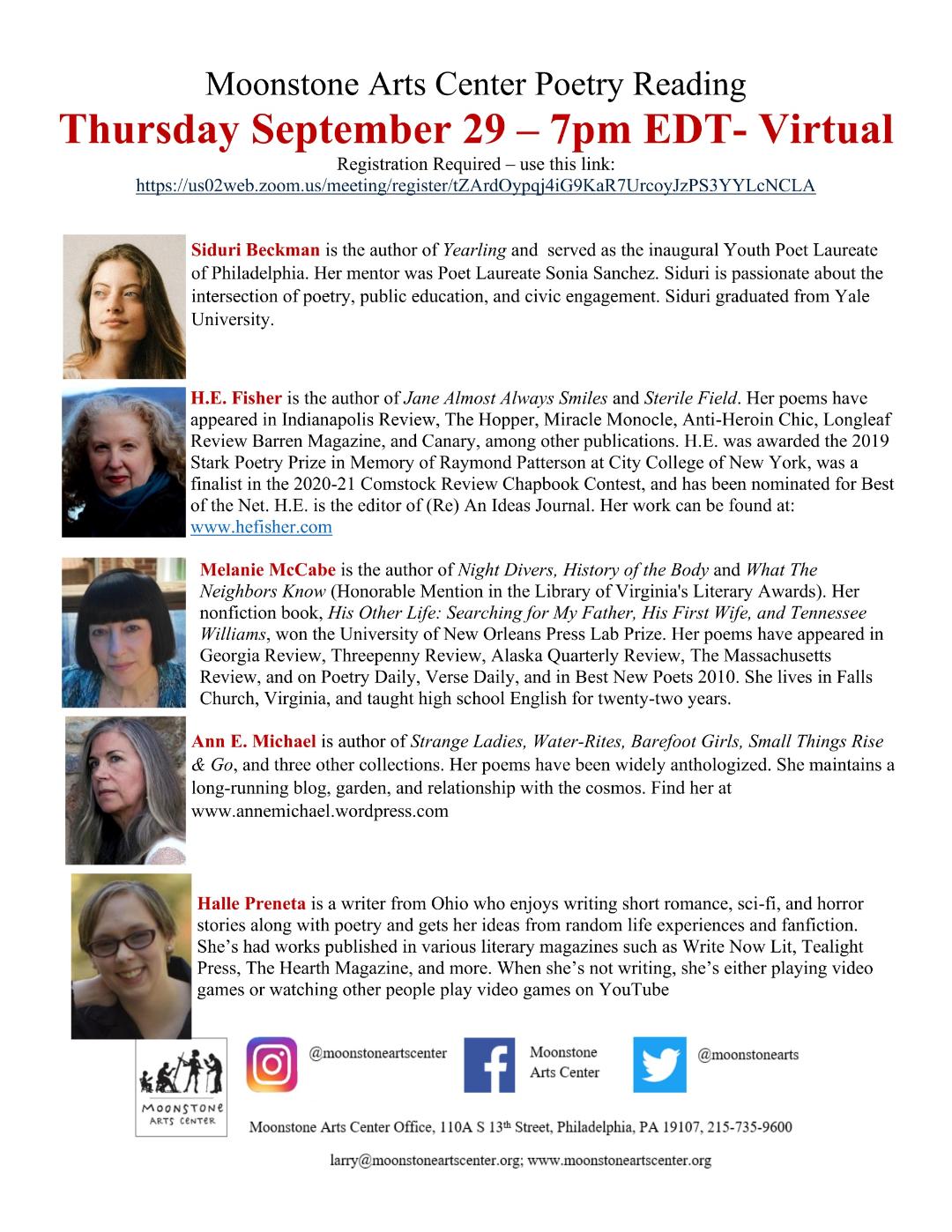
Meanwhile, here is the link to register for an upcoming Zoom reading by some strange ladies, including yours truly:
I learned, this week, that Rosemary Cappello has died. She was among the first people to encourage my writing and was an advocate for poetry and the arts in Philadelphia, where she lived for most of her life. I would not call her a mentor of mine; but she has been mentor to many other people as well as instrumental in setting up poetry reading series, poetry events, and other gatherings. All while also editing and publishing Philadelphia Poets Journal, a literary magazine that started as an 8-page photocopied zine and became a 100+ page annual journal…what energy, what devotion! And such kindness–when I first met her in the early 1980s, we saw each other often at poetry readings and open mikes. Then I moved away, first to Connecticut and then to the Lehigh Valley. Yet whenever I returned to Philadelphia for a poetry event, it seemed Rosemary was there. She always remembered me, too! In recent years, I’ve encountered her on Zoom readings and events. And I knew she had health struggles and trouble with mobility, but she never flagged in her enthusiasm for the arts.
~
If Rosemary, bless her heart, was not one of my poetry mentors, helpful and kind as she was, who were my mentors–and what exactly is a mentor? A teacher, a guide, a supportive expert in one’s field? Someone who advises, offers a network, feeds the soul, provides a model? Yes–but more than that, perhaps.
At my university, there are several programs or projects that purport to offer mentorship, but I get different answers when I ask people who qualifies as a mentor. It has made me think about my own mentors, most of whom have been in the creative writing field. I mean, I could count my dad or mother, but parents generally aren’t considered mentors—they’re doing another job, that of parenting.
This concept came up recently not only from my workplace, where we are launching programs to have our students be mentors to incoming freshmen, but also from a recent interview with Ocean Vuong that has been making the writing-related social media rounds. [link is here]
This video kind of floored me. I am aware that Vuong is young—but 33? He’s my son’s age! Much as I love my intelligent and funny son, he doesn’t possess the insightful earnestness that comes through in Vuong’s presentations, interviews, and writing. Not to mention his teaching! I am not so sure, at twice Vuong’s age, that I possess those qualities, either; yet I know I have been a mentor to some friends and students, mostly by accident. What defines mentorship?
I have not formulated a definition for poetry mentor or life mentor yet, but considering the possibilities may help me recognize what mentorship is and what it means. Therefore, I think I will devote the next few blog posts to beloved and talented friends and colleagues whom I consider to be my mentors. Alas, some of them have departed this earth, but that doesn’t mean their influence has vanished. I hope that writing and posting about them will keep the memory of them alive in that way that human beings have of recalling and integrating the compassionate and useful persons we’ve known and loved into the present moment.
Next time I post, I’ll have things to say about Ariel Dawson, to whose memory my most recent chapbook collection is dedicated.
This evening, a steady rain at last, one I hope continues for hours. It is too late to save my vegetable garden but will help trees, shrubs, flowers as they set seeds, birds as they migrate.
Earlier today, I harvested a few remaining veggies. I cut some zinnias for bouquets and watched as a newly-emerged monarch butterfly unfurled its antennae and proboscis and dried its new wings. As often happens in the late-summer weeks, I pondered what to do for the next year’s garden. A surprising thought took shape: letting the garden go fallow for a year. After all, the patch has been working hard for over two decades now–shouldn’t it get a break?
My thought process then admonished me about weeds. The majority of the weeds that would crop up in a fallow patch well-composted over the years will be non-native plants. Those are what mostly come up in our meadow, though we do have many natives as well. But the meadow isn’t rich soil like the garden is. True, I have nurtured some natives even in the vegetable garden. I grow three varieties of milkweed as well as native asters, rudbeckia, and goldenrod (not to mention the native vine poison ivy, despite my best efforts to eradicate it). The milkweed was, this year, much appreciated and eagerly consumed by monarch caterpillars. Still, if I do nothing in spring but let the patch go fallow, I’m likely to find it has been claimed by white clover, dandelion, purslane, Canadian thistle, mugwort, garlic mustard, Japanese knotweed, Amur honeysuckle, and other common weeds that originated in Europe, the Caucasus, or Asia.
Okay, but I’m a champion at weeding in the springtime. I could pull out many of the invaders just as they are getting started. What if, however, I allowed some sprouts to grow? The volunteers, as gardeners call them, that come up on their own after wintering as seeds in the ground or in the compost–I could let them stay wherever they popped up. In this way, the garden would design itself, instead of me being the designer. It would be a year of surprises! I like that idea. I love a good experiment…why not find out what my garden wants to do, after 25 years of me trying to tell it what to do?
Hasn’t yet taken its first flight!
I can make some good guesses as to what I might find: morning glories, zinnias, some variety of squash, tomatoes of mixed parentage, nicotiana, sunflowers. Basil, possibly; chives and cilantro and dill, almost certainly.
Anything else really would be surprising, but this year I had a cantaloupe volunteer, and its fruit was quite tasty. It gets below freezing here for months in winter, and I have never had lettuce volunteer; however, I haven’t let it go to seed, either. It might survive, as the radishes seem to do.
The more I mull it over, the more I like the idea. I like the experimental aspect of it, and the speculation and the surprise. It means that instead of preparing the soil in spring, all I’ll do is spread the compost out as usual–but not dig it in. I’ll water if the spring is dry, but mostly pay attention to the things that sprout and determine as early as possible whether those are edible or ornamental, or just weedy. The downside is that I’ll get all those marvelous seed catalogs and…will I be able to resist? Also, my spouse will complain. He likes a well-laid-out, well-delineated garden so he knows where he can step and where he shouldn’t, what to water, and what to pull out. He may also object initially to the aesthetics of an unplanned truck patch. But around mid-June, I will be admiring my volunteers. It will be beautiful.
~
Always I find metaphors and analogies between the gardening process and the writing process. The way I put my recent chapbook (Strange Ladies) together was similar to the theory of an all-volunteer garden. I drafted those poems at different times over many years and let them sprout even though they did not seem to fit in with my other writing projects or plans. After awhile, I realized they made their own kind of peculiar and surprising design.
I recognize that experimentation is a big part of my writing process. I love just playing around with words and ideas; when I first started writing more purposefully, my poems were often a bit surreal and strange. Over the decades, I’ve experimented with craft, prompts, natural world imagery, poetic form, philosophical and speculative concepts, and memory. It’s hard for me to say where my style or genre of poetry fits. I experiment, but most of my poems are not “experimental.” Much of my work uses observations of the natural world as major image and motivation, but I am not quite a “nature poet.” It doesn’t really matter how or whether my poetry fits an identifiable description. I weed as I go along, and I let anything that looks interesting (or familiar) show me its stuff.
That’s a natural process that reflects the way I think, the way I experience the world, and the various ways I find to express myself to readers. [Crafting and revising–that’s less spontaneous, though it can have outcomes just as surprising.]
A pebble is dropped into a deep well, and 3.0 seconds later the sound of a splash is heard as the pebble reaches the bottom of the well. The speed of sound in air is about 340 m/s. (a) How long does it take for the pebble to hit the water? (b) How long does it take for the sound to reach the observer? (c) What is the depth of the well?
Indeed–what can we determine based upon the little we know for certain? This physics problem came to mind when I was listening for responses to, say, a short poetry collection that came out recently. (Yes, Strange Ladies.) And I recalled a visit in 1984 to Goodrich Castle in Ross on Wye, Herefordshire, England, where we did just that–dropped a small stone into the well–and waited what seemed a long time for the sound to reach us. From what I understand, tourists can’t do that anymore; the National Historic Trust has upgraded the ruins to make them safer to visit. The tourist board doesn’t want anyone falling down wells.
But I digress. I meant the metaphor to apply to how writers listen eagerly for response to their work once it is published. Will anyone review it? Will anyone read the review? Will anyone post about it on social media? Will anyone contact the writer to say those words we want to hear: “I love your book!” –?
Sometimes, yes. And for those who have done so already, a million thanks.
~
According to family records, some of my maternal grandmother’s family were related to these Goodriches; but as the castle’s later owners were Normans (and then, Parlimentarians), it’s kind of hard to be certain. I can vouch for the depth of the well, however.
Many thanks to Lesley Wheeler for giving my chapbook Strange Ladies a mention on her blog! Given the circumstances of the past month or so, I have not been on the ball about promoting the publication. Word of mouth and social media platforms have helped the sales, but I have been remiss about scheduling readings, book signings, etc. These days, even well-known mid-list authors often have to be self-reliant about promoting their books. Agents for poetry are few and costly, so while getting the book into the readers’ hands may more easily happen thanks to online bookstores, finding an audience of interested readers takes effort and imagination on the part of the poet. Effort and imagination that, at present, I lack.
But–as Kurt Vonnegut reminds us in Slaughterhouse 5–so it goes. (106 times.) At the close of this quick post, I’ll try to remind myself to add the link to Strange Ladies.
As life has afforded few spare moments of uncluttered mind-time in which to write, I’m back to scribbling notes, phrases, and ideas on random pieces of paper and in my journal. This fallback method works well for me, an old-school pen & paper poet. Quite a few colleagues-in-poetry use various smart phones and electronic devices to write notes-to-self and even to draft poems, but when I resort to that–on the rare occasion that I have my cell phone but not a writing implement or bit of paper–I forget about my ideas, which are filed somewhere “in there” (on Samsung Notes’ app). It’s a good thing I am not considered a significant author whose work is worthy of preserving, because my poet-life drafts and mementos would be challenging to archive.
For the moment, my writing has a work-centered locus: curriculum, to-do lists, meeting schedules and agendas, orientation and presentation scripts, group emails to announce this or that Important Thing that likely 80% of the recipients will ignore. I get home, eat dinner, pick beans, tomatoes, zucchini, and zinnias. And I read. The one thing I always seem to have time for!
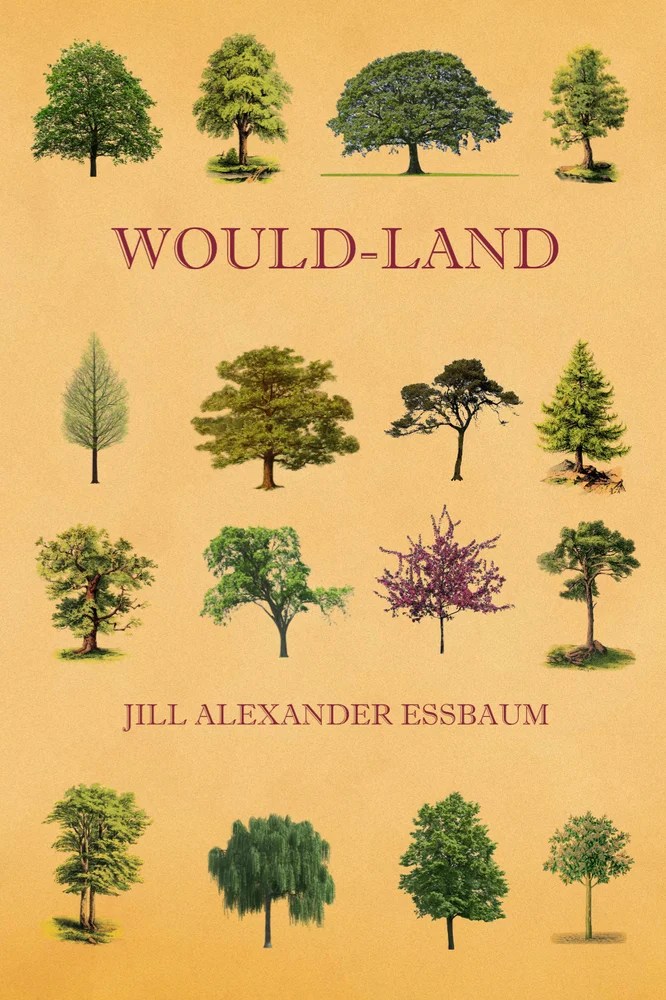
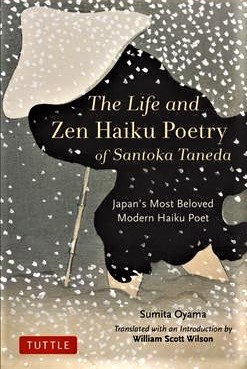
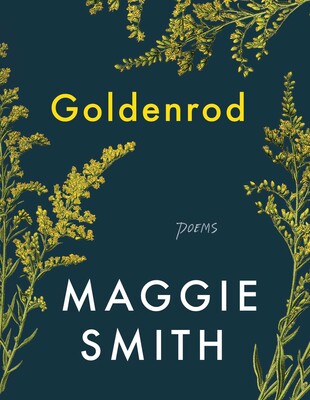
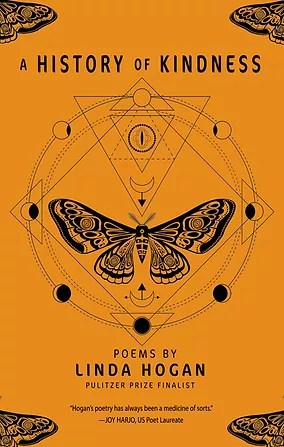
While I didn’t purposely take up the Sealey Challenge, I have continued reading poetry books more than once weekly, mixed in with creative non-fiction of various sorts, histories, and a novel or two (recently re-read Our Mutual Friend, by Dickens, to cheer myself up). Here’s a list of the recent poetry books I’ve perused: Linda Hogan’s A History of Kindness, Maggie Smith’s Goldenrod, Jill Alexander Essbaum’s Would-Land, and Sumita Omaya’s The Life and Zen Haiku Poetry of Santoka Taneda, tr. William Scott Wilson.
The least exciting was Smith’s book–I liked her previous collections Good Bones and The Well Speaks of Its Own Poison better (this is not to say Goldenrod was “bad.”) The most exciting was Alexander Essbaum’s book, which I devoured and have already read a second time. I find Hogan’s work meditative and calming, even when she writes of trauma and disturbance; it’s her style, I believe, that creates that mood in me. And I knew very little about Taneda or his standing in literary Japan, so that’s been interesting.
~
~ And, as promised, there’s always a book! Here’s my latest:
This collection did not begin as a collection. If anything, it originated in the poems that stuck out as not belonging anywhere, poems not quite abandoned (in fact, most of them had been published in journals over the decades) but not fitting in with my other work. Which is in itself an odd statement to make, since my “style” has ever been inconsistent; I try many styles and forms when composing poems: short, long, free verse, rhyming, metrical, prose poems, telegraphic, chatty, narrative, lyric, abstract, broken, experimental, et cetera. So what do I mean when I say these poems did not fit?
From the time I began writing poetry “seriously” (with authorial and craft intent), I developed themes, tropes, and images that I have never stopped employing; but sometimes one topic or lyric current would bob to the surface and occupy my thought-flow for days, weeks, or months on end. When that occurs, I may get a collection out of it. Sometimes several collections create a sort of arc or, in some cases, a thread of resonance that results in a longer collection. Or maybe there are stylistic choices that recur, and those poems seem connected.
Then there are those impulses that just show up for one poem and vanish for a long while. Persona poems. Feminist poems. Political poems. Rants. Love poems. Dreamy poems. Surreal pieces. And so on.
For Strange Ladies, I realized that during the past 45 years I’ve written enough oddly interesting straggler poems about/in the voices of/relating to female “characters” of a mythopoetic variety that they might form a coven. Or at very least, a neighborhood. The strangeness of these women comes from their position as outsiders, exiles, shamans, rebels, goddesses, myths, heroines. A chapbook manuscript materialized, and what surprises me most about this collection is that the poems I ended up choosing date all the way back to some of the first poems I ever got into print. At that time (circa 1981), indie-lit mags were photocopied, stapled affairs often using collages of copyright-free art for graphics. My nostalgia about that era led me to go for a retro look on the cover. And yes, I wrote one of these poems in 1979 while living in New York City…but others are as recent as 2019. A span of 40 years, and yet they seem to belong together in their differences.
Here’s what one of Moonstone Press’ anonymous poetry editorial committee members had to say:
“This chapbook is like a chorus of distinct personae over time and myth and family–Hagar, Icarus’s sister, the mother, the grandmother, the daughter, each poem a character sketch, engaging, memorable. I loved lines like: ‘Women shoulder everything’ and ‘gliding brought more joy/ than soaring.’ The poem ‘Witch’ is so tight and mysterious, like a dream. In ‘Heron Heroine,’ I loved this: ‘and she who balances stands often on one leg, /as what’s precarious for others grounds her, toes clawed deep/in mud.’ Themes such as sailing, water, bones are carried through in a nice variety of forms that never got boring or repetitive. The diction is so interesting, nice use of natural terms and details, words like ‘bittern,’ ’tilth’ and ‘binnacle.’ I think my favorite might be ‘I am a Cloud,’ with its powerful ending, ‘Attached to nothing, I dance the wind.’ I vote yes, enthusiastically.”