Another fallen bird. This time a mourning dove.
~
Meanwhile, at night I sometimes still can hear the shirring of wings as flocks head south. And the owls converse.

Mourning dove, October 2014
Another fallen bird. This time a mourning dove.
~
Meanwhile, at night I sometimes still can hear the shirring of wings as flocks head south. And the owls converse.
Mourning dove, October 2014
I remain pretty busy with the October poetry workshop and mid-term evaluations, so I’m going to cheat a bit by adding a link to Poet’s Quarterly, which is featuring in this issue one of my brief essays.
Click on this sentence to take you there. (Probably there is a way to embed the post, but I have not quite figured that out and lack the time today to look into it.)
 ~
~
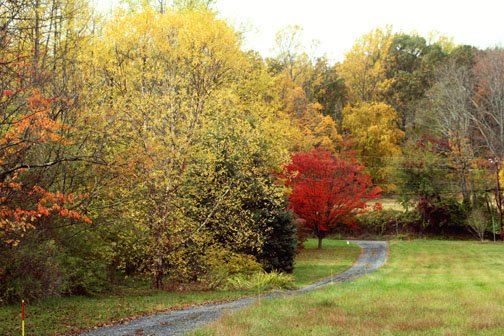
October. I’ve put my vegetable garden to bed, deadheaded and pruned the perennials. The leaves are yellow and red and orange and brown, and the white pines are dropping their old needles. Quieter days, quieter nights: fewer insects, amphibians, and birds making their noises.
Well–there are the danged woodpeckers…
I expect to keep this blog less frequently this month, or to make the posts shorter, because I am taking part in what is for me a new endeavor: an online poetry workshop. I am taking a month-long class with Daisy Fried through Providence’s Fine Arts Center, 24 Pearl Street.
Daisy Fried lives in Philadelphia, 24 Pearl St. is in Rhode Island, and my fellow workshop participant-peers live in NH, MA, IN, MC, ME, NY, VA, NJ, VT, CA, AL and IL. Oh, the amazing connectivity of the world-wide web!
I’m somewhat tech-savvy but only to a limited degree, and reading online is still cumbersome for me. Nonetheless, I am curious to see how the virtual critique will work, given that we are not face-to-face as we comment, enthuse, and suggest. Interpretation takes on multiple meanings in an environment such as this one. And whether I can keep on top of the comments and reading! That’s another type of challenge during the academic year for me.
I feel thrilled to be back in the position of student, though. I’m the sort of person who might stay in school perpetually if I could manage it. Even autodidacts sometimes enjoy the camaraderie of peers.
If you are interested in the process, and how it goes for me…I shall eventually report back on these “pages”!
I have taken it upon myself to read Dewey after many years’ hiatus from his remarkably clear prose and his fervent support of free, equal, and accessible education for all. The essays in his Philosophy of Education (Problems of Men) were written between 1935 and 1945 and yet in many ways are relevant to 2014: In his era, technology has led to enormous social changes, as have global conflicts; school districts are under pressure to conform to top-down management and are feeling the pinch as politicians cry for school-tax cuts; more young people than ever graduate from high school and college, only to find that jobs are not available for them; an economically-advantaged elite dis-empowers the middle- and working-classes by using class, money, and networking to subvert or gut the democratic system. What is the philosophical, patriotic pragmatist of 1940 to do? Urge people to exert themselves into action, of course.
Dewey’s passion for education and his pragmatism appeal to me even when I do not wholeheartedly agree with his premises, proposals, or–alas–his optimism. Right from the introduction of this series of essays, he sets out such sensible observations about culture, society, and government that it is hard to disagree with him; his works always begin with a straightforward clarity that is refreshing among philosophers. One of the most trenchant observations he makes, over and again, is that the education of the citizenry must change as social developments occur; education must not remain in stasis and, he insists, democracy must also be flexible and living, always moving with the current times:
“I find myself resentful and really feeling sad when, in relation to present social, economic and political problems, people point simply backward as if somewhere in the past there were a model for what we should do today…We have a great and precious heritage from the past, but to be realized, to be translated from an idea and an emotion, this tradition has to be embodied by active effort into social relations…It is because conditions of life change that the problem of maintaining a democracy becomes new, and the burden that is put upon the school, upon the educational system is not that of merely stating the ideas of the men who made this country…but of teaching what a democratic society means under existing conditions.”
My italics in the passage above are there to indicate what I feel is Dewey’s most enduringly important recognition–that social conditions change, and, to stay vital, the foundations of a society need to be resilient enough to be adapted to existing conditions. Tradition has considerable value, but a too-conservative approach to law or education or any other abstract, social construct will fail in time, Dewey says. There is “an inherent, vital and organic relation” between democracy and education that reflects democracy’s recognition of “dignity and the worth of the individual.” As a person who engages in the task of educating others, and who finds she frequently has to change the curriculum to keep up with the technology and the changing mood and environment surrounding her students, I’m glad to be reminded of that organic relationship. It’s important to me that each individual I instruct, advise, and (in turn) learn from feels that he or she embodies dignity and worthiness.
Much as I enjoy reading and thinking about philosophy, it seldom gives me a “warm feeling” the way Dewey’s well-considered, thoughtful words do. He saw the need for balance and for growth–human growth, interpersonal and social growth–which he posited could be achieved through the conscious, considered, informed actions of well-meaning people in community. Educators are, by such lights, among the foremost in the endeavor. Certainly Dewey thought they were.

Gardening has been a dismal endeavor this past summer; I just did not devote my usual energies to the landscape, the perennials, or even to the vegetable patch. For a number of reasons I will not enumerate here, I did not even get to the weeding. I wish I could say I spent my energy on writing, revising, and submitting my poems–alas, no.

Tangle of weeds & blossoms
After a weekend of trying to catch up (in two days) on two months of garden neglect, I caught up on my reading a bit and found this delightful and appropriate post on Lesley Wheeler’s blog: “Restlessly pruning the overstuffed closet of a poetry manuscript.” Her analogy is to a closet and wardrobe, but the underlying concept of assessing and culling works for perennial beds and poetry manuscripts (and attics, and basements, and garages, and…)
This post appeals to me because, in addition to rallying myself to the cause of deadheading and pruning and weeding in the great outdoors, I have also been working on cleaning up two manuscripts. Wheeler asks of her work:
Wise questions to ask of a book of poems; also see Jeffrey Levine’s Tupelo Press blog for his exhaustive take on the process.
Clearly, reorganizing and evaluating my collections are not the kind of work I could accomplish in two days.
In that way, weeding and pruning the gardens offers more immediate satisfaction, though it left me with some scratches, rashes, and a sore back!
“It’s not all about you.”
 (Many thanks to those geniuses of the adolescent mind, Jerry Scott and Jim Borgman, creators of Zits.)
~
…Or is it? Psychologists, neurologists, and even philosophers seem to agree that human beings need to develop through the stage of self-centeredness in order to attain a mature sense of self-in-the-world. We do not recognize the world at large without finding a way to validate or maintain the self or consciousness that we are given.
One method of defining who that self is, what selfhood entails, is through dissent. The two-year-old who shouts “No!” establishes the foundation for the later process of expressing selfhood through making oneself distinct from others–sometimes through disagreement. As I guide my latest freshman class through the understanding of argument as reasoned discourse in an academic environment, one of my purposes is to encourage them to feel free to disagree as long as they can support their reasons for doing so. To accomplish that task, sometimes they have to learn how to “step back” from themselves a bit (see my last post).
~
Yeats: “We make of the quarrel with others, rhetoric, but of the quarrel with ourselves, poetry.”
~
I am aware that most of my students’ dissenting opinions will occur outside of the academic environment, i.e., in “real life.” Real life could benefit from a little more reasoned discussion and fewer overheated, intuition-based gut reactions and ad hoc attacks. Often what people (and students) need is what we desperately try to avoid: difficulties, complexities, challenges. Okay, I’m whistling into the wind…still, I’ve written about the topic briefly here.
~
…and maybe the narcissistic 18-year-olds who come to college subconsciously thinking “it’s all about me” are actually reasonable human beings whose developing conscious awareness of self is ready, (almost), to feel the push-back of the world against the whining ego and recognize that respect and understanding require wide perspectives and differing methods of operating in the world. Maybe they are ready to move beyond mere opinion and into the realm of thinking about thinking, analysis, generosity, compassion…and facts, if we can discern what’s factual.
Maybe they are ready to begin the quarrel with themselves.
~
In August 2014, New York Times writer David Brooks wrote about the differences, if any, between narcissism and introspection. His opinion column explored whether self-questioning and rumination might lead to self-centeredness rather than self-discovery; he begins the column with the concept of the personal journal or diary and whether that practice has value or not. (Certainly there are other methods of introspection, but for a literate society it is writing that first comes to mind).
Citing research from several psychological studies, Brooks states:
We are better self-perceivers if we can create distance and see the general contours of our emergent system selves — rather than trying to unpack constituent parts.
Interestingly, this suggestion more or less jibes with the multiple-levels-of-self version of consciousness as theorized by Douglas Hofstadter and Daniel Dennett.
Writing as a means to recover from trauma or to “make sense of the world” seems most effective when the writer puts some reflective distance between experience and feeling (see The Writing Cure), although James Pennebaker’s research argues that even immediate expressive writing can help psyches and bodies to heal. Brooks outlines three ways, different from the microscopic introspection of the narcissistic diary-entry, that self-reflection can develop into something other than self-absorption.
One of them is narrative, which makes perfect sense to me–human beings are story-makers. In fact, all three approaches to introspection Brooks mentions find expression in poetry, storytelling, fiction-writing, creative nonfiction, and in good journalism.
Creating our narratives from a reflective “step away” from intense analysis helps human beings to navigate the inner and the outer worlds.
I’m seeing this approach in action with my college freshmen this semester. More on that in a later post.

Sunday, September 14, 2014
7:00 p.m. ~$10.50
Godfrey Daniels listening room
4th St. Bethlehem PA
Ann E. Michael with Danielle Notaro and musician/host Dave Fry
featured at Dave’s Night Out
“Tonight’s Dave’s Night Out explores the artistry of regional poets Ann E. Michael and Danielle Notaro. Both are established and published poets in our community. Tonight, we will explore the art of writing for a living, the world of creating and publishing verse in this modern world, idle chatter about the artist’s life and stimulating conversation with the audience. A very unique evening in the arts.”~~
“All the poems I have written were written for love.” ~ W.H. Auden
“But when you give to the poor, do not let your left hand know what your right hand is doing, so that your giving will be in secret…” Matthew 6:3-4
~
Acts of compassion, great or small, are good for us. I state this not because of ancient Greek philosophers’ concepts about the Good, nor out of any religious dogma, but because psycho-neurological studies almost definitively align with this aspect of received wisdom. Hanson writes, “Compassion draws on the anterior cingulate cortex (ACC) and insula,” which help us observe (or “read”) the reactions of others, an action critical to the survival of a social species. It turns out that when we pay attention to others, we are more likely to help them; that’s how the average human brain works.
Unfortunately, human beings often stop paying attention once we think we have ascertained another person’s intentions and have passed an internal judgment upon them. We tend not to attend past that initial observation. Thus, we may miss actual intentions. Usually this miscommunication of intent leads to problems, but not always. Some people desire to hide their deeper intentions, and not because those intentions are “evil” or even merely narcissistic.
Viz: W.H. Auden, as portrayed in this quietly-written, reflective essay by Edward Mendelson in The New York Review of Books (March 2014). Mendelson begins:
W.H. Auden had a secret life that his closest friends knew little or nothing about. Everything about it was generous and honorable. He kept it secret because he would have been ashamed to have been praised for it.
Auden was a Christian who had an often challenging relationship with his religion (being homosexual did not help with the dogmatic wrestling match). In this essay, Mendelson says that “Auden had many motives for portraying himself as rigid or uncaring when he was making unobtrusive gifts of time, money, and sympathy. In part he was reacting against his own early fame as the literary hero of the English left.” The author also looks at Auden’s era: Fascists, Nazis, dictators, and how they managed to sway so many potentially and otherwise “good folks” to bad causes, the use of “good/evil” in the literature and intellectualism of those times and the writers who used celebrity to lionize their causes–a posture Auden found distasteful.
Yet Auden was willing to make himself distasteful, socially awkward, arrogant, in the service of a hidden compassion. There’s no good word for this in English. “Modesty” does not suffice. “Humility” does not quite hit the mark, either.
~
It seems to me that Auden, and others like him (there are others, many undiscovered), chose to follow Jesus’ words in Matthew 6:3.
A contemporary person may ask why all the modesty. After all–a good deed is a good deed. Does keeping it “hidden” increase the inherent goodness? Are anonymous philanthropists somehow more authentic to the concept of compassionate giving than those who allow their names to grace buildings and organizations? Those people who benefit by good works and kind acts–surely they feel a desire to thank whoever is responsible, so why disguise the giver?
~
One possible answer: compassion does not need a specific object, though that is generally how we learn compassion in the first place.
The gratitude a human being feels when he or she is the receiver of a kind, anonymous act has no immediate object. We do not know whom to thank. Although the receiver’s response may initially be one of suspicion, in most cases the sense of gratitude will be directed more widely into society; the receiver of a kindness is more likely to be kind to others, to perceive others as potentially benefactors or at least to view other people with less suspicion and envy–because the secret donor is somewhere among all of us.
The secret gift works to spread compassion to all sentient beings.
~
It turns out that, as far as the brain is concerned, doing good sets up a kind of feedback loop. Doing good for others improves how good we feel in general. Not how good we feel about ourselves in an egotistical way but how good we feel mentally, emotionally, and even physically.

Love is all you need
We not only write for love. We live for love.
~
“Every burned book or house enlightens the world; every suppressed or expunged word reverberates through the earth from side to side.” ~Ralph Waldo Emerson, “Compensation”
I have taken this quote out of context–Emerson wrote this sentence as part of his reflection on compensation: he was questioning the received doctrine of his era that evil-doers flourish on earth and the just do not, therefore Heaven is God’s compensation for the trials of being a Good human being. Emerson did not accept this doctrine out of hand and theorized that, through just laws, people could make compensatory actions operable on the earth. He recognized, too, that sometimes evil people fail to thrive and compassionate, just people manage quite well. The received wisdom was merely received, not wise. Nonetheless, I find “Compensation” essentially dualist. And it is, truly, a sermon.
In the paragraph that contains the above words, Emerson suggests that there is always compensation of some kind for any act, for good or ill, that suppression cannot be maintained–the volcano will surge eventually–that the martyr never dies in vain because from his or her action will arise, in time and through the flaws and the perfections of Nature, some form of (often surprising) compensation. Hmm. Sounds a bit similar to Karma.
~
And I am thinking, again, of books and what they offer. My students tend to consider books as information solely (I do not generally teach the kind of young person who reads novels or philosophy). This is, we have been reminded continually, the Information Age–so that approach to books seems well-founded. Then there are our other means of information-gathering, largely through technological devices. These phones and various screens are mighty distracting and designed to be so. Yes, Fahrenheit 451 was prescient. Does the book-burning in that novel begin a revolution? Not in the predicted ways.
~
More prescient writing (found, by the way, in books): Neil Postman, back in 1985, commenting on the prescience of Orwell’s 1984 and Huxley’s Brave New World in Postman’s must-read cultural criticism, Amusing Ourselves to Death. In his foreword, Postman writes
What Orwell feared were those who would ban books. What Huxley feared was that there would be no reason to ban a book, for there would be no one who wanted to read one. Orwell feared those who would deprive us of information. Huxley feared those who would give us so much that we would be reduced to passivity and egoism. Orwell feared that the truth would be concealed from us. Huxley feared the truth would be drowned in a sea of irrelevance. Orwell feared we would become a captive culture. Huxley feared we would become a trivial culture, preoccupied with some equivalent of the feelies, the orgy porgy, and the centrifugal bumblepuppy. As Huxley remarked in Brave New World Revisited, the civil libertarians and rationalists who are ever on the alert to oppose tyranny “failed to take into account man’s almost infinite appetite for distractions”. In 1984, Huxley added, people are controlled by inflicting pain. In Brave New World, they are controlled by inflicting pleasure. In short, Orwell feared that what we hate will ruin us. Huxley feared that what we love will ruin us.
~
Is there compensation for being drowned in a sea of irrelevance? What might that look like?
~
Perhaps these are a few of the reasons I often need to turn from information to poetry.

