Parenthood & writing

My life, in my role as parent, has lately trumped my reading-&-writing time. This happens periodically and is one of the challenges–one might suggest hindrances–of being a writer who has children.

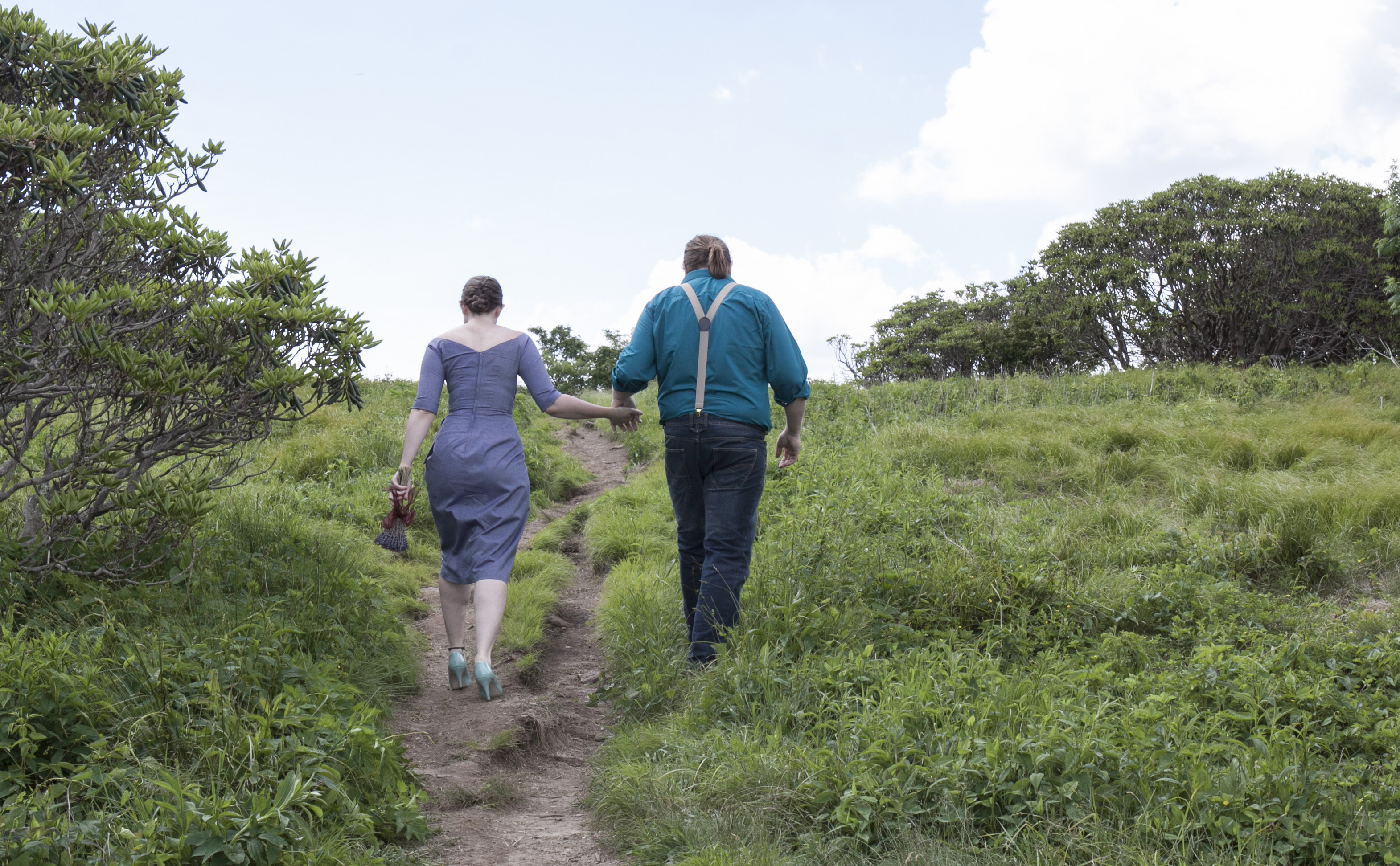
My children are grown, yet the occasional interferences continue. I rush to note that these interruptions can be marvelous; June has been pleasantly subsumed in the marriage festivities of my youngest. My blog plays a decided second fiddle to family. Or third fiddle. Or maybe just a fiddle that sits in the closet for months.

The recent New York Times Sunday Book Review offers two delightful essays on how parenthood affects writers: the columns by James Parker and Mohsin Hamid speak for me on how parenthood has informed these authors’ “writing life.” There is a difference, though it may be only one of small degree, between real life and the writing life. These men demonstrate the interaction, inspiration, and interference well, so I will let their words stand in for mine today. Please do click the link and read the essays.

Meanwhile, I observe with joy and a mixture of feelings (and a certain amount of preparation and planning and organizing) as one of my best beloveds chooses a lifetime partner and the two of them head off together into a shared life. I will be on the periphery. Which is as it should be, I suppose.

Many blessings, daughter.

Image


Enter the philosophy paper…

My “day job” at a small university is part administrative, part teaching, part assessment, and largely tutoring in writing. The last of these requires a peculiar balancing act, because my directive says I must not tutor discipline content; I have to tutor students toward “clear expression” while staying within the areas of grammar, spelling, vocabulary use, assignment interpretation, thesis writing, paper structure, and documentation. As a job description, that all sounds quite clearly delineated and objective enough, but writing well cannot happen when the writer fails to understand content material. Enter the Philosophy paper.

In any discipline, it’s difficult to separate tutoring “clear expression” in terms of grammar and vocabulary without also tutoring content. With philosophy that process is especially challenging, because to a large extent, philosophical understanding (content) relies on grammar (rhetoric). A student can contradict himself simply by neglecting to type the word “not” in a sentence, rendering his attempt at argument void. Or a student may announce she will use one approach to prove her claim and then prove the claim, quite adequately, with a different (and opposite!) approach.

This bust resides in the Louvre, and was found here: http://www.humanjourney.us/greece3.html

This bust resides in the Louvre, and was found here: http://www.humanjourney.us/greece3.html

Cases like these cause me to ponder. How can I coach the writer without offering a content-based answer? Philosophy itself supplies the method: inquiry.

“So, you say here that because Locke believed in Natural Law, he would not apply Natural Law in the case of the social contract. Can you explain that statement? Because it seems as though you are contradicting yourself, unless you accidentally added the word ‘not’ or unless you have more to say after this sentence…maybe, why he would not do so?”

“Here, you do a pretty good job explaining why beauty is in the eye of the beholder, although you need to pay more attention to your use of the comma. But back at your claim in paragraph one, you say you will prove beauty is transcendent–and your definition of transcendent doesn’t work with your argument in paragraph three…do you mean beauty is not transcendent? Did you forget a word, or are you missing a paragraph of explanation?”

When the science students or economics students bring papers to me, it is, I admit, much easier for me to stick to grammar and mechanics. The same sorts of logical structure or argument issues crop up, however. Sometimes, I feel as though I am right on the borderline, and sometimes I think I’ve teetered a bit too far into content tutorial–especially when the students are writing about history, philosophy, literature, or philosophy. Yet would any philosopher disagree that you cannot completely disentangle grammar logic from any other kind of logic? They stem from the same root.

Writing process? Got that. Sort of.

Last year, I was invited into a blog-go-round for writers (see this post). Many thanks to Lesley Wheeler for tapping me for this 2014 blog tour on “the writing process.” I read Wheeler’s 2010 book Heterotopia and was wowed; she’s also the author of  The Receptionist and Other Tales, Heathen, Voicing American Poetry: Sound and Performance from the 1920′s to the Present  and other work. With Moira Richards, Rosemary Starace, and other members of a dedicated collective, she coedited Letters to the World: Poems from the Wom-po Listserv (Red Hen, 2008). We got introduced virtually via the Wom-po listserv.

Lesley is a formidable scholar and critic who writes a wise and witty blog, which you’ll find linked to her answers in the paragraph below this one. Now the Henry S. Fox Professor of English at Washington and Lee University, Wheeler has held fellowships from the Fulbright Foundation, the National Endowment for the Humanities, the Virginia Commission for the Arts, and the American Association of University Women. Wheeler received her BA from Rutgers College, summa cum laude, and her PhD in English from Princeton University. Despite all these amazing academic chops, which could appear intimidating, Lesley strikes me as approachable, generously interested in the wide world (not just ivory towers), and funny.

Click here for her answers to the prescribed questions. Below are my own.

~water-rites_cover

1)     What am I working on?

I have a completed manuscript that I sent out last year, The Red Queen Hypothesis; but I have had a change of heart about it. I am revising it completely. It’s a major renovation, because as I revisited the not-yet-book I found myself re-thinking the purpose of the collected poems. I had originally conceived the manuscript as an experiment in nonce forms, with a biological theme threading the poems together. As I re-read my work, I realized that my thinking, my purpose, for the poems has altered. Let’s just say some major life changes have been underway in the background of my creative efforts, and the influences made themselves felt. The book as originally imagined turns out not to be the book I want to write.

So, what I’m working on this year turns out to be what I was working on last year, only re-envisioned. I did complete (I think!) a collection of poems centering on adolescent girls of the 1970s that is a sort of a girls’-eyes-view of Bruce Springsteen songs–it’s called Barefoot Girls.  I’ll be sending that out to find a publisher.

Meanwhile, I am writing new work which, alas, seems to be rather dark–if you happen to consider poems about mortality to be dark.

2)     How does my work differ from others of its genre?

I would love to say that my poetry is wildly original in approach or style, but it isn’t. If you were to categorize my work as “eco-poetry,” it would be different from the genre because of a quieter rhetoric. If you were to call my poetry “nature poetry,” it would not fit quite comfortably into the genre because of its trending toward the intellectual. My poetry is usually “accessible,” but I don’t eschew the multisyllabic latinate vocabulary at all costs, and my allusions are often a bit arcane. I like form and classic poetic strategies, but I also like to break rules, and I adore free verse and prose poems. What did Stevens say? “All poetry is experimental poetry.” Yes. That.

3)     Why do I write what I do?

Journals, because of Harriet the Spy when I was 10, and ever since. Harriet_the_Spy_(book)_cover

Blogs, to practice the less emotional, more inquisitive side of myself and because I’m an autodidact.

Essays and criticism or reviews, because writing that type of work requires skills my brain needs to exercise in order to do other things, such as be an educator; and because I love to read and think about what I’m reading.

Libretti, because colleagues asked, and new things are compelling to attempt.

Poetry, because I can’t do without it.

4)     How does your writing process work?

Interesting question at this time, as I feel the way I go about writing is changing after many years of pretty solid operational process. It may be that I am getting older or because see above: significant life changes.

One thing hasn’t changed, and that is the need for a certain kind of solitude. Distractions aren’t in and of themselves anathema to my writing process, but the distractions need to be of a non-urgent kind. I don’t mind being distracted by a broad-winged hawk overhead or a siren in the distance or an overheard conversation, but sometimes even a loved one’s “Hello, I’m back from the grocery store!” shifts my focus irrevocably.

[aside: My loved ones do not really understand this effect.]

The way I begin a poem is akin to how I’ve heard mindfulness described. I allow myself to be relatively vacant, and something drops in to fill the moment. I assure you this is nothing like a bolt of inspiration from the blue; and usually all I get is a phrase, a metaphor, an image, an aphorism. But it’s a start. From there, the process is about association, relationships, combinations, experiment, and a certain amount of loopy freedom to write a bad poem if that’s what emerges.

Then, I pause. The draft sits there for days (weeks, months, years) until I decide to start revising poems, which I tend to attack in batches. That’s one thing I do differently these days: revise in bunches the way I did back in graduate school under a time crunch. What I currently notice changing, too, is the way that I enter emptiness. In years past, my favored way was to take a walk or to work in the garden. Physical issues have to some degree limited the amount of time I can spend doing those activities, and finding an acceptable substitute has been hard. I am muddling through, waiting to see what works best.

~

Next up, April Lindner and Zara Raab. They should have their writing process blog posts up sometime in the next 7-10 days; and I am excited to learn what approaches each of them takes.

April Lindner is the author of three Young Adult novels: Catherine, a modernization of Wuthering Heights; Jane, an update of Jane Eyre; and Love, Lucy, a retelling of E. M. Forster’s A Room With a View, forthcoming in early 2015 from Poppy.  She also has published two poetry collections, Skin and This Bed Our Bodies Shaped.  With R. S. Gwynn, she co-edited the anthology Contemporary American Poetry for Longman’s Penguin Pocket Academic series.  April lives near Philadelphia with her husband and sons.

Zara Raab’s latest book is Fracas & Asylum. Earlier books are Swimming the Eel and The Book of Gretel, narrative poems of the remote Lost Coast of Northern California in an earlier time. Her poems, essays and reviews appear in River Styx, West Branch, Arts & Letters, Crab Orchard Review, and The Dark Horse. She is a contributing editor to Poetry Flash and The Redwood Coast ReviewRumpelstiltskin, or What’s in a Name?  was a finalist for the Dana Award. She lives near the San Francisco Bay.

Autodidact as adult student: Goddard & me

In a previous post, I mentioned my peculiar undergraduate experiences at alternative institutes of higher education (The New School) and how being a book-loving autodidact influenced, perhaps even configured, my approach to education. My favored learning strategies led me to a non-traditional graduate school program, as well. Reflecting upon my higher education, I realize that every institution I attended chose alternatives to standard pedagogy–and I am grateful that such colleges exist. The world needs outliers.

A kind of heaven.

The New School’s pedagogy for the “Freshman Year Program” was seminar-based. That worked very well for me. Classes were small, discussion-centered, predicated on the reading of significant original texts–no textbooks. The professor was not a lecturer but a participant-coach and mentor.

The program was only a year long, however, so I had to transfer. There were a number of experimental college programs in the 1960s and 1970s; without the miracle of internet searching, however, they were not easy to locate. I did not find out about St. John’s College, Reed, or Evergreen, for example. I stumbled instead upon Thomas Jefferson College (now defunct) in Michigan.

I completed my undergraduate studies without ever seeing a syllabus. Yet I read more books than the majority of my standard-pedagogy-educated peers and discussed classic and contemporary texts, science and history and literature, in depth with my peers and with scholars. I wrote a lot and did hands-on projects, independent studies, experiments and interviews. TJC drew criticism for its ‘flakiness’ and ‘lack of oversight,’ (some of which, I can attest, was deserved); however, the former college president “described TJC as perhaps too far from the mainstream, but attracting excellent students, noting that ‘Thomas Jefferson College…was sending a larger percentage to graduate school than the College of Arts and Sciences.'” Yes, but in my case it took awhile to get there.

Much water under the proverbial bridge: suffice it to say that in 2000, I returned to college to pursue a masters degree…and I wanted to learn in the kind of environment that suited my style. There were other factors then, as well: two children, for example, and responsibilities I had not encountered as an undergrad. On the other hand, by 2000 I was an adult and more motivated and disciplined than I could ever have been at age 19.

I chose Goddard College for a number of reasons, foremost its small seminar-style instruction, its mix of workshops and instruction, its focus on readings, annotations, mentoring, and community-building among students and faculty–reaching outward into the world at large. The low-residency format only works if the student is independent and self-directed, which–as a returning, “adult” student–I certainly was. I appreciated the school’s more interdisciplinary approach to the creative writing program. We didn’t have to face off, pegging ourselves as poets or fiction writers. And creative non-fiction was taken seriously as a genre to develop voice, style, and depth…it could be studied and parsed. That endeavor of interdisciplinary arts education is true of a few institutions now but was rather new among MFA programs in the late 1990s.

Another college without core requirements, without syllabi, without standard formats. But, like New School and TJC, Goddard offers excellent professors dedicated to students’ intellectual enrichment and personal transformation, small-group discussions, and narrative evaluations. I knew how to balance life’s responsibilities when I enrolled, and I knew what kind of teaching I’d respond best to. How did I learn that? See above. Suits my philosophical, bookwormish, autodidactic approach to–well, practically everything!

Proofreading

Every Living Thing–The Life & Times of a Glasgow Vet Student has a cute anecdote regarding the value of careful proofreading and how small mistakes can be inconvenient and costly at the customs line. Who thinks to proofread a passport or visa? Well…

Proofreading is how I began my so-called career many years ago, and the habits I learned follow or perhaps plague me still. For example, I’m currently reading Hilary Mantel’s 1992 novel A Place of Greater Safety and finding the text riddled with typos. The most common error is a missed quotation mark–not surprising because Mantel takes a unique approach to setting  up dialogue. But it’s dismaying to find that a major publisher allowed so many mistakes to slip through, and it interrupts my reading pleasure.

Years ago, I saw Edna O’Brien reading at the 92nd Street Y in New York City. She read from one of her short story collections, and at one point she paused, adjusted her reading glasses, and stated: “Typographical error, Farrar, Straus, Giroux.” Called out on the podium, publishers!

Online sites host the largest number of typos and outright grammatical or mechanical mistakes, but paper texts aren’t as reliably correct as they once were. The New York Times has become quite lax lately; three months ago, I even found a typo in The New Yorker!

Proofreading services

I understand why there are so many more typos these days–there are so many fewer proofreaders. It gets expensive, hiring all those human beings to inspect the small details of every text, and publishers are not making as much money as they once did. How many picky readers like me exist? Probably not enough of us that we could stage a book-buying boycott demanding that Random House hire more proofreaders (people like me could never really stage such a boycott–we’re too addicted to books).

Computers, however, are not yet intelligent enough to catch the shimmery, shifting nuances of the English language and its attendant finery in the shape of punctuation and capitalization, footnoting and italicization. So there will be mistakes, and I guess I can live with that. “To err is human,” and all that. And Mantel is a fine writer.

Critique: an anecdote

A group of friends gathers once a month to read and share and critique one another’s poems. They know one another well enough that they can be empathic, honest, and helpful; also, they are trusting enough to bring poems that really aren’t “working.” The critique’s the best way to get some understanding of why a poem is not working.

Recently, one member shared a poem that was somewhat philosophical in its overtones. The rhetoric of the poem was shifting, getting away from her, and she knew it. But she couldn’t figure out why, or how to correct the problem.

The talk moved away from critique and into values–for awhile. So the group was no longer exactly discussing the poem, or poetry, at all.

And yet, through the conversation, the writer recognized where at least part of the poem’s problem lay…which was in image and in structure (as illuminated, perhaps, by value and by rhetoric).

Reason can lead to beauty.

Here’s something lovely

…from Maria Popova at the Brainpickings site: book loving and writing and art and literacy and library connect to produce this event/display at the New York Public Library. I was in the city just last week–rats, I missed this. (But I did see Ken Price at the Metropolitan Museum of Art and spent part of a lovely afternoon at Untermyer Park again).

~ Please click on the links! (I know they’re kind of hard to see on this theme)~

MEANWHILE…

I’m on blogging hiatus again while I get accustomed to my work week and while we prepare for the Goschenhoppen Folk Festival (or on Facebook here) this coming Friday and Saturday. Not a time to get much writing done, nor much reading.

A festival participant prepares apples for drying

A festival participant (19th c) prepares apples for drying

Young apprentices (18th c) at work

Young apprentices (18th c) at work

Spinning & flashing

While traveling, I finished Octavio Paz’s The Bow and the Lyre and also Dave Hickey’s The Invisible Dragon, two very different books that I’m still churning around in my mind as they intersect on the subject of beauty in the arts.

Hickey’s work has been much more controversial than has Paz’s; but then, he addresses a completely different audience in his book (most specifically art world critics, a contentious bunch to begin with). Both writers spend some time on the idea of rebellion in art, and there’s much to consider on just that topic alone. But I feel as though I need to re-read both books and jot down my thinking because–well, they cover so much that relates to my interests. I cannot keep all of this information, and all of these concepts and revelations, in my mind at once.

My brain’s spinning.

Which is a good thing. To spin is to draw and twist into a thread, to gyrate, whirl, “to evolve, express, or fabricate by processes of mind or imagination” [Merriam-Webster], to twirl, roll and yaw, speed along, etc. When the brain does these things, neurons are firing happily. The brain also needs meditative rest, true, but the whirling of intriguing thoughts is a better activity than the grating stir of anxieties or the dull repetition of too-familiar routines.

About Paz. All of the essays in The Bow and the Lyre are good, but some are better than others–and some just appeal to my interests more than others. The glib aphorisms I complained of earlier turn out to be forerunners of quite thorough explorations into the “what” of poetry and of being. I came away amazed at the breadth of the author’s knowledge, the depth of his close reading, his philosophical forays and his artistic analysis and his creative intuition. We should be glad our Nobel laureates are of this caliber.

Furthermore, coincidentally of course, Paz (writing in the late 1950s and early 1960s) cites Heidegger, who was alive at the time; proto-phenomenologist Husserl; and Deleuze–a philosopher who’s on my to-read list. Also many others, some of whom are Mexican or Spanish poets or dramatists with whom I have little or just passing familiarity, and most of whom are poets and philosophers I’ve read (whew, so I didn’t get too lost in his examples).

My favorite chapter is the one on Image in the poem, but I admire his thinking in so many of these essays. Paz discusses the much-acknowledged need for tension in the poem, a topic I thought I’d already read enough about, but his approach strikes me as particularly clear and apt. Robert Bly has written about the “leap” in a poem (see his small gem Leaping Poetry) and the suggestion of the twist or surprise in a poem is not new. Paz considers the poem as a kind of rebellion because the poem is always outside of the expected cultural norm, because the poem is slippery and cannot easily be pinned down–else it fails. There is also a startling-ness to the good poem–his translator employs the word “fulgurant,” an obscure but specific word meaning amazing in an impressive way–suggestive of a flash of lightning.

The tension need not be so flashy. It can be subtle, but the poem has to have earned its ‘turn.’ How does that happen? Paz says that tension is created in tandem with the reader: the reader is an integral part of the poem. What occurs in the poem (in terms of form, imagery, metaphor, meaning, rhythm, wordplay, etc.) will be unexpected even though the reader anticipates it. In fact, the reader desires the surprise, wants the unpredictable, and the poem will be weaker for the lack of it. It’s like watching a fireworks display. You anticipate the noise, “chrysanthemums” and “fountains,” but you’re never quite sure when exactly the rocket will spew forth its light or what form the explosion will take.

The reader expects change and transformation from the poem, expects puns, twists, leaps, juxtapositions, and all the rest. The reader feels that thrill from a poem when the expectation is justified but the delivery of the surprise nevertheless startles. Paz would say that is a revelation.

And this is only one tiny aspect of this deep and intriguing book. No wonder my head spins, and I feel transformed!

More on the English major

The New York Times commentator Verlyn Klinkenborg recently wrote about the “decline of the English major” in an opinion piece titled “Why the Humanities Still Matter.” I am offering a link to the letters to the editor concerning that essay [which includes a link to the opinion piece as well]:

http://www.nytimes.com/2013/06/28/opinion/why-the-humanities-still-matter.html?emc=eta1&_r=0

Another article, this time in the Chronicle of Higher Education, makes the point that employers often want qualities in their employees that the English major supplies…but that employers may not realize that! (One commenter suggests students major in business or biology or whatever and minor in English).

Those of you new to my blog may wish to look at the archives here on this topic, which include:

“Reasonable, Calming” http://wp.me/p1RDyQ-go

“Just-so” http://wp.me/p1RDyQ-cI

“Defending the Poetry major” http://wp.me/p1RDyQ-6z

“Learning the literary analysis” http://wp.me/p1RDyQ-je

“Philosophy & English are friends” http://wp.me/p1RDyQ-hk

I’m a philosophy and literature major who is also a poet; and I’m not starving to death, and I like my job. Can the cynics please stand down? Learning matters. True education makes us into better thinkers. Society benefits.

End of story. Now, go read a book!

“Next Big Thing”

A friend & colleague-in-poetry, April Lindner, has invited me to participate in the round-robin writing blog event (termed a “blog hop”) called “The Next Big Thing.” Thanks to Molly Spencer for coordinating this web-event, which has been going awhile, so she is no longer curating it as actively. At the end of this post, I’m linking my readers to a handful of other participants. From their sites, you can locate others…and so on! We hope to foster discovery of writers our own blog followers–or random visitors–are not yet familiar with, and to spur readership in general. I love to read, and I have a mission to introduce more people to reading, to poetry, and to contemporary artists–especially word-artists. Therefore, I’m thrilled to be asked to add my 2¢ to The Next Big Thing…even though some of the formulated “interview questions” lend themselves more to fiction writers than to poets. Some of the answers may end up sounding a bit far-fetched, or simply silly.

But poets do possess senses of humor, folks. We are not all depressive garret-dwelling introverted cynics. [Ha!]

~

Now to commence with the interview questions:

What is the working title of your next book (or story, or project)?

I have two. One manuscript is finished, and I am seeking a publisher–that one is titled The Red Queen Hypothesis. The work-in-progress is tentatively called Barefoot Girls.

Where did the idea come from for the book?

imagesThe Red Queen Hypothesis seems to be culled from a bunch of my poems musing on science. I love science because it is so weird, much odder than so-called real life. Also, the nomenclature…I swoon over those latinates, Greek roots, and things-named-after-other-things. Here’s the biological definition of the Red Queen Hypothesis from Wikipedia: “an evolutionary hypothesis which proposes that organisms must constantly adapt, evolve, and proliferate not merely to gain reproductive advantage, but also simply to survive while pitted against ever-evolving opposing organisms in an ever-changing environment.” As Alice and the Red Queen are hurriedly running through the chessboard of Wonderland in Through the Looking-Glass, the Queen remarks, “Now, here, you see, it takes all the running you can do, to keep in the same place.” Don’t we often feel that way?

PBS has a good little article on it here, for those who want to learn a little science with their poetry.

Barefoot Girls evolves as I revise. As of now, the poems are memoir-based about being a teenaged girl in New Jersey, and many of them allude to Bruce Springsteen songs. The collection is, I suppose, lyrical narrative in style. Mostly free verse but with some ballad-type pieces and even a sonnet or two. I may have some trouble getting that manuscript into print because I have to get Springsteen’s permission to use a couple of epigraphs. God knows how long that will take–or if it is even possible!

What genre does your book fall under? Poetry. No other genre need apply.

Which actors would you choose to play your characters in a movie rendition?  

I would love to have Gary Cooper or Barbara Stanwyck play characters in my poems, which makes about as much sense–since they are dead–as making a movie of a poetry collection.

What is the one-sentence synopsis of your book?   

Life, love, family, environment, death, memory, animals, youth, curiosity, god.

Will your book be self-published or represented by an agency?

1) No.

And 2) –you have got to be kidding! Literary agents in the USA generally avoid poets as though we harbor west Nile virus.

How long did it take you to write the first draft of your manuscript?

Four years, generally, though some individual poems evolve more slowly. My first full-length collection, Water-Rites, took much longer…closer to ten years.

Who or what inspired you to write this book?

Ah, the “inspiration” question. I have a deep indifference to the question of inspiration. I suggest you read other writers on this topic.

What else about your book might pique the reader’s interest?

The Red Queen Hypothesis includes numerous poems that employ formal strategies, as well as plenty of nonce forms; I think of them as experiments, the way scientists frame their work though experiment.There are also philosophical undertones. It is a book of questions that are scientific, speculative, spiritual and philosophical. Barefoot Girls, the project in process, also poses questions–but of a different kind. More social and gender-related questions, more coming-of-age curiosity. The fact that these poetry pursuits came one after the other intrigues me since they seem in many ways fairly unrelated. Perhaps I will discover the relationship as I continue to revise Barefoot Girls.

Meanwhile, if anyone can suggest a publisher for RQH, I’m all ears!

Who are you tagging for The Next Big Thing?

~As The Next Big Thing is on hiatus, I suggest my readers browse for it or follow the links below that will lead to other links & literary discoveries!!

Here are some other Next Big Thing posts:

http://boysinger.wordpress.com/2013/02/24/the-next-big-thing/