Barnacles, finches’ beaks, art

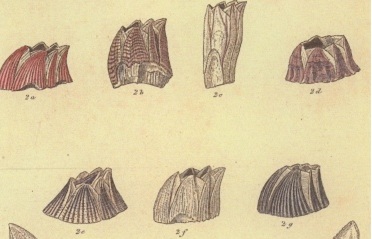
Cirripedia, the barnacles, occupied Mr. Charles Darwin for many years, even though his extensive studies of the class are not what he’s famous for (except among cirripedists). The average layperson knows Darwin as the man who came up with the theory of evolution–though that is not strictly what he did, and none of his books bear that title. After the publication of On the Origin of Species and The Descent of Man, and the subsequent and ongoing controversies that followed, pretty much everything in the world could be–and has been–examined “under an evolutionary lens.”

The original “lens” involved finch beaks, pigeon-breeding, and early geology studies. It was fueled also by taxonomy, anatomy, and barnacles, by a member of the landed gentry who stayed at  home, more or less, for 45 years after his five-year journey on the Beagle. A scholar, an “armchair naturalist” by today’s standards; a genius.

finch beaksMany people who interpreted what evolution suggested went off the deep end one way or another, which is what happens with ground-breaking ideas. Both critics and supporters re-interpreted and often misinterpreted Darwin and the implications of his work, as well, all of which means he accomplished something truly significant. Why not, therefore, examine fundamental human traits to see whether evolutionary currents can be discerned? Certainly Darwin and a few of his contemporaries speculated that altruism might have an evolutionary basis, a concept that was taken up, debated, and temporarily dismissed in the 1960s-70s; recent neurobiological and genetic studies have brought the possibility of a biological basis for kindness back into discussion (see also Damasio).

There is also the question of art (and aesthetics, though taste seems more likely to be social than biological–but who knows?), which brings me to Denis Dutton’s delightful book The Art Instinct: Beauty, Pleasure, and Human Evolution.

Rather than summarize my responses to his thought-provoking and rather convincing arguments, I’m posting some quotes. These are ideas I find juicy to consider; perhaps other readers will feel similarly.

~

Wondrous aesthetic experiences are possible in the absence of a sense of larger community: the response of an individual to a beautiful landscape, for instance, …or to a recording of the Goldberg Variations heard in solitude. If the arts were intrinsically social in the way that social-cohesion theory claims, people…would prefer standing in a crowd to see a painting in a museum, rather than standing alone.

Because of sexual selection, the arts retain an incorrigible sense of being made by one individual person for another…the motives of art, as even Darwin knew, are ancient and complicated–directed toward a community perhaps, but also created to captivate an audience of one.

~

The artist…probes the content of human emotional life with an eye toward articulating, or making clear, a unique emotion, an individual feeling.

Can you imagine taking [a] pill to save the expense of concert tickets, or even the time spent in listening to a recording of the piece? The answer is very likely to be no, and the reason tells us something about the nature of artistic expression. It is not just the emotion as bare feeling we want from art, it is the individual artistic expression of emotion–how emotions are revealed in the art, through technique, structure, balance, and the blending of sounds….Yes, we want feeling from art, but not as an end for which the art is a means: with art, the means is the end itself.      [italics mine]

~

Extending Darwin’s original suggestion, I believe this intense interest in art as emotional expression derives from wanting to see through art into another human personality: it springs from desire for knowledge of another person….talking about art is an indirect way of talking about the inner lives of other people.

~

All of the above excerpts are from Denis Dutton, The Art Instinct, 2009.

http://taxo4254.wikispaces.com/file/view/darwins_barnacles.jpg/274764236/409x262/darwins_barnacles.jpg

wikispaces.com/file/view/darwins_barnacles.jpg

About art (a poem)

While trying, I fear in vain, to tidy up and organize my poetry files, I came across this poem composed before 1997. Despite its flaws, I decided that rather than revise I should post it here, because it offers a narrative about how a person–shall I specify, this particular person–might come to love the wide, multicultural, historical, spiritual, experimental, transcendent “world” of art.

Melencolia_I_(Durero)
A Life Saved by Art

The library’s card catalog led me
to shelves of art books: oversized, glossy-paged,
crabbed with tiny, inarticulate commentary
about volume, form, structure,
perspective, light and shadow,
innovation and rebelliousness
and the emotive content of the line.

What did it mean? I was eleven.
I made a hagiography based upon
the beauty of still things, life arrested,
mid-gesture, on canvas, wood, stucco,
merging all my saints and artists into
a collage of stories as naive
as Rousseau’s jungle scenes–

but I believed Rousseau, and Breughel
and the intimacies of Rembrandt’s Bathsheba
and the endless processions of amazed Magi
through the narrow streets of precarious Italian towns
and Degas’ women tying up their hair
and the rich invitingness of Gauguin’s flowers
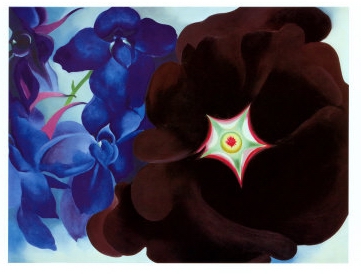
and the stark heart of Georgia O’Keeffe–12-01-05MagiFraAngelico

I believed I would learn to comprehend my life,
put it into perspective through
Giotto’s tiny and exquisite backgrounds,
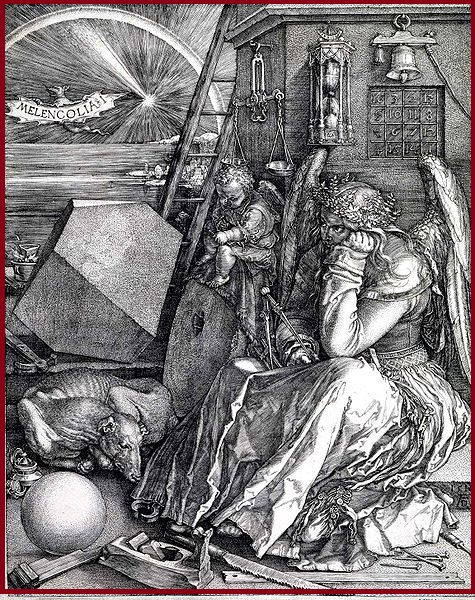
Dürer’s precise grids, believed I would discover
an understanding of the abstract.
I wanted to be transformed through art,
the sanctity and structure of the line,
and, through them, out
of the coming confines of adolescence.

I forget so much of what I learned,
but still I possess Arles, and Athens,
the buff-colored pages of
Da Vinci’s notebooks, ink and ideas:
ink which now sprawls abstract upon the page
while I consider the emotive content
of each line–and brilliant fields of color
daubed in wild and perfect order:
a moment, a childhood, a life
saved by art.black-hollyhock-blue-larkspur-georgia-okeeffe

~ © 1997 Ann E. Michael

~

There are better poems about art (even by me); but I treasure the yearning outlook this piece suggests, and its tendency toward overstatement as well.

Awareness, openness, & … magic mushrooms?

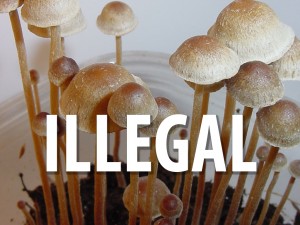
In a recent New Yorker article about potential medical uses for psilocybin (“The Trip Treatment”), science, culture, and food writer Michael Pollan interviewed researchers in neuroscience, medicine, and psychology. The medical potential of psychedelic drugs is not something I can comment on from reading just one article; what intrigued me most about this piece is how these drug studies overlap with studies on cognition, metacognition, consciousness, and spirituality. The medically-controlled “tripping” that volunteers have undergone overwhelmingly resulted in some form of what we term mystical or spiritual (for lack of a scientific term) feeling.

It’s almost impossible to consider these realms of experience without questioning concepts such as “soul” or “self-awareness.” Pollan writes:

Roland Griffiths is willing to consider the challenge that the mystical experience poses to the prevailing scientific paradigm. He conceded that “authenticity is a scientific question not yet answered” and that all that scientists have to go by is what people tell them about their experiences. But he pointed out that the same is true for much more familiar mental phenomena.

“What about the miracle that we are conscious? Just think about that for a second, that we are aware we’re aware!”

A man after my own heart. It is amazing, a kind of miracle. And we get consciousness and metacognition without any drug intervention at all. It just springs into our beings at some point, as we create ourselves from lived events and construct speculative worlds and an understanding (though often flawed) of other minds.

Here is another fascinating result from the psilocybin studies that may make us revise our ideas of interpersonal relationships, personhood, and creating a self. Pollan writes:

A follow-up study by Katherine MacLean, a psychologist in Griffiths’s lab, found that the psilocybin experience also had a positive and lasting effect on the personality of most participants. This is a striking result, since the conventional wisdom in psychology holds that personality is usually fixed by age thirty and thereafter is unlikely to substantially change. But more than a year after their psilocybin sessions volunteers who had had the most complete mystical experiences showed significant increases in their “openness,” one of the five domains that psychologists look at in assessing personality traits. (The others are conscientiousness, extroversion, agreeableness, and neuroticism.) Openness, which encompasses aesthetic appreciation, imagination, and tolerance of others’ viewpoints, is a good predictor of creativity.   [italics mine]

Openness, aesthetic appreciation, imagination, tolerance, creativity…and one researcher in neuropsychopharmacology suggests that this sort of un-boundaried openness signifies a temporary regression to an infantile state, very much as Freud hypothesized. I thought instead of Bachelard and the childhood reverie state.

Intriguing, that pharmacological work of this sort makes neuroscientists resort to citing William James and Sigmund Freud on mystical experience and the subconscious!

[Robin] Carhart-Harris believes that people suffering from other mental disorders characterized by excessively rigid patterns of thinking, such as addiction and obsessive-compulsive disorder, could benefit from psychedelics, which “disrupt stereotyped patterns of thought and behavior.” In his view, all these disorders are, in a sense, ailments of the ego. He also thinks that this disruption could promote more creative thinking. It may be that some brains could benefit from a little less order.    [italics mine]

I wonder if the aesthetic experience itself, when wholly engaged, can sometimes act like a drug on the art-viewer’s or art-maker’s being. When one reads the poem that rearranges one’s world, doesn’t it disrupt stereotyped, familiar, habitual patterns of thought? That’s what happens for me when I encounter great art of any kind. It is close to mystical.

~


Key images

I had intended to post on Denis Dutton’s book The Art Instinct: Beauty, Pleasure, and Human Evolution; and I will (I suppose) at some point, because I enjoyed it immensely. Looking through my files, however, I found the transcripts from the initial interview Karen Jogan and Hernán Pereira conducted with me when they were compiling the book So Far…So Close and realized that my answers to some of their inquiries connect with my last post about poetic voice and Kunitz’s thoughts on key images. (The longer, but edited, version of the interview appears in the book).

~~

  1. What colors or aromas remind you of your childhood?

Cinnamon toast, mown grass, onion grass (wild garlic), lily-of-the-valley, cedar-water and pine trees, the scent of a muddy river in summer, wintergreen, play-dough, school paste, steam-irons, fresh peaches, campfires, burning leaves, talcum powder, Pepto-Bismol, air-dried clothes and linens, mimosa blossoms, roses, strawberries.snowdrops

  1. Describe yourself as a child.

I wonder from whose perspective I should attempt to answer this question. I know from others that I was considered to be shy and polite, talkative when comfortable, imaginative. I certainly felt uncomfortable among groups of people, preferring small groups of friends with whom I played make-believe. I made up stories which I told my sister and brother, and when I was old enough to write I made little children’s books that I illustrated and bound in cardboard.

My sister was my best friend, but I spent a good deal of time all by myself. When alone, I walked my dog, climbed trees, played on the swings, sketched and painted, and read books. I really was a bookworm and spent many happy hours with books and in libraries. Being alone was, and still is, deeply satisfying for me—it helps me regain creative energy.

  1. At what moment in your life did you begin to write?

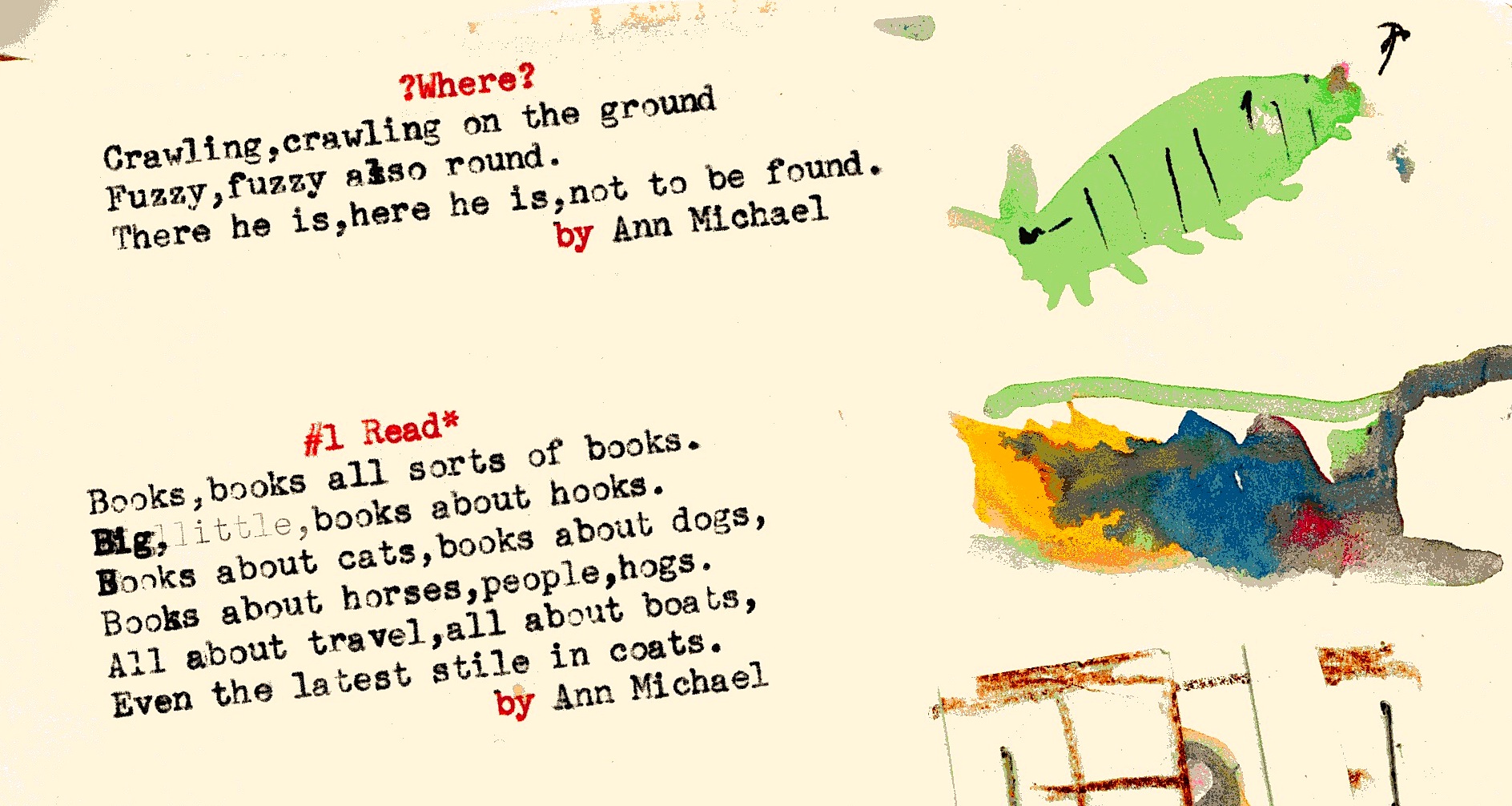
I don’t remember when I began writing. My storytelling began early, and I suppose the writing developed from there. The first story I recall writing down was about a princess; I was in second grade. I felt proud of myself, even though the story was only about three sentences long. Apparently, the poems started when I was about nine. I don’t remember writing poems then, but I recently found some that I had composed and typed up (I was fascinated by the typewriter), and my mother’s notes said I was nine when I wrote them. What I really wanted to be was an artist, but writing seemed natural to me. I started keeping a journal when I was ten…

9yroldpoems010

Rhyming and typing and illustrating and bookmaking– at nine years old.

  1. What influences have been important to you?

Other writers, naturally, but first of all, visual art. From the time I was very small, I’ve loved paintings and sculptures and architecture. Church hymns and Bible verses and nursery rhymes were influential to me, as well as folk music and the lyricists of popular music when I was growing up. I am also influenced by non-fiction work, especially in the sciences, and philosophy. My early poetry influences were Donne, Shakespeare, Blake, and the King James Bible; but then I fell in love with contemporary women writers, then surrealist poets, then Latin American writers, then Asian poetry, then contemporary lyric poems…it goes on and on. It might be easier to say what I have not found particularly influential!

~~

With further reflection, I could go deeper about early images that have become, for me, “key” aspects of my writing voice…a particular landscape, the feeling of an empty nave, bees and birds, milkweed, cloud patterns, my parents singing, my little sister beside me in our shared bed, the sound of a symphony. They may not appear in my poems as such, but these images connect with me in ways I probably don’t understand. What do such keys unlock, I wonder?

~

Voice

I follow the Women’s Poetry Listserve (Wom-Po), and recently there was a discussion there concerning what poetic voice is. Can it be defined clearly? Does it differ, and if so how, from style? Is it personal, belonging to the writer herself–an attitude? Is it distinct from the creator of the poem, as the “speaker” of the poem arguably is in the case of poetic voice/persona?
A listserv member offered this quote from Kunitz:
“One of my convictions is that at the center of every poetic imagination is a cluster of key images which go back to the poet’s childhood and which are usually associated with pivotal experiences, not necessarily traumatic. That cluster of key images is the purest concentration of the self, the individuating node. You can tell the poets who are working at their center by the distinctiveness of their voice, their constellation of key images, their instantly recognizable beat.” … from Stanley Kunitz‘s 1975 lecture at the Library of Congress, “From Feathers to Iron.”

A constellation of key images may seem to be imagery, not voice at all; but Kunitz’s decision to connect distinctive voice with a recognizable beat and images, and to further suggest that these mesh to in the compositions of a poet who is writing with clarity and authenticity (my interpretation of what he means by “working at their center”), indicates that voice is a critical component of poetry. I have read the above-mentioned lecture, but Kunitz does not there elaborate on whether he means the writer’s personality, style, or attitude or whether he means, instead, persona. It seems to me, though, that he wasn’t talking about persona (the “speaker” or mask the writer uses in an individual piece). I interpret that the key constellation of images, the “individuating node,” would have to be personal experience of the actual writer–Roland Barthes be damned.

CH Chucrch

Gaston Bachelard’s phenomenological approach to poetics and, to some extent, psychology, appears to jive with Kunitz’s pivotal childhood images. It is easier to recognize one’s own key images in one’s work, of course…and I cannot help but recognize that Kunitz has nailed it for me, at least, if not for all poets (writers, artists, musicians, etc.). My own cluster of images, drawn from childhood, include the church. Also the beat of hymns and responsive readings and the King James and RSV Bibles. Also the bleat and wail of diesel engine horns, the progression of fields and trees and flowers, the hum of highways, the sluggish flow of certain rivers. To mention but a few that stay with me.

I am not an adherent to any particular style or form of literary critique, and I am not a whole-hearted phenomenologist, either–but I have to admit that these concepts (the individual’s key images, the individual voice and the persona voice, the rhythm or beat of a writer/speaker) intrigue me. I find them well worth exploring, mulling over.

See Dave Bonta’s Via Negativa post here for a mini-photo-essay that illustrates what I mean.

Gestation

Without committing to any resolution to do so, I spent some time recently with my own poetry: the unfinished drafts, the partially-revised pieces, the fragments and the poems I had put aside for the time being. “For the time being” was, in some cases, over a decade.

This putting-aside led me to wonder what process–other than forgetfulness–leads me to abandon a poem for such a long time. I am aware that artists in other media experience this sort of pause in the working of making; sometimes, the years on a project are full of revision and detailing (Rodin’s doors “The Gates of Hell,” for example) but often, the composition just lies about for a perhaps-indefinite number of years. I believe the poet Donald Hall refers to this as a poem’s necessary gestation.

In a 2008 interview (by Wendy Andrews), Galway Kinnell said, “When I can take a poem of mine that I think is finished and put it aside for a month and pick it up and read it and find it interesting, and if I encounter no place where I think it should be changed, and if at the end it surprises me, even though I wrote it, I think it might be done.”

That’s what I have been endeavoring to accomplish for the past two weeks or so: a reading of my own drafts to discover whether any of the poems are capable of surprising me, or if any of them might be revised into achieving that state. It is a lengthy project and a quiet one that requires considerable internal analysis and an objective stance. And maybe that is one benefit to letting the work sit around for so long…by the time I peruse the draft again, I have forgotten the initial inspiration, so the poem has to operate on its own merits as a composition rather than through any residual inclination or emotional attachment I may have once had for it.

If my own work manages nevertheless to impress me in some way, I tend to harbor the hope that it may be salvageable. If not, I can keep revising, or put the drafts into my “dead poems” file and consider it incapable of resuscitation.

The parallels to pregnancy and gestation may be inevitable–parents harbor hopes that their children will be good people who are successful in the world, just as poets want their poems to be “good” –but that sort of gestation analogy only goes so far. We cannot revise or rework our human offspring, and an objective analysis of their strengths and weaknesses is unlikely to lead to betterment of either party. But a work of the imagination can be re-envisioned, reconsidered, and made new.

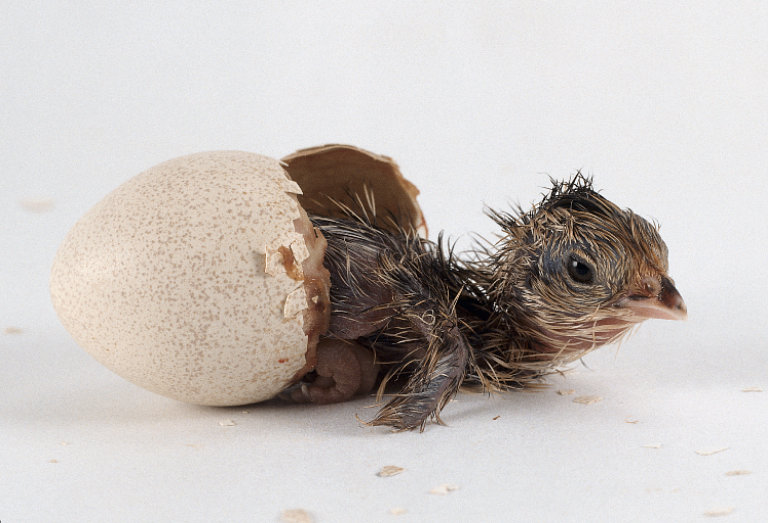
That’s the work of the next many weeks. I am curious indeed as to where the work, after its long gestation, will lead me.

chick-hatching

Synthesis & coincidence

&&001“and per se and”

Ah, synthesis! The conjoining and combining of objects, ideas, theories, values and systems, arts, media, experiments, research, disciplines, metaphors, symbols, rhythms, patterns, DNA, et (“&”) cetera.

Synthesis can be planned, hypothesized, purposeful–and it can be spontaneous, unexpected, coincidental. There are times when I feel as though the overlapping and intertwining of experiences seems to have been somehow “planned by the cosmos” (or some higher power); but coincidences occur more often than we think, especially when our consciousness is primed to make connections.

I have primed my own brain, recently, to synthesize thinking about aesthetics, neuroscience, the arts, philosophy and consciousness. So it should not surprise me–though it does!–that the books I have recently been reading connect many threads of my thought, including other recent readings. For example, Martha Reineke’s Intimate Domain: Desire, Trauma, and Mimetic Theory is an exploration of family “romance” in psychoanalytic theory that draws on Freud and Girard; but because Reineke uses Girard’s early writings as her basis, she cites Merleau-Ponty and phenomenology quite often. Furthermore, mirror neurons and the place and operations of consciousness appear in her claims and explorations in this (difficult) text. Mirrors and mimesis, minds and spirits…Gabrielle Starr’s Feeling Beauty, which I’ve mentioned in recent posts, examines the art-body-mind connections in neurological domains and mentions, more than in passing, the phenomenological aspects of the experience we term “art.” Arthur Danto’s The Transfiguration of the Commonplace: A Philosophy of Art (1983, though I read it last month) also wove itself into my thinking as I read Starr’s more current book. In addition (oh, there’s always an “in addition” with synthesis), I am re-reading Csikszentmihalyi’s classic, Flow: The Psychology of Optimal Experience. The states humans experience when we work hard at challenges we enjoy, such as art-making, are deeply connected to our brains and also rooted in our bodies.

So there is a coming-together, a process not unlike chemical bonding, that all of these texts and ideas produce in my mind. This post is one outcome, I suppose. But there will be others.

~

From Carl Sandburg’s “Tentative (First Model) Definitions of Poetry” (1928): “Poetry is the achievement of the synthesis of hyacinths and biscuits.”

387236_10201085579685937_1062169370_n


The knot of contrariety

~
Sometimes, human beings feel contrary: irritable, grumpy, stubborn. It does not matter that we may be well-versed in rational critical thinking, or aware that a Zen approach can offer balance, or that an understanding of the psyche, or studies of consciousness, or even immersion in some sort of spiritual practice might help us to clear whatever baggage happens at this moment to burden us.
We’re just cranky, and for the moment, we feel justified in our contrariety. Here’s Walt Whitman:
I too knitted the old knot of contrariety,
Blabb’d, blush’d, resented, lied, stole, grudg’d,
Had guile, anger, lust, hot wishes I dared not speak,
Was wayward, vain, greedy, shallow, sly, cowardly, malignant;
The wolf, the snake, the hog, not wanting in me,
The cheating look, the frivolous word, the adulterous wish, not wanting,
Refusals, hates, postponements, meanness, laziness, none of these wanting…

~

What appeals to me in the passage above is not so much Whitman’s confession–any of us might admit to others our foibles and our sins–but the extravagant and beautiful mode of his expression: lists, near-synonyms, expansions on meanings, metaphors following the verbs, nouns, and adjectives, “none of these wanting.”

128-2848_IMG

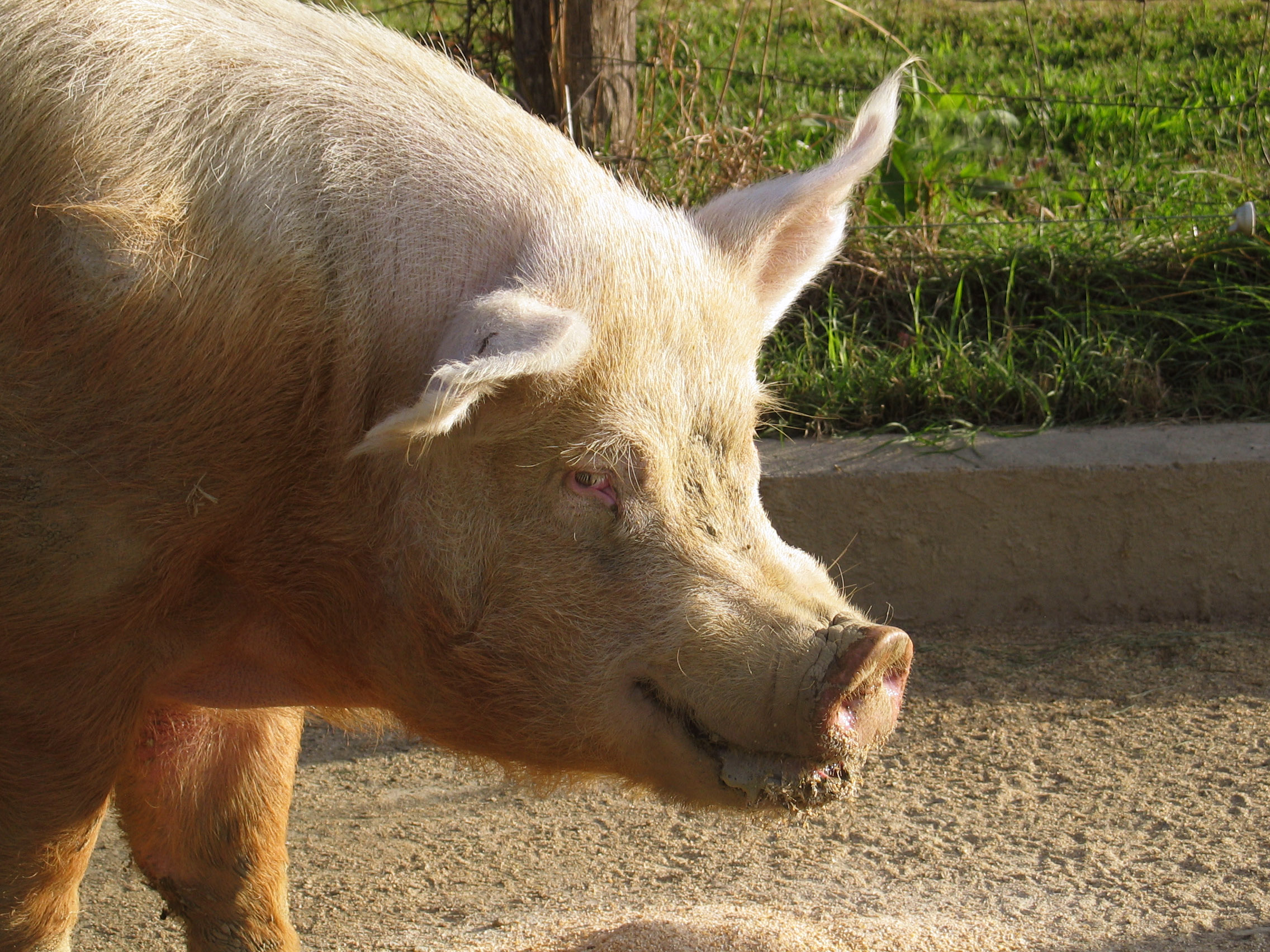
Hog… [His name is not Walt]

What appeals to me, really, is the way these lines make the litany of our petty evils so beautiful to behold. Perhaps that indicates that the aesthetics of a poem move the purpose beyond mere description and into the realm of art. I will be reading more about this in the coming week as I make my way through the book Feeling Beauty: The Neuroscience of Aesthetic Experience by G. Gabrielle Starr.

~

Meanwhile, I am threading my way through the thorny knottiness of everyday life, trying to shed my contrariety as I proceed.

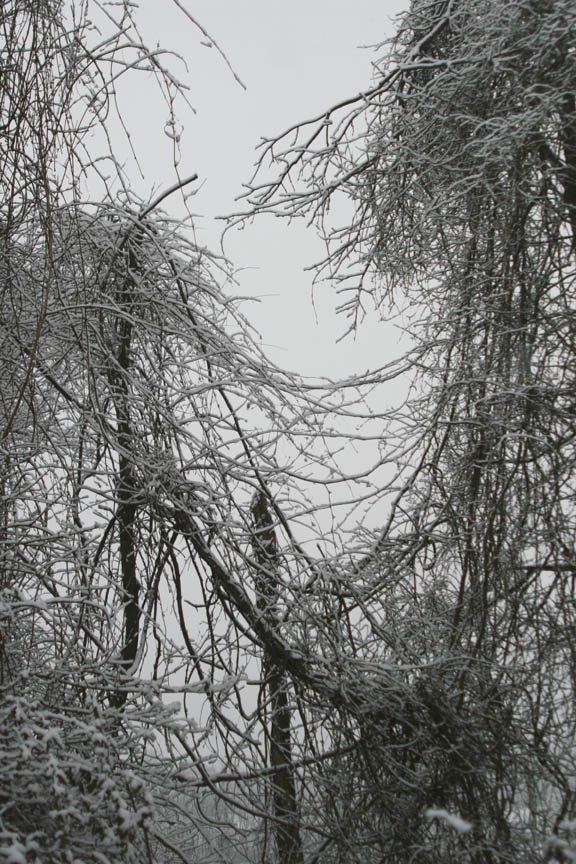
Knotted vines

Knotted vines

Local vs. National

Election season is upon us, and this being a non-presidential voting year, US citizens tend to avoid the polls in droves. I’ve been talking with my students about herd mentality, informational cascades, and the pros and cons of non-conformity recently; local elections make a good example of the theory that people tend to do what they think others are doing (see this post for more on conformity and dissent). Which may include not doing what others are not doing, such as going to the polls.

This train of thought got me thinking about poetry, oddly enough. Years ago, when I was more ambitious for myself, I spent considerable time and effort trying to get my work published in national journals. There was, for me, a sense that the cachet of publication in certain “top tier” magazines would somehow confer legitimacy on my work (vocation or avocation, depending upon how one defines being a poet in the USA). But I am not strongly suited to the organization, persistence, and promotional oomph required to get my work into the limelight; also, I may have lacked the required talents as a poet. At any rate, during that time in my writing life, I was advised to avoid ‘local venues’ of publication because these were not top-tier and might devalue my work.

To which I now say: humbug!

Annshumbug1

Humbug by Steve Barr, cartoonist

~

Local voting is crucial to a democratic society. Local politicians and local legislative changes affect a voter’s life more immediately than national elections do.

By the same token, local arts potentially have more impact than nationally-known artists and art events; yet citizens are often rather clueless, and often woefully unsupportive, of regional arts and artists. (To visit Steve Barr’s website, click on the humbug.)

I am no longer a young, ambitious poet who aspires to national prominence. My ambition revolves more around becoming the best poet I can be given my abilities, education, and circumstances. Furthermore, I now firmly believe that local is a crucial step in global: the two can no longer be separated, as parts of the environment, the social and economic and cthonic ecosystems that are intricately dependent upon connections and relationships.

I am happy to report, therefore, that I am one of three regional, if virtual, “resident poets” for the autumn season of the online e-zine Lehigh Valley Vanguard–a local journal devoted to the “subversive arts.” Several of my poems will appear among its posts over the next three months. Please check occasionally for poetry postings! The first of these is “Post-Exodus,” although an earlier poem, “Regional Conflicts,” appears here.

~

My ambitions for my own poetry center, these days, on what I want the words and the work to accomplish regardless of status or publication. My aesthetics have perhaps changed along with my assumptions…and my evaluations of the value of local and national and global recognition.

Local is where I live. Local’s good. Check out the Vanguard, and take a little time to find out what’s happening wherever it is you reside.

~

Here’s another bug. :)

Difficult writing?

Here’s Will Buckingham on writing and difficulty. Worth a read! I don’t know how to embed the blog into my post, so here’s the link.

http://willbuckingham.com/the-pleasure-and-difficulty-of-writing/

Writing can indeed be a pleasure–most of the time! There are periods of difficulty when I feel frustrated, but those periods make for puzzles and challenges; and I enjoy puzzles and challenges. They push me, force me to stretch a bit, engage with what’s not so simple or superficial, change my perspective, alter my expectations and assumptions, discover something new. I learn from these experiences. I would not want life to be easy all the time, nor would I want creative writing to be easy all the time. Although it’s pleasing to lie in a hammock on a mid day and sip a cold drink and listen to the birds and read a book…pleasure also encompasses inventive challenges. Motivation. Inspiration. Different forms of joy.

Buckingham mentions a biography of the writer and artist Tove Jansson, best known in the USA for her Moomintroll series but clearly a creative artist of the first rank. I’d put this book on my reading list, but it is at present only available in Finnish! Marina Popova at Brainpickings has posted some of Jansson’s vivid illustrations of Alice in Wonderland here.

On the pleasures of difficult reading, please see my past posts here, here, and here.