Equinoctal

Torrents. We had rain in torrents, and it went on for days from February into March and then on…and on. Constant alerts on the cell phones: “Flash flooding.” Doldrums set in. In an effort to accomplish anything at all, I even started to sort through and organize my attic.

Talk about desperation!

The attic project isn’t finished–the weather turned mild and clear two days ago, so I ran to the garden to get to work out there–but it turned out to be a more rewarding task than I expected. I started by tackling the Christmas stuff, then the books (SO many books), children’s toys (the kids are in their 30s and there are no grandchildren), and moved on to paper correspondence. Letters! Postal mail. Epistles. Why I have saved so much of my correspondence from 1975 to the present, I cannot explain. Maybe that’s a thing that people who love words just naturally do, the same reason I have kept so many books. I certainly don’t need all of it; but that was part of the task, sorting what I want to keep and agreeing to recycle the rest. I also found odd ephemera, such as photocopied posters for long-ago poetry readings, broadsides of poems, xerox-zines from the early 1980s, and ancient mixtapes on cassette.

~

There’s some sorrow with this project. So many of my former correspondents have died. I find my grandmother’s looping script, my dad’s distinctive handwriting, my dear friend David Dunn’s nearly-illegible scrawl. Reminders of times past. Maybe that is why we keep ephemera: to remember what we thought, at the time, was important.

Maybe it is, maybe it isn’t, by the time we reach our later decades–if we’re fortunate enough to reach them.

I keep gardens for different reasons. Not to remember the past but to see what the present can bring.

~speaking of the present~

My new book can now be ordered from the publisher, if you find Amazon problematic (and there are good reasons for that). The link is here.

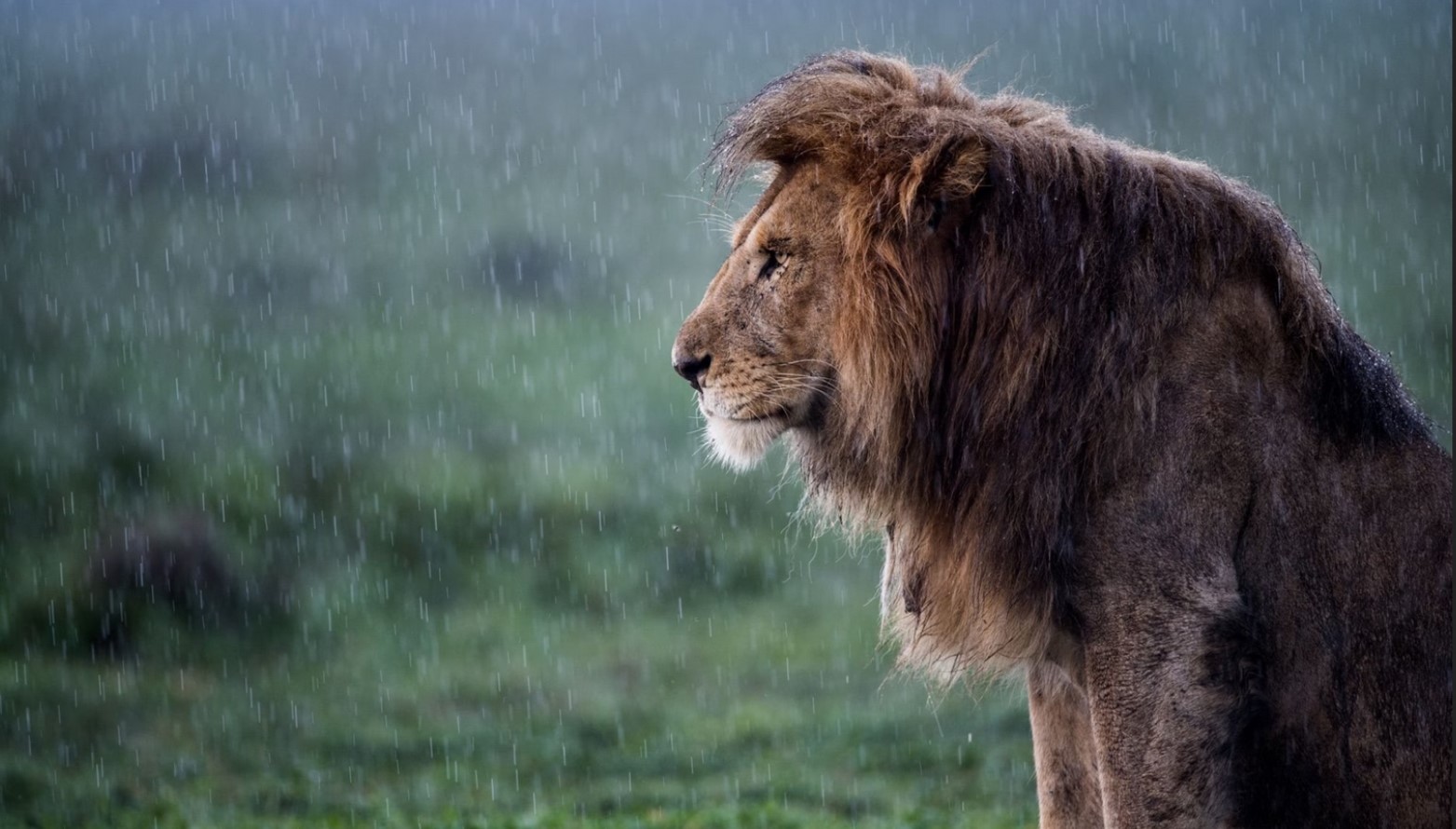
Wet lion weather

Early March, but February’s doldrums appear to be hanging on with clouds and heavy rain in our weather (though it has been fairly mild) and my mood as well. If March comes in like a lion, it is this year a very damp panthera leo. Crocuses, yes; iris reticulata, yes; winter jasmine, yes; hellbore, yes. And the robins are chirping like mad every evening as dusk arrives–and it does arrive later each day.

I should feel merrier. There are some poetry-related things coming up this month, an informal reading at our friends’ house, a bit of recognition perhaps, a visit from a beloved before the month closes, and maybe even the new book. In addition, I have managed to collect and organize the first draft of yet another collection. (Don’t hold your breath–this one will be a long time coming.) My physiology has been annoyed by the rain and humidity, however, which keeps me out of the perennial beds where the winter weeds are having a party in the chilly mud. There’ll be hell to pay for this later if I can’t get out there pretty soon. But it would not be the first time–which is why I know there will be hell to pay!

I did take advantage of the many rainy, achy days by reading an amazing novel by (Nobel Prize winner) Olga Tokarczuk, The Books of Jacob. Dare I call something a masterwork? This marvelous historical novel is over 900 pages long, beautifully rendered in English by Jennifer Croft, and based upon 18th-c Polish history and the idiosyncratic Frankist religious movement. I’ve been thinking about it for days–reflecting on words, names, letters, philosophy, and even metaphysics. Several times I found myself setting the book down in admiration, wondering how on earth Tokarczuk manages to keep the thread of her numerous narratives together so beautifully.

When a book gives me that kind of joy and evokes so much wonder, I feel that being a writer might actually be a worthwhile occupation. And if the rain keeps up, I’ll be at the library looking for her other books soon.

Waiting

Trying new things, slowly. I made a profile on Chill Subs, even though I am about to take an extended break from submitting poems to journals. The task I have recently set for myself is to curate (?) collect (?) another set of my poems to make into a new manuscript. Generally, I start with a selection of about 100 poems and winnow, revise, and substitute from that initial batch. It takes time. Eventually, though, I will get around to exploring the Chill Subs platform to see whether it makes sending out poems any easier. My guess is that it won’t help all that much, since my real problem with submitting work is a lack of motivation and uncertainty about whether a poem suits the editorial tastes of the journal–or whether the poem is even a good poem. I have trouble judging my own poems, though I feel I am fairly adept at critiquing the work other people compose. It’s that log in my own eye, perhaps (Matthew 7:3-5).

The days are lengthening, but February remains a long month, typically a time of year I feel achy and low in mood even as the woodpeckers “laugh” their noisy calls high up in the trees and sun shines brightly on the not-melting-much snow. But the snow feels right; last year we had an “open” winter, and that lack of natural snow-mulch takes a toll on the kinds of plants and animals that reside here. In another week or two, the urge to put a few seeds in seed trays will likely take hold of me. For now, however, the seeds stay nestled in their unopened packets under the desk in my kitchen.

Waiting.

This superbly handsome pileated woodpecker photo was taken by my friend Fred Zahradnik at nearby Hawk Mountain Sanctuary.

lìchūn

As is not uncommon in our region, we have a warm and sunny spate of days that evoke thoughts of spring…often thoughts that are dashed by late-arriving snow and ice storms. The days are an hour longer than they were at the December solstice, and some plants bloom or start to bloom: witch hazel, snowdrops, hellebores, skunk cabbage, winter aconite.

In the Chinese lunar-solar calendar, these weeks mark the start of spring: 立春 lìchūn. (Hence the new year commences, celebrated this year on February 10.)

I love the emergence of new growth in springtime and enjoy looking for buds and leaf-tips, but winter’s crucial to this environment. It plays its role by enforcing dormancy and restful, unperceived rejuvenation. Nonetheless, sometimes I resent the way it teases–knowing that the freezing will return and that mid-March snows are not uncommon here. That has made me think to post my poem “Spring Lies,” which appears in The Red Queen Hypothesis.
~~

Spring Lies

Sun through fog. The leaves of beech trees gleam
low under the tall expressive line of ash and poplar
whose topmost reaches, feathered by the mist,
wait budded but un-leafed. The starlings stop, are
tethered to their twigs for brief collective
breaths and urgent calls that rally all
to action once again—a whir, black-speckled sky,
the poplars barren after the birds’ brawl
moves off. An hour goes by. The meadow’s damp
expanse reveals patches and threads of green.
Here, mud seems harmless: winter has decamped.

Meanwhile, a small town near a river bank
sighs beneath a dank slide, silenced, loses
all but longitude and latitude.

People want to feel the home they choose is
safe but, at best, they stake a compromise—
fire, flood, crime rate, mud. Spring’s temperate. Spring lies.

~

Hominid animals

Reading Frans de Waal’s books always gets me thinking about the use of anthropomorphism/personification in poems. When I was studying and first learning about poems, the general thinking from critics seemed to be to treat anthropomorphism, and even personification, as a “no-no” in contemporary poetry. We were not to make trees or grasses or wolves “humanized”–which does make a kind of sense; instead, we were told to observe and describe what we saw with less of a reflection on whether the non-human thing bore resemblance to human things.

For example, the bee was not to love the flower or the hive, nor the ostrich to love a fellow ostrich. A willow shouldn’t sway like a dancer. It should sway like a willow in the wind. There was science behind all this, maybe Skinner’s science but still; and there is Nagel’s bat: how can a person imagine being a bat the way a bat experiences being a bat? I’m not going into reductive materialism here, don’t worry. Just trying to provide some context outside of poetry to suggest there may be forces behind the trend away from anthropomorphism, some of which are valid.

I have always been tempted to title a book The Personification of Everything.

Now science is fairly certain that emotions preceded “rational intelligence” as life evolved and that animals possess traits and behaviors that aren’t so fundamentally different from ours; we are hominid animals. I would add that, as reflective hominids who employ language for reasons beyond basic information, human beings make connections (metaphor, simile, parallelism…) and can observe the “others” in our environs as not always so unlike ourselves. Or dream of inhabiting the lives of those others, or imagine telling stories from those vastly strange (to us) points of view.

So I’m coming around to appreciating anthropomorphism and personification as dwelling in the realm of the imagination that is not the domain of philosopher or scientist. After all, writers have been taking other perspectives on stories for quite some time, especially during the past century. Ophelia’s perspective (Hamlet), Persephone’s (The Odyssey)…Kazim Ali re-writing Icarus’ story (Sky Ward, 2013). Why not, then, write poems using the perspective of the spotted lanternfly, as Robin Gow has done?

One of my favorite short stories by Ursula Le Guin, “Direction of the Road,” takes the perspective of an oak tree. It is about the relativity of time and motion, but one thing the piece brings home–without any preaching–is that human lives are comparatively brief and, dare I add, not as important in the scheme of things as we may believe. Once we can accept that possibility, maybe we can more gently embrace the world and the things of the world.

Work

Ending the year reading new-to-me poetry collections was my plan, though of course family life and all that distracted me quite a bit, in a pleasant way. Maybe I will reframe that as starting the new year with poetry collections. Which is to preface the following, an excerpt from “The Work,” a poem that contains a lovely reflection on what it means to leave one’s job and find one’s work–eg, retirement–in David Mason’s latest (2022) collection, Pacific Light:

~

Once, work was the thing one rose to by the clock,
the place one drove to, the faces one met getting coffee.
Now there are stones to be moved, but will they be moved?

...We are doing the work no other demands in the light
we are given, forgetting what day of the week it is,
the work all other work was a way of putting off.

That’s a useful way of thinking about post-job life, the work that everything else was a way to put off. So now we are poets or writers, artists, gardeners, people who spend time fishing, walking in the woods, hanging around in libraries, caring for grandchildren or pets. In his poem “One Day,” Mason writes “I was always too slow/and now my deadline/nobody knows,//not even the moon…” That concept of a deadline, so ubiquitous in all industries (and academia), churns workers into all kinds of stress. Needless to say, the term has a violent origin–“time limit,” 1920, American English newspaper jargon, from dead (adj.) + line (n.). Perhaps influenced by earlier use (1864) to mean the “do-not-cross” line in Civil War prisons.” [Thank you Etymology Online.] I am happy not to have so many deadlines now. Whatever work I do now, moving stones or writing poems, no other person demands it of me or sets the timing. “Not even the moon.”

Or maybe I’m mistaken, just a bit, because: gardening. I do have to follow the environment’s requirements and timing when it comes to that work. Nature can be a demanding “boss,” but the work rewards me. As does the work of reading and writing poetry. Pacific Light, by the way, is one of those rewarding books.

Alien

Last week I attended a local book festival that offered a day of independent and small press books (Easton Book Festival) and came away with Lanternfly August by Robin Gow. The poems fascinate me on a number of levels, especially as I love poetry that interconnects with science–biology in particular–and with the diverse experiences that make up a human life.

But first, some context or references. Gow hails from eastern PA, from a rural area north of me, and now lives in Allentown. This region of Pennsylvania was port-of-entry for the spotted lanternfly, a recent scourge for gardeners and landscapers, that made its way from Asia–where it feeds on Ailanthus altissima (tree of heaven). Well, in fact, it did not “make its way” here; it was brought here, inadvertently I assume, through global trade and human intervention. It isn’t the lanternfly’s fault that it is an invasive species. It is human beings’ fault. What if we were to view the lanternfly from other perspectives? What metaphors might it offer us, particularly about being alien, the Other? This is one way to read Gow’s collection.

Gow, who is not yet 30, identifies as an “autistic bisexual genderqueer person” but says they didn’t come out until college. Life in rural Pennsylvania as a person with autism and a sense of being different in terms of mind and gender? There have to be feelings of alienation, or of feeling like an alien. Gow also writes for YA readers, where compassionate understanding of how it feels to be part of, or left out of, peer groups matters; in the lanternfly poems, readers get a sense of empathy even for this damaging leafhopper. That amazes me, and I appreciate it deeply.

When the bugs first appeared, I read as much as I could about how to discourage them from our trees, how to trap them and what their various stages (egg masses, instars) looked like. Mostly I was bent on eradication, with a bit of resignation in the mix–see this post from 2018. After we got them reasonably under control here, they began to move north and west, just as the brown marmorated stinkbugs did shortly after their arrival in 1998. Both insects feed on sap or fruit. They are foreign to our shores but find much to suck upon here and have damaged fruit crops and trees. Although some people find them beautiful–they are much prettier in flight than at rest, brightly translucent red with the sun behind their wings, and their second instar stage resembles ladybugs–they have gained the reputation of being a Bad Bug. Gow writes:

When I called you “host” I meant,
“I love you in a ruinous way.”

That’s from the poem “Third Instar.” In the poem “First Instar,” the speaker wonders how long before “this becomes wreckage? I don’t even know yet what I am.” The creature could be some type of cryptid, developing into something no one can explain or understand. Society offers solutions that don’t necessarily work–ways to eradicate the insect demonstrated on TikTok, laid out on government websites, posted on Pennsylvania Department of Agriculture’s pages. Also the inquiry, in “Home Remedies,” of totally re-imagining one’s body: “Have you tried becoming a different species? Have you really given mammals a try yet?” Wry humor, of a bleak but wildly intelligent sort, pervades many of these pieces. In “Stop the Spread” (pandemic/plague allusion definitely intended):

...I cannot stop myself
from lanterflying: verb meaning to exist ardently
despite not belonging. How did I become so contagious?
Spores, like fireworks, floated from my gills.

I’m not really writing a review here, just sharing my enthusiasm; otherwise I’d have written about the varieties of form/text/layout Gow employs and the structure of the collection, and much more. Anyway, this is the reason I love going to conferences, seminars, readings, small press, and literary events–always something new to me to explore and learn from. Gow’s poems have helped me to develop a kind of compassion for “alien invasives.” The parallels to how society treats its Others–those aliens and distraught foreigners (not colonizers) arrive almost inescapably from the collection. That those who do not fit in nonetheless have value and need appreciation and respect comes through as given. There’s deep heart in these poems.

A bit of awe from me to this poet. (I happen to be reading about awe right now, which may figure in my next post). To find out more about Robin Gow: They have a website with a daily poetry blog at https://robingow.com/dailypoetry/, definitely worth checking out, and their books are listed there.
There & back again, with weeding

I have traveled to the American Southwest and back again, over a fortnight away from the humid valley where my gardens languished toward autumn, pounded by rain, while we were gone. For two weeks, we lived among the terpene-scented (pinene, not cannabis…though we did notice cannabis when in downtown Albuquerque…) environment of the Sandia Mountains, where humidity is “not a thing.” I embraced my beloved family members, not quite often enough to make up for the distance between us, but enough to feel contented for awhile. And we explored some of the northwestern/north-central parts of the state that we haven’t seen before and were awed. I have not yet tired of the geology there. It’s easy to imagine New Mexico as the benthic floor of an ancient sea!

En route home, we encountered flight cancellations and re-routing, which is practically to be expected (our checked bag arrived 20 hours after our arrival in Albuquerque, also not an unsurprising development). I hear many complaints about air travel these days. I may even have added to said complaints. While it may feel almost as inconvenient, unreliable, and uncomfortable as traveling by Conestoga wagon, you must admit it’s much faster–even if it doesn’t seem that way while you’re waiting for the bus to the economy long-term parking lot at 11 pm. If my beloveds had taken Horace Greeley’s advice in the 1850s, I might never have seen them again. So, I am grateful. Even to American Airlines.

~

Upon a (slightly delayed) return, I found that the valley in which we live had experienced considerable rain but mild temperatures; as I expected, the garden weeds were thriving. Some of that is fine with me: annual weeds can go crazy in October and I don’t mind. But the perennial vines, little shrubs, and weedy biennials and perennials? I dig those out in fall, along with the tomato vines, sunflower and corn stalks, and amaranth plants. That has been my job upon my return; and the cooler weather, with soil moist from all the rain, has been a boon. I have to admit that adjusting to the lower elevation and the higher humidity has put some strain on my ol’ body. But we did a good bit of hiking and walking in the Sandias and Bandolier and Jemez, so I was somewhat prepared for the workout.

My beloved doesn’t understand my enthusiasm for “putting the gardens to bed for winter.” It seems like boring, hard work. Yet I don’t clean everything up–I always leave cover for bees and other creatures that need leaf litter and old stems in order to winter over. However, taking down the stalks and cutting back the peonies (etc) feels satisfying to me. I work in the cooler weather and sense the difference in the air. I recognize the annuals are dying and the perennials are going dormant, the trees let go of their coloring leaves; walnuts, oaks, and hickories seem to fling their mast upon the earth with every gust of wind. There’s nothing sad or somber about the changing of seasons. Winter must arrive in order for spring to do its thing. I like to think of daffodils, muscari, and irises huddled quietly in soil and taking much-required rest before the warmth unthaws the earth. I feel the same.

Restorative

I often start a post with a mini-weather report; I guess that’s one way I prepare myself to write, centering myself in the environment I inhabit. Our region received much-needed rain this weekend, but I was out of town–and the weather in Chicago was glorious: cloudless, crisp, mild, a light breeze. Odd, though, how weather conditions can evoke strong memories for me. The amazing clarity of the sky and air reminded me vividly of September 11, 2001, and the two days following it when we had a run of glorious weather and a mood of intense disturbance all around us…and no plane traffic at all. It took a few moments for that recall to settle in, and a few minutes more to let the memory go so I could enjoy the present moment.

~

I was in the Chicago area–Highland Park– for the book launch of The Red Queen Hypothesis. Many thanks to my publisher, Julie Dotson, and the welcoming and supportive group of poets and audience; the reading went well, and we sold some books (always a satisfying thing). I met quite a few interesting people and learned a bit about the city of Highland Park, its relatively long history, its parks, architecture, the storied Ravinia Festival, and how the city’s been coping since the July 4 tragedy last year. Travel always offers perspective. In this case, travel offered community as well: a lively community of people who support the literary arts.

~

I even got to be recorded, with Jennifer Dotson as the interviewer–a first for me. Here’s the link:

My generous poet-host, Julie Isaacson, knew from my writing and my biography that I would enjoy a walk around the Chicago Botanic Gardens–and she was so right! The gardens offered just the respite I needed after airplane travel. We hadn’t the time to stroll all 280+ acres, but the chance to walk amid trees and beside water in the middle of an urban expanse was genuinely restorative.

Now I am pulling weeds and pruning for the approaching autumn, activities that allow me to settle into myself internally and which sometimes result in poem drafts. Please wish me luck on both endeavors!

Script, postscript

The weather has been glorious lately, which has the downside of getting rather droughty. No rain in the forecast, either, so it is time for supplemental watering if I want to keep harvesting from the vegetable garden. There’s not much left there, though; I may just wait things out and save the water. Meanwhile, some of our days have recently been punctuated by the sound of green ash limbs crashing in the nearby woods. When I investigate the trees, there are the telltale scribbles of ash borer on the trunks. The marks look like script.

I learned, while teaching college freshmen the past few years, that many younger adults do not know how to write or even to read script. Many children never get the lessons in handwriting in the second through fourth grades the way I did. Instead, they learn keyboarding–a skill I got to in my junior year of high school but never really have mastered (yes, even now I use a self-developed version that’s sort of an advanced hunt-and-peck method). It’s hard to believe that reading script is a task that will be relegated to specialists in years to come, but I shouldn’t be surprised if that’s what happens. To many of my college age students, handwritten script in English is almost indistinguishable from the marks of ash borers. They don’t see the need for that particular skill. Handwriting is going the way of letter-writing.

Perhaps we live in a post-script world?

I have been thinking about the handwritten word recently because of a recent incident while visiting my mother. She received a small refund check from an insurer, and though she understood what it was and that she no longer uses her checking account–we siblings take care of that through power of attorney–she was confused about what to do with it. “Sign it, Mom,” I told her, offering her a pen. “We’ll deposit it for you.” I turned the check over and pointed to the line for signature on the back.

She wavered, pen in the air. “I don’t…I don’t,” she said (her aphasia has advanced past the point of expressing full sentences). It took me a moment to realize that she could not recall how to sign her name. I placed my hand around hers and helped her start with the capital B.

I didn’t cry, but the experience hasn’t left me alone. I suppose there may be a poem in this incident, but if so, it’s a sorrowful one.