Forward

Lately, less gardening and more writing; we have experienced the region’s not-uncommon August/September drought period. My vegetable garden has given me about all it can at this point, so what remains to do is clean up. That’s a job that will have to wait, because I’m processing new poems instead of pears.

I tell my students that writing is a process, but the processing I’m doing now is more akin to the verb form of process, in the sense of “to treat raw materials in order to change or preserve them” (Merriam Webster). That could be another metaphor for the revision process…

Also applicable is the etymology of the word process {from pro “forward” (from PIE root *per- (1) “forward”) + cedere “to go”}.

So, forward I go. More drafts, more changing the raw materials of poems (what would those be? words? ideas? emotions? observations?). More going forward into the whole process. “Without hope and without despair.” (That’s Dinesen by way of Carver.)


index.jpg


Repetition

Repetitive tasks often lead directly to boredom, then to daydream, and then–if forced to continue said task–to numbness. The sheer effort involved in repetitive operation makes for drudgery; if the labor is also dangerous, hot, physically difficult, and unrelieved, the human mind gets sapped of joy and creativity. For much of human history, our time on earth has consisted largely of this sort of work, constant toiling, just to survive.

My thoughts dwell on that fact when I spend a day or two as a re-enactor and when I harvest beans and other produce that won’t keep and need immediate attention, else the food will go to waste. I think of all the people now and in the past who have to cut firewood and stack it, keep it dry, then keep fires burning in stoves or hearths and watch the food so it doesn’t burn. And do the same, day in day out.

I think of my grandmother who, when she was still in her 50s and 60s, kept a large truck patch from which she fed her extended family. All the canning and processing and freezing she did…the jars of peaches, jellies, tomatoes, beans…meant hours of often-tedious, not to mention exceedingly hot, work.

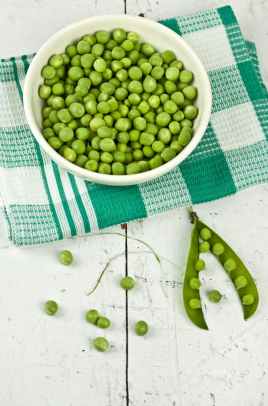
green peas on white ceramic bowl

Photo by R Khalil on Pexels.com

I cannot recall ever assisting her with canning; but from the time I was a very small child, I would sit beside her on a wooden bench or chair and “help” her shell peas or snap the ends from green beans. I suppose I prattled to her, because I recall her distracted “Mmmm Hmmm” responses. After awhile, however, I’d get quiet and daydreamy just opening the green pods and slipping the fresh, round peas out with my finger over and over, listening to the plunk as they dropped into the bowl in my lap. It was soothing.

~

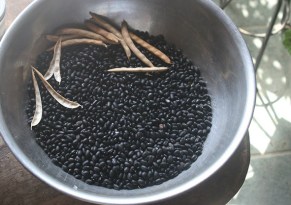
I remembered that long-ago activity today as I shelled black beans from their dry, tan husks: two or three pounds of them! My shelling created a crackly noise that intrigued our kitten, who has otherwise been drowsy from the heat. I’ve been freezing green beans, cooking tomato sauce, and harvesting pears and black beans for days in the humid August heat–but not non-stop (I have a day job, and the students have returned to campus!).

black beans in a bowl

So for me, the potential boredom of the repetitive task gets replaced by a rather Zen attitude. Be here now, shelling the beans, stirring the pear butter. Appreciate bounty and what the earth has given us. Remember childhood. Daydream awhile. Think about poems.

~

In this case, repetition means abundance. New poems as autumn arrives.

Anticipation

Public relations and poetry are quite separate pursuits, in my mind, yet how else will readers learn that I have another chapbook nearing publication? Yes! Barefoot Girls, a series of 24 poems winnowed from a much longer set, will be appearing in print from Prolific Press later this year.

2021 still seems quite a way off, but perhaps it isn’t too early to mention that my full-length poetry collection The Red Queen Hypothesis will see publication then from  Salmon Poetry, an independent publisher in County Clare, Ireland.

Anticipation! I’m eager to see what the books will look like, eager to know whether anyone will read them, and experiencing that little frisson that comes with waiting for potential delight.

I cannot express how grateful I am to the folks behind small independent literary presses for all they do to keep poems circulating, to publish lesser-known writers, and to promote the literary arts generally. They are not making money from the process; they do it for love. Society benefits. Bless them all and donate to them if you can. But the best way to help small independent presses and publishers is to purchase books from them. Browse Prolific Press’ bookstore here, Salmon Poetry’s poetry book catalog here, and Brick Road Poetry’s books here (scroll down far enough & you’ll see my book Water-Rites, still available). Another small-press venture that has been plugging along for years is Michael Czarnecki’s FootHills Publishing. Two of my chapbooks are available from its website.

Dear Readers, purchase a few books from these stalwart independents, even when there’s a lower price used on Amazon. I’ll be thrilled if you buy one of my books but gladder still if you take a chance on an author you don’t know and discover some terrific poems and poets in the process.

Of course, when anticipation becomes realization and my new book becomes available, I will try to don my PR hat and let you know it’s in print. Thank you!!

bfg

Barefoot Girl ca. 1974 or 75

Waves & relationships

I had planned to take a little “vacation” from difficult books this summer and read a bit of fiction, go to the movies, work in the garden. And while Maryanne Wolf’s Proust and the Squid covered the challenging topic of reading and delved into some neurological explanations for the process of how we read and how literacy changes our brains, Wolf writes in layperson’s terms and divides her text into easily understandable chunks. It was a relatively easy read on a complex topic and reminded me that I need to re-read Proust’s famous essay “On Reading Ruskin.”

Then my dad said I should read Reflection in the Waves by Pablo Bandera. Here’s a physicist with a philosophical bent who tries “reconciling the realism of Aquinas with the empirical evidence of quantum mechanics.” I like Bandera’s interdisciplinary approach, a blend of physics–his main area of expertise, a “true” science–and philosophy, anthropology, evolution, even theology. Does Bandera entirely succeed in persuading me that the observer effect of quantum physics is a human-based, perspective conundrum that may not be a problem at all? Not completely, but it is an intriguing theory about which I remain open-minded. The recognition that being human alters the observing mechanism seems sensible to me.

I would never suggest that Reflection in the Waves is an easy read for the average informed person. It contains a few fascinating observations and summaries, however, that relate to human relationships (our need to connect), to communication, literature, and art. He writes:

What distinguishes us humans from other objects around us, including other measurement devices, is not that our reality is not somehow irrelevant for the physical world, but that our relationship to this world is such that it transcends the mere subject-object relationship currently envisioned by the physicist.

Reality=relationship to others and the world. That’s a contemporary way of interpreting Aquinas. I’ve never before thought of myself as a Thomist, and the very idea makes me giggle. But as a writer, especially as a poet, the relationships and connections in the physical world are the stuff of metaphors that engage the conscious mind of abstract thought and help to put the poem across to other readers’ minds (thank you, Maryanne Wolf). Perhaps not so far from philosophy, or physics, or neurology, after all.

Topophilia

In a past post, from 2013, I mentioned some neologisms describing feelings about place.

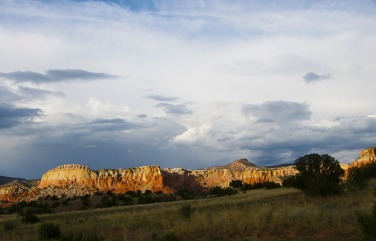
dusk GR

Toponesia suggests nostalgia but adds to it a sense of loss for what has been erased, eroded, or developed to the point it is no longer familiar. When you return to your old neighborhood, for example, and discover that your house no longer exists and there’s a mall there instead, or discover that your old school has become a condominium. Many of us know this feeling: memory conflicting with current reality.

A sweeter emotion–if you can call these emotions (they may indicate self-reflection and consciousness as much as emotion)–is that of topophilia. An article by Hakon Heimer in Environmental Health Perspectives says

The term topophilia was coined by the geographer Yi-Fu Tuan of the University of Wisconsin and is defined as the affective bond with one’s environment—a person’s mental, emotional, and cognitive ties to a place.

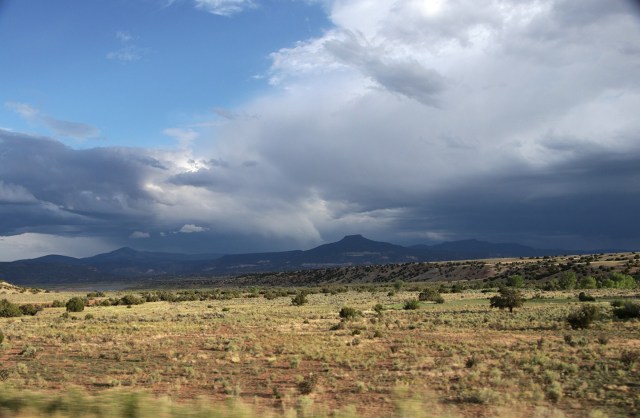
This feeling arose in me recently on a trip to New Mexico. The place in mind and heart is Ghost Ranch, which most people associate with the artist Georgia O’Keeffe–her house and studio are there (and are now a museum). But my association began before I knew of O’Keeffe; I was eleven years old, and the ranch was journey’s end of a long family road trip west.

GR19

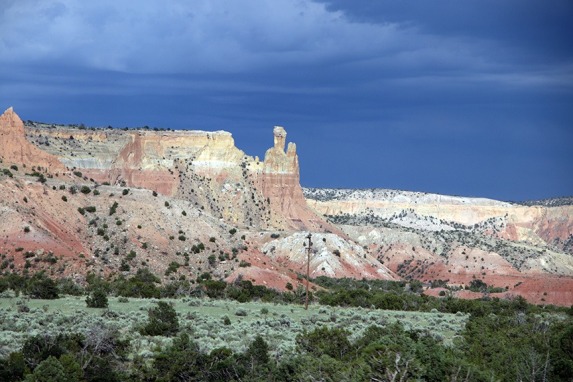
Chimney Rock, Ghost Ranch, Abiquiu, MN


The summer days I spent there somehow lodged inside me with a sense of place–and space–that felt secure and comforting, despite the strangeness of the high desert environment to a child whose summers generally featured fireflies, long grass, cornfields, and leafy suburban streets. Ghost Ranch embraced me with its mesas curving around the flat, open scrubby meadow where the corral block houses sat. Chimney Rock watched over me. Pedernal loomed mysteriously in the deep, blue-purple distance. I still cannot explain why the place felt, and still feels, like a second home to me. If I believed in the existence of past lives, I would say I had lived there before. Topophilia.

pedernal storm


Altered perspectives

One of the arguments Arthur W. Frank makes in his book The Wounded Storyteller–and in his subsequent books about “illness narrative”–is that there’s a compelling ethics for medical diagnosticians and caregivers involved in just listening to the other person’s story. The difficulty emerges when the storyteller cannot put his or her story into words or lacks enough objective distance from the illness to narrate the kind of story that others are expecting.

When people’s circumstances push into the chaos realm, they’re in the midst, overwhelmed; few of them can construct a cogent and concise narrative. In their pain, in their grief, everything seems equal–no beginning, no end, all middle.

The listener expects: a beginning. a middle. an end.

The listener expects: chronology. a goal. a desired outcome.

If the listener’s job means determining a course of healing, the listener requires history, onset, comparisons. Truly good diagnosticians therefore need more than sleuthing skills, experience, and education. They need to listen well in the midst of the storyteller’s chaos; Frank calls this listening with.

That often means taking a deep breath and endeavoring to change perspective.

~

[Which, by the way, is excellent practice for poets.]

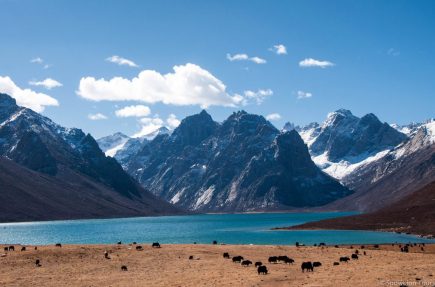
Tibet-Mountains-Everest-Kailas-Tibet-tours-Tibet-travel-Tibet-trekking-Tibet-hiking-3-of-8-1024x676

Himalayas: view from a high lake plateau (Snow Lion tours)

natural_fractals_tibet

Himalayas from satellite: a fractal view

~
We cannot climb into an airplane and get an overview of a human being’s situation. Nor can we get into another person’s thought processes to determine what’s going on. Listening without rushing the person, without offering advice, without finishing the sentences with what we expect to hear–that’s a hard task.

In a previous post, I tried to replicate what it was I could hear when someone I cared for experienced cognitive damage.

It was very, very difficult to listen. For me, heart-breaking because of my previous understanding of who the person was. It was only in her final days that I started to realize I’d needed to change in my relationship with her in order to get some idea of what she wanted to say. And it was too late, really.

~

As another Best Beloved is now experiencing significant cognitive changes, I want to do better. I need to acknowledge the chaos narrative, the interruptions, the lacunae in the person’s story. It’s important that I develop a new perspective on what a conversation entails, too; my expectations surrounding a conversation no longer hold, and both of us will get frustrated if we stick to former habits.

If sometimes a visit feels a bit like the Mad Hatter’s tea party, so be it. There’s a story in that, after all, thanks to Charles Lutwidge Dodgson.
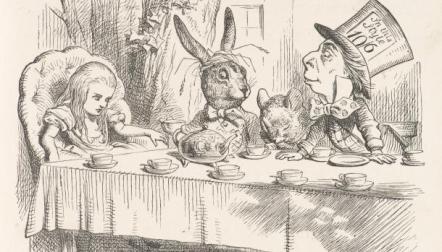
mad hatter tea party tenniel

Tenniel’s sketch for Alice’s Adventures in Wonderland

And, just as an aerial view of the Himalayas alters the perspective of what the mountains are and how they appear, an altered perspective of a loved one keeps the person, as a human being still in the world (no matter how changed), in view. True, perhaps with changed patterns and unexpected gaps that we who love them may grieve the loss of. The conversations may be interrupted and chaotic, or full of long pauses and grasping for words and concepts. It is just a different kind of human communication.

Not what I expect, but what I am given. I’m trying to listen with, before it is too late.

Not a perfectionist

My late mother-in-law, may her memory be for a blessing, spent much of her last decades gardening. I learned a great deal about flower gardens from her, and we discussed cultivars and shade-loving plants and pest control with the sort of enthusiasm that avid gardeners well know. She enjoyed landscaping her place with colors and textures, carefully tracing expected bloom times as well as plant heights and spreads so that the beds produced an ever-changing canvas to delight the eye.

hail and roses

Hail: One of Nature’s curveballs

Except: Nature is always throwing curve balls. My mother-in-law’s gardens were beautiful, but she always eyed them critically. It is true that most gardeners notice what isn’t thriving, where the weeds are, or what has not grown out or bloomed as hoped. That comes with the territory. But the process of gardening is so much more enjoyable, even soothing, when one is not a perfectionist.

Not being a perfectionist myself, I find that time in the garden acts as a meditative oasis. It is part mindless physical labor, part problem-solving, part mindful awareness of the environment. This year, I’m making it even easier by planting fewer vegetables and fruits and more blooms to attract pollinators; I’ve a smaller variety of produce but am experimenting with some new (to me) seeds–a melon from the Caucasus, a few heirloom tomatoes, black beans as well as green ones.

I learn as I go–as I cull and thin, inspect insect damage, note responses to growing conditions. It occurs to me that this activity bears a resemblance to the writing process, particularly when putting together a collection for a chapbook or longer manuscript. In that undertaking, I’m also not a perfectionist; and I should not be quite so quick to gainsay the need for the perfectionist attitude when creating one’s art (as long as it does not lead to fruitless caviling).

But I’m just not constitutionally ordered towards that sort of purist idealism. The best I can do with my poems is similar to the best I can do with my gardens: devote mindful attentiveness to the “product” and try not to worry about eventual outcomes.

“Write a little each day, without hope, without despair.”  —Isak Dinesen [Karen Blixen]

See what grows.

IMG_1547

By July–who knows?


Trees

The catalpas are blooming, really putting on a show this year–huge crowns full of white blossoms. I suppose the climate this year contributed to this show somehow, but my research says catalpa speciosa is drought resistant and requires little water compared to other tree species.

casp8062

catalpa in bloom

Eastern Pennsylvania has not had drought lately, and two wet springs in a row have meant burgeoning iris pseudacoris and particularly floriferous honeysuckle vines in my yard. The river birch seems happy with its feet all wet; the firs–though in a slightly less waterlogged area of the yard–are, by contrast, miserable.

~

I’ve been thinking about trees because I’m reading Peter Wohlleben’s 2016 book The Hidden Life of Trees. The text reads like a friendly forester inviting readers to learn what he loves about trees and their encounters with us, with the environment (soil, air, sun, water, pollutants, pests, fungi), and with one another. I have to say I remain somewhat skeptical about the scientific veracity of his source material, but I do enjoy his warm enthusiasm for his subjects and his reminders that we humans don’t know even the smallest fraction of what goes on in the planet’s interconnected and unplumbed depths.

Although some critics object to what they see as too much anthropomorphism in Wohllebehn’s book, his use of the analogy of the human and the tree “bodies” makes his information about how trees and forests work easy to grasp.

For science nerds, there are other texts. The Hidden Life of Trees is meant to make the less scientifically-inclined reader more aware of his or her environment, to convince the average human being to consider plant life more consciously.

~

I take many photos of trees; and they appear in my poems pretty regularly, not as main characters but in supporting roles–not symbolic, but actual. Wohllebehn’s book may influence my work somehow…possible inspiration? But then, the trees themselves, especially the oldest ones, are inspiration enough.

sycamore

This 200-year-old sycamore resides at Bartram’s Garden in Philadelphia


Collection

As I’ve previously mentioned–I have been putting together another manuscript of my poems–a collection. I had a few ideas on how to make the poems work as groups, but it turns out they are not happy together. I don’t think a poetry collection needs an “arc,” but I like to have the poems converse with one another in some way. Resonate with or inform one another. That’s what I am enjoying in Louis Simpson’s 1980 collection Caviare at the Funeral. I realized my aim in collecting my work was off when reading his book just recently…and now, I am reconsidering my manuscript approach. Again.

This may be one reason why, despite being a fairly prolific and reasonably well-published poet (in journals, etc.), I am so pokey at getting books into the world.

But I am considering what it means to be a collector, which is not the same as a curator. There is a difference between collecting one’s work and curating it into an experience for a reader (including oneself). Curating has never been my strength: I was the kind of child who collected things randomly, attempted to organize a doll or rock collection, but mostly just had little piles of stuff that interested me.

That’s poetry, too…little piles of stuff that interest me.


Cartography

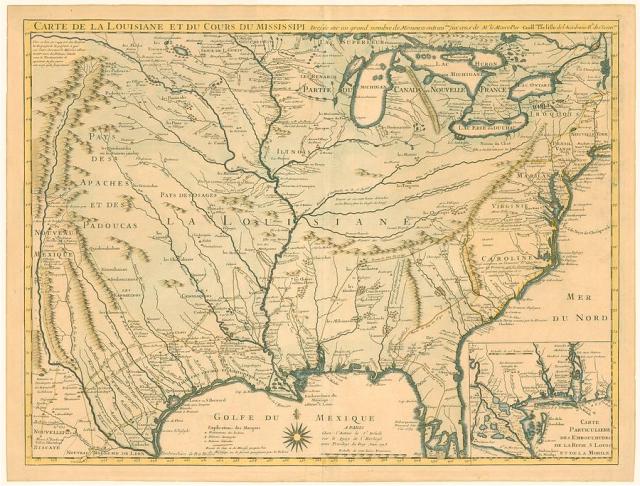
Reading Mark Monmonier’s 1995 book Drawing the Lines: Tales of Maps and Cartocontroversy got me thinking about names and boundaries.

Human beings name things so we can communicate with one another, and then we tell stories to remember the names, encoding them in the language of later generations. New occupants–and colonizers or conquerors–claim and rename to communicate to their followers.

This mountain is Mount McKinley (or is it Denali?), this one is Sagarmatha (or is it Everest?). Keep it in view to your left side and you will be progressing northward.

Big objects accrue many names. When you come to the river called Misi-Ziibi (or Yununu’a, or Báhat Sássin, or…), you must ferry across at the place just south of X. Furthermore, the big river moves, as Mark Twain* knew (see Life on the Mississippi); and as it moves it affects human-made boundary lines that we use to determine tax-base and property ownership and state borders.

Not to mention nationhood.

Monmonier rightly observes that most people assume that maps are factual representations of the physical and legal/abstract/imagined aspects of the “real” –and that assumption is incorrect. Maps can be manipulated. They can be propaganda. They can be drawn to reflect anything the people hiring the cartographer want to emphasize, or erase.

My husband has a German map from 1941. There is no Poland on it, no Austria, no Lithuania, no Ukraine…

~

When we built our house, I wanted to come up with a good name for it. Then I realized that the housing developments in our region all seemed to be named after things that weren’t there any more: Field Crest, Orchard Acres, Stony Meadows, Fox Stream…and the urge to name my house began to quiet down. Besides, all along I have recognized that the area around boundaries is more interesting to me than what is in the middle. Edges–the fringes, the spaces along and between–

And yet I’m trying to create boundaries around my garden to keep out the field voles, stands of cleome to discourage the deer, as another rainy spring keeps my shoes and gloves muddy and the weeds vigorous and tall. Paradoxes.

Reminds me that my favorite Whitman** quote when I was a teenager was: “Do I contradict myself? / Very well then I contradict myself.” At 16, however, I never thought to include his marvelous parenthetical line “(I am large, I contain multitudes.)”

(I am large, I am boundaryless).

~~


*Another example of name-changing that humans are so fond of.

** The 31st of this month is his bicentennial! I’m participating in a reading–see my Readings & Events page.