Toponesia and poem

Here is a poem by Virginia Hamilton Adair that demonstrates, perhaps, the idea of “toponesia”–loss of connection with place. The speaker recalls the beloved beach in its decay and in its beauty; she also recognizes that the tide erases all–talk about amnesia!

Buckroe, After the Season, 1942

Past the fourth cloverleaf, by dwindling roads
At last we came into the unleashed wind;
The Chesapeake rose to meet us at a dead end
Beyond the carnival wheels and gingerbread.
Forsaken by summer, the wharf. The oil-green waves
Flung yellow foam and sucked at disheveled sand.
Small fish stank in the sun, and nervous droves
Of cloud hastened their shadows over bay and land.
Beyond the NO DUMPING sign in its surf of cans
And the rotting boat with nettles to the rails,
The horse dung garlanded with jeweling flies
And papers blown like a fleet of shipless sails,
We pushed into an overworld of wind and light
Where sky unfettered ran wild from earth to noon,
And the tethered heart broke loose and rose like a kite
From sands that borrowed diamonds from the sun.
We were empty and pure as shells that air-drenched hour,
Heedless as waves that swell at the shore and fall,
Pliant as sea-grass, the rapt inheritors
Of a land without memory, where tide erases all.

from Ants on the Melon. Copyright © 1996 by Virginia Hamilton Adair

Homescape poems: Solastalgia

Note–The poems below are used only as illustrations and used by virtue of the Creative Commons theory; the copyrights belong to the authors or their executors.

~

I’m thinking about the nostalgic overtones of the “changed” homescape here, or the notion of solastalgia as coined by Glenn Albrecht (see earlier post). At first I planned to use a poem with overt environmental themes (as of the home that has been denuded, altered, destroyed–many good poems exist on that theme). Then I thought to look more obliquely at the idea of solastalgia as an emotional state, for home is deeply freighted with psyche.

One form of “solastalgia” is represented here, I think, in Philip Larkin’s “Home Is So Sad”:

Home Is So Sad

Home is so sad. It stays as it was left,
Shaped to the comfort of the last to go
As if to win them back. Instead, bereft
Of anyone to please, it withers so,
Having no heart to put aside the theft

And turns again to what it started as,
A joyous shot at how things ought to be,
Long fallen wide. You can see how it was:
Look at the pictures and the cutlery.
The music in the piano stool. That vase.

~

Another aspect of solastalgia, in this section of Gary Snyder’s “Four Poems for Robin,” relates to the homeplace in the form of a relationship, one bound up with the excitement of youth, college, the orchard with its tall dry grasses and love’s “grave, awed intensity.” Yase village is located near Kyoto; the speaker of the poem identifies where (and when: December) he resides while reflecting on an autumn day in his past.

December at Yase

You said, that October,
In the tall dry grass by the orchard
When you chose to be free,
“Again someday, maybe ten years.”

After college I saw you
One time. You were strange.
And I was obsessed with a plan.

Now ten years and more have
Gone by: I’ve always known

where you were–

I might have gone to you
Hoping to win your love back.
You still are single.

I didn’t.
I thought I must make it alone. I
Have done that.

Only in dream, like this dawn,
Does the grave, awed intensity
Of our young love
Return to my mind, to my flesh.

We had what the others
All crave and seek for;
We left it behind at nineteen.

I feel ancient, as though I had
Lived many lives.
And may never now know
If I am a fool
Or have done what my

karma demands.
~
I’d be interested in finding out which poems you consider solastalgic. Meanwhile, I am going to browse my collection for poems that are endomophilic…

AWP follow-up

photo Ann E. Michael

winterhazel

Snow fell on Boston. Not a big snow, however, and rather typical for a late-winter storm: damp, swirling but not biting, swift-melting once the sun appeared two days later. Early Friday morning, I trudged with a friend over the as-yet unshoveled sidewalks to breakfast on Newbury Street at Steve’s. We met with conference buddies who are all members of the WOM-PO [women’s poetry] listserv. It is lovely to meet face-to-face people who have been virtual colleagues and splendid to discuss poetry over a good breakfast.

~

It is also a relief to realize that I have finally learned how to manage conference-going. It is all a matter of pacing and, I suppose, of taking poet William Stafford’s advice and lowering one’s expectations. The hardest challenge is making the choice between blowing the budget on terrific food (in a big city, wonderful restaurants abound) or on books, because the bookfair at the Associated Writing Programs’ annual conference is enough to inspire swooning among literary bibliophiles.

In three huge exhibit rooms, small presses and literary and university presses displayed chapbooks, literary journals, and books that range from minuscule to tabloid-sized, books that are handmade, letter-pressed, offset, print-on-demand, stapled, ribbon-sewn, die-cut, fancy-boxed, reprinted, spare, florid, illustrated, edgy, deckle-edged, marbled, second-hand, one-of-a-kind, limited-edition, mass produced, commercial, educational…in all genres including mixed-genre, collaborative, collage, anthology, with an emphasis more on the literary than the commercial text. These books can be devilishly hard to locate, even with the existence of Amazon and online sellers; and holding them in your hands is a far more convincing sell than seeing a picture file on your computer screen.

Heaven for poetry-readers, there are also wonderful creative non-fiction books, collections of short stories, novels, books on prosody and poetics, the craft of writing, on creativity and inspiration and toil and revision and on the complex and controversial topic of teaching writing. Oh, and there are people, too. Most of the attendees are writers of one stripe or another who are congenial and curious or else walking about with the glazed expression of the overwhelmed.

Or some combination of the two.

~

I exercised considerable restraint and managed not to load my bedside table with two months or more of reading material (see a related post here). And I got some terrific ideas for teaching writing to college students and found some wonderful poets whose work I want to study. The last night of the conference, I listened to the mesmerizing Anne Carson read an indescribable take-down of the fifth book of Proust’s À la recherche du temps perdu, the section titled The Captive (Albertine). It’s been years since I read Proust, which I did almost out of stubbornness in my junior year of college, but the book came back vividly enhanced by Carson’s peculiar approach to pacing, language, scholarship, whimsy and satire. I like what the Poetry Foundation’s biography says about her after the release of her text The Autobiography of Red:

According to John D’Agata in the Boston Review, the book “first stunned the classics community as a work of Greek scholarship; then it stunned the nonfiction community as an inspired return to the lyrically based essays once produced by Seneca, Montaigne, and Emerson; and then, and only then, deep into the 1990s, reissued as “literature”and redesigned for an entirely new audience, it finally stunned the poets.” D’Agata sees Carson’s earlier work as an essayist everywhere in her poetry, along with her deep absorption in Classical languages. Carson’s work, D’Agata alleges, asks one to consider “how prosaic, rhetorical, or argumentative can a poem be before it becomes something else altogether, before it reverts to prose, to essay?”

~

Altogether, Boston provided nourishment of many kinds: gustatory, intellectual, emotional, poetical…food for thought.

Exhaustion & bloom

Isak Dinesen: “I write a little every day, without hope and without despair.”

~

Some days, the little is…quite little. I am not exactly taking a break from reading and writing, but a great deal of my reading these days is student-written work; and the writing tends to be corrective.

There are also events in one’s life that tend to push back against the time needed to dwell on creative things.

Kurt Vonnegut: “So it goes.”

~

I’m re-reading Descartes. The best part of his philosophical writing, in my opinion, deals with his conscious desire to remove all prejudicial thinking from his mind. I have my doubts as to his success in that regard, but I love the splendidness of trying to attain the mental tabula rasa. Open-mindedness, a virtue more human beings should strive to embrace.

~

And there is also exhaustion, pure and simple. Some days, I need my rest.

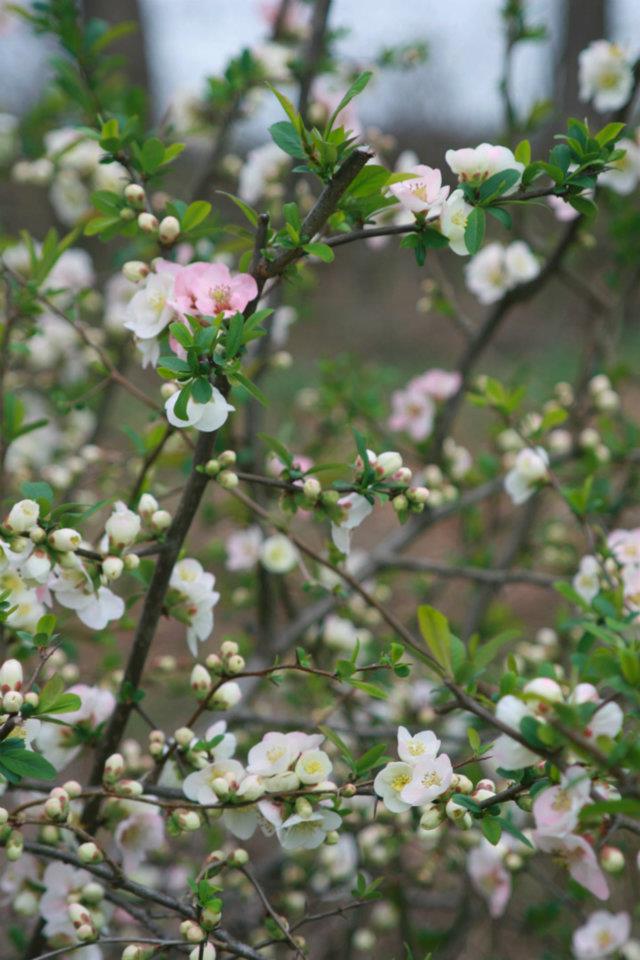
February: awaiting the snowdrops’ blooms. (They’re nearing…the white tips are visible, enclosed in the deep green spathes.) Meanwhile, fragrant yellow winterhazel.

corylopsis

winter hazel

Memoir & the lyrical narrative

I have decided to devote two class periods to exploring the lyrical narrative with my students. The reason evolved from, not exactly a revelation, but a dawning awareness that this particular mode of poetry connects more easily with students than other modes.

Popular music, of course, sets the contextual stage here. American country music fills the nation’s highways and airwaves with lyrical narratives and modern-day ballads. The story-song appears in a wide range of musical genres from rock to rap, born from simple blues narratives and Appalachian ballads and from John Henry and Casey Jones to glam-rock “epic rock ballads,” new wave, Motown, British invasion (think “A Day in the Life”) and quirky indie lyrics–not to mention huge hits like “Lying Eyes” and “The Devil Went Down to Georgia” or oft-played 70s narrative songs like “Cat’s in the Cradle” or Bruce Springsteen’s “Thunder Road.” These tunes are all before my students’ time, but they have their own lyrical narrative popular songs; they “get it.”

Bruce Springsteen: lyricsThunder Road

Bruce Springsteen: lyrics
Thunder Road

Narrative lyrical poems hook readers who might not otherwise spend much time closely reading a poem because of those critically important pronouns “I” and “you” and because there’s a human impulse to stick with a story. We want to know how it ends; and we want to figure it out in our own subjective ways, to put the speaker/writer’s experience into our own (or vice versa) and interpret the narrative on our own terms. We also like to be a little surprised.

Why?

I’ve touched on the topic of the cognitive need for narrative in a previous post, and on Boyd’s story-telling impulse research (here), and now–in light of reading the lyrical narrative poem–I want to offer an excerpt from Oliver Sacks. In an excerpt from Speak, Memory, Sacks writes:

“There is no way by which the events of the world can be directly transmitted or recorded in our brains; they are experienced and constructed in a highly subjective way, which is different in every individual to begin with, and differently reinterpreted or reexperienced whenever they are recollected…Frequently, our only truth is narrative truth, the stories we tell each other, and ourselves… Such subjectivity is built into the very nature of memory, and follows from its basis and mechanisms in the human brain. The wonder is that aberrations of a gross sort are relatively rare, and that, for the most part, our memories are relatively solid and reliable. We, as human beings, are landed with memory systems that have fallibilities, frailties, and imperfections—but also great flexibility and creativity.”

How can we honestly interpret a poem without acknowledging immediately that our brains are highly subjective processing organs that inherently interpret and experience input differently? Our personal narratives, our memories and recollections, limit, expand upon, and influence our interpretations. That is why I insist that my students accept all “expert interpretations” of famous works with a grain of salt. Every human brain re-creates based upon subjective, unique processing; the fact need not keep us from admitting of rational thinking, but it must affect human interpretations of phenomena. Especially subjective phenomena such as art.

This is also the reason I warn my students not to assume that the speaker of the poem is the poet himself or herself. Poets invent, and they can invent personas. Furthermore, in their efforts to write truths–emotional truths, lasting truths–they may alter physical, actual, memory-based “truth.” In other words, maybe the story happened just that way. Or didn’t. Though “for the most part our memories are relatively stable and solid,” the paradox of art is that altering the facts can lead to deeper truths. Sometimes the facts seem altered from one perspective but not from another. Other times…well, I confess, I myself have changed some facts in poems in order to make the poem better. In such cases, craft supersedes the need for stony factuality. I guarantee I am not the only writer who employs this strategy.

Whose life is it anyway? And whose art? Sacks reminds us of the loosey-goosey aspects of recollection: “The neuroscientist Gerald M. Edelman often speaks of perceiving as ‘creating,’ and remembering as ‘recreating’ or ‘recategorizing.’” Thus, the lyrical narrative is a form of memoir, created through individual perception and recreated through the process of memory itself. Which, all of us being human and therefore fallible or otherwise liable to err, and subconsciously quite able to lie to ourselves, means that the lyrical narrative could end up as mythical as the stories of Mount Olympus.

And just as compelling to generations of human listeners or readers.

A voyeur’s fascination that the reader may be witness to the human-talking-to-human in the framework of a storyline is a significant part of what engages audiences. This poem might be memoir! It may be true. It may be genuine experience, something to which I can relate. There’s emotional frisson, or thrilling curiosity, or the dread of knowing it will all end badly. But I must know; and I want to believe it might be true. Tell me sweet lies, oh troubadour!

~

*Note: the image above is not Bruce Springsteen’s handwriting. He prints. An example of his actual lyric drafts is here.

Associating with allusions

Human beings use the power of association to create art; indeed, without association, it would be difficult to create or even to learn anything at all. Paolo Friere observed that all true learning is based on previous experiences and associations; Pavlov, in a different field, established the same thing while experimenting with instinctual responses. In literature, in the poem especially, the art of the work depends upon associations. The writer makes cultural, historical, linguistic and personal references and allusions, establishing imagery based upon place, time, art, experience, event. How would metaphor, or simile, operate without prior knowledge and associative power? Allusion’s a crucial tool for poets.

In his textbook/anthology To Read a Poem, Donald Hall notes that allusions can, however, be problematic in poems and may “act as a barrier to understanding.” Indeed, a common criticism in poetry workshops is that an image, word, or allusion is obscure. Such critiques often center around an indirect reference that readers “don’t get.” A poem no one can understand or appreciate is certainly a failed poem, but what if the failure is the fault of the reader’s lack of experience or education? Is the poet to blame for being elitist, or is the reader to blame for his or her innocence? What if the allusion is based on something integral to the author’s perception of life and is meant to further the understanding of the piece, not to build barriers? How is a writer to judge whether or not an allusion is working in the poem?

Let’s back up a bit and start with a definition: an allusion is simply an indirect, but meaningful, reference. It is not the same as writing a poem based on a quote or news article; not the same as direct referencing in a line, stanza or epigraph. It is not a symbol—it does not stand in for anything, merely points indirectly at an experience. Because of its indirectness, allusion operates on a more complex level than does other imagery; and because of that complexity, allusions deepen meaning. A good allusion works on several levels, dependently and independently.

But an allusion is also meant to be understood. Robert K. Miller, in his textbook The Informed Argument, defines allusion as “an unexplained reference that members of an audience are expected to understand because of their education or the culture in which they live.” That expectation—and the assumptions that go with it regarding culture and education—has the potential to make an allusion into a sandpit of obscurity. Yet great poems avoid getting mired. Great poems work even when history has intervened and allusions have been lost: one can read The Inferno with notes and explanations about politics in the city-states of medieval Italy and Biblical references; or one can read it naively uninitiated and still find it to be a fabulous, weird narrative, a guided anti-quest. The uninformed reader has lost some aspects of the poem (perhaps its irony, its parodies of important men, etc.). The uninformed reader has not lost everything in the text, however. He or she does not return impoverished from a reading of Dante by any means. The art is still in the poem, the narrative, the craft, the intention. In a good poem, the poet’s point of view and range of experience can transform the reader’s experience.

il_fullxfull.369385736_ddho

What if the contemporary writer’s experience includes a love of Ovid, a familiarity with Hindu cosmology, or twenty years as a coroner? Educated readers of a century ago would have caught allusions to Greek and Roman classics, but that’s less true today (a fact that has not stopped Billy Collins or Anthony Hecht from employing classical allusions or references, however). I’ve recently had students who were not able to recognize allusions that referenced Shakespeare, Wordsworth or the Bible. While this is dismaying to me as a teacher, it has not interfered with these students’ ability to enjoy—and understand—poems by such writers as Collins, Glück, Pastan and others: poems containing allusions to literature, history, art, and experiences beyond these readers’ ken. A good poem alluding to a coroner’s working knowledge of the body and its various means of demise (without directly referencing or explaining this knowledge) would certainly pique my curiosity, and that of my students. Maybe it is difficult to get the news from poems, but through poetry we can expand in other ways.

Besides, people read to learn, and each unfamiliar reference or allusion offers the chance to further that learning. Why bother to tell people what they already know? In my own experience, poems have led to the dictionary, the encyclopedia, to libraries, art museums, philosophers, scientific theories, and to other poems. Granted, I am the sort of reader willing to do that extra work; and this points out that deciding whether or not to use an allusion entails a couple of decisions. Who makes up the audience for a poet or poem? That’s the issue Miller addresses in his definition of allusion—who’s reading, and what experiences and education these people have access to. The recent interpretations of Wordsworth’s language of the “common man” have on the one hand encouraged accessibility in contemporary poetry but have also led to some ridiculous directives in poetry seminars. (Example: A student of mine was told by a conference instructor never to use the word “vermillion” in a poem because “people won’t know what it means.” While there are poems in which “red” is a better choice than “vermillion,” there are certain styles and subjects in poetry that benefit by the use of the “more obscure” word). The second question a writer must ask is: does the poem work even if the reader misses the allusion?

The first question is intellectual and is less important than the second one—but it can help the writer decide whether to keep the allusive image/phrase or to direct-reference, clarify, footnote, or delete it. In a culture as overwhelmed with media as our own, even contemporary allusions can be missed (what if your readers don’t watch commercial television? or keep up with CNN? or know what blogging is?), let alone well-considered indirect references to, say, American life in the 1950s, composers other than Beethoven and Mozart, or most writers once considered essential to the “classic canon.” So it does help to know who your audience is. This is as true for allusion as it is for vocabulary choice in the poem.

The second question is absolutely necessary for the poet to ask, for allusion often arises spontaneously if it is deeply grounded in a writer’s experience. Because the poet’s experience drives the poem, a writer who is dissuaded from, or afraid to harness and use her experience, risks losing her investment in the work. While obscurity is also a risk, too much concern over being democratically accessible may result in what one of my students called “the dumbing-down of the poem” (a phrase which is itself a contemporary, political allusion). The condensed complexity of poetry is possible thanks in large part to the associative powers of allusion. Strange and surprising associations and metaphors and multiple, list-built associations evoke fresh responses from the reader through transformative acts within the poem. If no one “gets” the allusion, but readers still “get” the poem—if they do not stumble over the language or the images, do not lose the narrative or miss the overall meaning of the piece—the poem has surely succeeded: some kind of transforming language, some synthesized meaning that leaps out of and past the accepted denotations of words, has occurred.

If a reader comes along who does catch the allusion, that reader will have an enriched perception of the poem, a deeper insight into the writer’s inspiration and purpose. That’s how a reader can tell the chosen allusion works. And that’s how the poet can tell, too.

Mortise & tenon

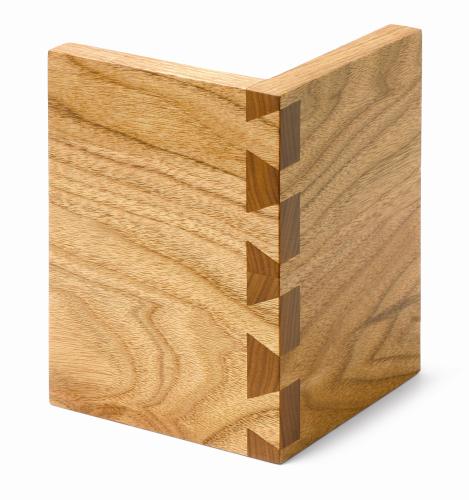
In a post late last year, I examined a Gerard Manley Hopkins poem for the way the lines and images might be considered as hinges. Another metaphor for how poems work–one I have been churning in my mind for a couple of years now–is joinery of another kind: mortise and tenon. What joinery does in woodworking is allow the cabinetmaker to connect separate pieces of wood together in such a way as to allow a little movement as the wood responds to temperature and moisture changes. Good wood joinery requires experience and thoughtful attention, as there are often additional challenges such as connecting end grain to long grain. Amateurs resort to screws, nails, and glue to cobble projects together because joinery takes time to learn and requires technique and practice that the average DIY “carpenter” does not possess.

True craftspeople learn, practice, and employ conventional joinery techniques and often develop their own signature styles. The craft of woodworking parallels the craft of poetry: there are tools and techniques, strategies and conventions, patterns to follow, and inventions and innovations to create. Both crafts join together materials that seem alike (wood to wood, words to words), and yet it can be damned hard to get those connections to hang together solidly and make a coherent and stable whole.

~

Odate's

Odate’s “Pride of New England” [1982] photo: Laure Olender

~

My friend Toshio Odate was trained as a shoji maker and has worked as an educator, artist (sculpture), and craftsman-in-wood for most of his 82 years. Possibly his best-known book is the practical but also spiritual Japanese Woodworking Tools: Their Tradition, Spirit and Use. This text will teach you how to choose, care for, sharpen and use traditional Japanese hand tools, meanwhile illuminating the history and spirit of the woodworking craft in Japan. Toshio reveres the work of humans, the human touch, the effort of making that goes into a handmade object; and his sculptural pieces reflect his passion. The large sculpture above, Pride of New England, stands on his property under the hardwood trees and above the nearby creek. Nothing holds these huge slabs and trunks of wood together but hand-cut joints: mortise and tenon, mostly.

~

I’m going to try to explain a connection between poetry and joinery through a brief examination of the poem “Whereof the Gift Is Small” by Maxine Kumin. This poem appears here, and I think you ought to check out the link to a Q & A on this poem, as it is enlightening and amusing (as Kumin so often is).

Whereof the Gift Is Small

       Henry Howard, Earl of Surrey

And short the season, first rubythroat
in the fading lilacs, alyssum in bloom,
a honeybee bumbling in the bleeding heart
on my gelding’s grave while beetles swarm
him underground. Wet feet, wet cuffs,
little flecks of buttercup on my sneaker toes,
bluets, violets crowding out the tufts
of rich new grass the horses nose
and nibble like sleepwalkers held fast—
brittle beauty—might this be the last?

~

This lovely small poem is framed by phrases from Henry Howard, Earl of Surrey’s sonnet “The Frailty and Hurtfulness of Beauty,” so right away we have an old poem joined to a new one; and as Kumin admits in her commentary on the piece, “Picking lines from others’ poems is hazardous and I don’t recommend it.” Woodworkers will recommend that old, seasoned wood not be joined to green wood for practical reasons. Good reasons, too. But that does not mean one should never attempt it or that it cannot be successfully done. A master like Maxine Kumin can succeed–but with caution.

How might one approach the joinery of words as apparently distant from one another in tone or image as “sneaker” and “rubythroat”? The grave of the gelding (a gap, into which something solid may be placed) gives the reader one opening. There is also the stepping-down aspect of the images, each connecting to the next. The bird appears higher in the poem, quite literally, up there with the lilacs fading on their tall stems; but the alyssum blooms much lower to the earth, as do the bleeding hearts where the bee is busy. The grave and beetles take us deeper. Then, up ever so slightly, to the low-growing buttercups and the damp cuffs of the speaker’s trousers and the noses of still-living, grazing horses…with a “brittle” reminder that this season is short (“the gift is small”). If you are familiar with Surrey’s poem, there’s a marvelous resonance here, though I feel Kumin’s tenor is a bit less cynical than Surrey’s.

dovetail joint

dovetail joint

Kumin’s poem is not a full sonnet, and some of her end-rhymes are slant. A modernity pervades her piece, yet the older poem’s language and sensibility are evoked nonetheless. How elegantly she achieves this balance. I think the first joint in the poem appears at line 4, at which point the nature imagery of the first three lines, which could incline to the romantic, solidly connects with the real fact of death. This line also introduces us to our speaker: the gelding is “my” gelding. Line 6 provides another clear connection: the speaker here exists very much in the present moment, wearing sneakers, noticing the buttercups. This line fits into the poem like a well-cut dovetail, linking the pastoral descriptions with the reflective mode the speaker turns to after observing the horses. And there, between the em dashes, we find Surrey’s “brittle beauty,” a tenon that fits the space and holds the entire brief poem together.

Good joinery is often invisible except to those who appreciate the work and take the time to look for it. Toshio solved the engineering challenge of constructing his sculpture through a process of reflection, experiment, experience, and revision. How like a poet’s work that seems to me! When I told him I feel his work is analogous to poetry, he was initially flabbergasted. Maybe the surprise stemmed from a difference in the approach to poetry across cultures, or maybe from a difference in the way a plastic artist perceives a largely abstract art like poetry. Maybe I could not explain my idea adequately to a person for whom English is not a first language. Actually, I’m not certain he believed there is as much human touch and hand-work involved in poem-making as there is in woodworking or the sort of made-by-hand sculpture Toshio does. We agreed not to fully understand one another.

About a year later, I attended a special event at his home, a celebration of the Object as Being, for which I composed a poem. That summer, he called and said, “I think maybe I understand now what you mean.”

~

endnote: If you’re interested in learning more about Toshio Odate, here is a 1996 article from The New York Times and a 2009 blog post (including a short video) from Tom’s Workbench, as well as a short on making shoji screens–from Martha Stewart’s network.

What do poems do?

This semester, I’m teaching an introduction to poetry survey course. This course helps me more than my students, probably, because while drafting the curriculum and teaching the classes, I find myself forced (in a good way) to confront my own aims and purposes regarding the art. In addition, I discuss poetry more frequently with colleagues and friends when I’m teaching a class like this one.

A question I’ve been asking is: what can a poem do for a person? In particular, what do great poems do for people? The phrase “transform us” has been suggested, but I think that word in itself is too unspecific. Transform us in what ways? How?

Here are some of the answers I’ve received, and I think they are all worth considering. I’m always looking for more feedback on this question, so feel free to add comments…

• Poems help us to imagine or understand perspectives we do not ordinarily assume: “I never thought about it that way before.”

• Poems help us to feel understood and less isolated: “I thought I was the only one who felt like that!”

• Poems help us define our experiences: “I would never have described it that way, but it seems exactly right!”

• Poems help us to see what we take for granted: “I never realized how valuable that was before.”

• Poems help us to feel compassion: “I feel as though I went through this experience because I read this poem.”

• Poems help us to reflect and to think about what is beautiful and terrible; they offer solace and extend our grasp of the human situation.

These things–and others–may, in fact, transform our lives. Not every transformation is a bolt from the blue; most transformations occur gradually, through a series of small movements and almost imperceptible changes the way a zygote grows into an adult being.

What else do poems do for people?

Difficult criticism

I have a list of books to read, yet I am often reading something else. Something I have stumbled on in the library or on a friend’s site or bookshelf…

The most recent of these is Rosanna Warren’s Fables of the Self, a book of essays on lyricism in poetry that has a distinctly classicist bent. It’s an odd book, though, because there are tightly-controlled, scholarly critical essays in here and also memoir; the book closes with a journal witnessing her father’s dying. I’ve found the personal pieces thought-provoking and often lovely. I’ve found her criticism scholarly and difficult.

The fault is mostly mine: I have very limited background in classicism. No Latin, no ancient Greek, few readings of the classic writers even in translation. By the classic writers I mean such early Western poets as Horace, Virgil, Catullus, Theocritus, Ovid, Sappho, Euripides (but also Dante, Milton, etc.). These are foundational works, but they did not act as my foundation for poetry or poetics; I studied them later in my readings of poetry–and not in a scholarly way. Warren kindly offers translations for all of the original dead language passages she quotes, so she understands that her audience may be less familiar with the texts than she is. Nevertheless, I find this book quite difficult to read, since I am always stopping to look things up or re-read a paragraph and make certain I am following her exposition or argument.

It is challenging to me to read a discussion of, say, Mark Strand’s poetry that uses Horace’s odes or the poems of Alcaeus to demonstrate the thread of the pastoral that appears in Strand’s work. Yet by reading these essays, I learn about the alcaic lyric stanza and can pursue more on that topic if it interests me. I can go to Horace knowing a little more what to expect (as I only know his most famous/familiar georgics). I’m reminded of being in my 20s and reading Proust (yes, all the way through); I kept taking notes on what else to read…Racine, for example…as those allusions appeared in the novel. As a result, I got quite an education–if a rather eccentric, autodidactic one–in classic French literature and art and music. Then I read Hugo and Flaubert and Baudelaire. My life would be less rich if I hadn’t been moved to pursue those references beyond the text.

Similarly, I am likely to be reading more of the classical literature, and perhaps to understand it a bit better (as to how it relates to contemporary life and art) thanks to Rosanna Warren.

When the going gets tough, the tough get reading!

New look!

I am rolling out a new professional website! At some point, this blog will probably “move” to the new site; for the time being, though, I’m continuing to occupy two zones of the internet’s vast web. However, please consider clicking on the link below to take a look at the redesign.

One reason I am so excited about this new site is that I worked closely with the young digital-graphics designer to try to compose a site that reflects a little better my public-professional-poet persona. I wanted easy navigation, an uncluttered look, informational text, and links to my books’ publishers. I also wanted the page to convey my interest in the environment and to focus a bit more on my books’ themes and styles. The site is still a bit under construction, but it is “live.”

Did I mention that the designer is my son? He graduates January 19th with a degree in computer science/digital graphics. He is initiating his way into the professional world, following his sister, who has been on her own and working since May of last year. I graduated from college during an economic recession in the 1970s, and I can empathize with the frustration my college students and my grown children are experiencing as they start to make their adult ways into the world of work. But I know they will find their paths at some point (heavens, my own path took long enough!)

Here it is. Please take a look: www.annemichael.com