Still more on ambition

My experience with college students and their wildly varying achievements, coupled with my long-time interests in temperament and neurology, led me to rejoice in the extensive sources listed in Paul Tough’s book How Children Succeed. Angela Lee Duckworth’s studies on grit, persistence, interest, diligence, and ambition are particularly relevant to my job–she’s at University of Pennsylvania, and the site for her research is here.

Ambition implies a goal; as used in the studies Tough cites, that goal is the desire or drive to be the best. Persistence is what gets us to the goal–sometimes–or at least keeps us plodding in the general direction. Diligence is what we feel we owe to the work or to whomever assigned the work; i.e., careful attention to the job and the completion of each task. Interest means we can focus without becoming distracted by other ideas, novelties, events, or tasks. And grit is composed of all of these traits but includes a crucial element: the ability to carry on after failure or loss–the determination to surmount obstacles, evade them, or compromise; or even to fail to do so, then dust off and carry on anyway.

I administered the long version of Duckworth’s questionnaire to myself and the sense I get is that the results seem fairly accurate. I’ve asked family members and colleagues to take the survey; the results jive with our intuitive “measures” of these traits among ourselves. It came as no surprise to me that I scored below the median in ambition; but when I mentioned that outcome to a colleague, she expressed surprise. She said I am “ambitious” about my poetry, noting the time I devote to reflection, revision, trying to get the poem “right.” But is that ambition or something else?

So the spectre of ambition in poetry appears again (see my previous posts here & here). Having just breezed through David Orr’s delightful if somewhat flawed book Beautiful and Pointless–a Guide to Modern Poetry, ambition in relation to poetry screams out “Do not ignore!” And the coincidence of having the “grit” research to mull over and connect with the idea of ambition and the arts. Language being flexible within context as it is, I will stay with the Duckworth definition of ambition (and my low-ish score) and state I am not an ambitious person. Nor am I an ambitious poet, but I am ambitious about my poems. I want the poems I write to be as beautifully stated as they can be; I want them to communicate as well as possible on as many levels as I can achieve; and I want them to be relevant or revelatory to as many potential readers as possible. I want the poems to exert upon their readers the desire, even the need, to pause and reflect upon necessary things. Those are ambitious aims, and I cannot claim I ever achieve them in my work. But I try.

The poets whose work is great do achieve these things–and more–in their ambitious poems.

An ambitious poet is something else again. Walt Whitman claimed himself a “loafer,” and he may not have been ambitious as a person–but he was certainly an ambitious poet. Orr positions Robert Lowell among the ambitious poets; I’d say Edna St. Vincent Millay qualifies. These writers, who composed ambitious poems, were also ambitious poets. My personality does not support this from of ambition; hence my lower score on the ambition scale reflects my personal trait, not my attitude toward my work. Duckworth’s scale isn’t meant to measure the latter.

It’s been an intriguing exercise to explore interpretations and to revisit poetry and ambition. Now,  I wonder where Emily Dickinson, or Federico Lorca or Muriel Rukeyser would score in terms of ambition. Meanwhile, I am ready to go back to my own work. Plodding away. (Yes, I score above the median in persistence…)

Walt Whitman in mid-life

Walt Whitman in mid-life

Freedom above utility

S. Polgar is mentioned in Tough's book. Her website is here: http://susanpolgar.blogspot.com/

Susan Polgar is mentioned in Tough’s book. Her website is here: http://susanpolgar.blogspot.com/

One of the gifts I received this year is the book How Children Succeed, by Paul Tough. It’s a quick read that dovetails many of my interests: education, psychology, character, motivation, philosophy, & childraising, among others. There are several aspects of the book I could write about here; but today my frame of mind has wrapped around one particular passage having to do–well, in the book, with chess–but metaphorically and personally, with why I bother to write poetry.

In the chapter titled “How to Think,” Tough offers the stories of several chess-for-children programs and connects these endeavors with education, as well as with traits of persistence, grit, and critical thinking skills. He cites examples of chess masters the world over, of child prodigies, and of chess teaching methods; then, he connects these strands with the notion of learning “character.” That’s one of the book’s arguments: that character is learned, made up of other habitual traits, that it is not the same as temperament. One skill that good chess players learn is how to fail, how to overcome confirmation bias in decision-making, and how to immerse themselves through the habit of study (persistence). This does not mean that chess players naturally extend these abilities to other areas of their lives, but they could do so since they do possess these abilities. Tough finds it fascinating that many chess players still manage to screw up other areas of their lives…they do not choose to extend, or apply, their chess traits to things like academics, career, or personal relationships.

So choice (“volition” as he terms it, though he defines volition as closer to willpower) interferes with our application of learned ‘good’ habits. Ah, the old ‘free will’ trap…

~

But I digress.

The part of this chapter that grabbed me is a quote from chess master Jonathan Rowson. He says: “the question of chess being an essentially futile activity has a nagging persistence for me…I occasionally think that the thousands of hours I’ve spent on chess, however much they have developed me personally, could have been better spent…[yet] chess is a creative and beautiful pursuit, which allows us to experience a wide range of uniquely human characteristics.”

Sounds familiar to me. People say the same sort of thing about writing poetry. Then Rowson says chess is “a celebration of existential freedom, in the sense that we are blessed with the opportunity to create ourselves through our actions. In choosing to play chess, we are celebrating freedom above utility.”

Oh, that says it so well. Freedom above utility–choosing to create myself through my actions, which allows me, as poet and as sentient being, to experience all of those messy and sorrowful and complex and delightful human characteristics.

~

I have spent my 10,000 hours writing and am “expert” at it, yet it has brought me not money nor favor nor fame. So why pursue the path? Because it is beautiful and freeing. Because it is my form of gift–I have a small talent that I have labored at, but I am not “gifted” as a writer…yet I can see my way to thinking of my poetry as part of the gift economy Lewis Hyde elaborates upon in his book The Gift (which I’ve mentioned in a previous post). Ambition is not the same as willpower, and I do not have single-minded willpower in the task of promoting my work or my persona as a poet–no “poetry diva” am I. But I do have persistence in this one area: the writing practice and all it entails; and I do have experience with it, and I possess deep and abiding curiosity about poetry and gratitude that it exists and that I can continue to try my hand at it.

Even if it seems futile or pointless or non-productive to some people.

~

As an aside, I note that David Orr’s recent book Beautiful & Pointless: A Guide to Modern Poetry has been both enthusiastically and scathingly reviewed, so I must get to it soon. Perhaps Orr’s work will clarify my thinking on the non-remunerative, generally unacknowledged occupation that chose me long ago.

Or perhaps it does not need clarifying. Perhaps celebration is enough.

Learning the literary analysis

It’s end-of-semester time when I meet with students to coach them through revisions of their final papers. A fair number of those assignments are literary analysis papers, and the students I tutor tend to view these essays with dread stemming from confusion. I have learned a few methods of deconstructing and demystifying the literary analysis, but I understand these students’ frustrations. I felt them myself many years ago, as I learned literary analysis the hard way, under the tutelage of a formidable and exacting professor.

Actually, I had not thought much about learning literary analysis until a few days ago, when I had the chance to read some of my own early essays. In the bag of ephemera that contained my father’s essay on Martin Luther (see this post), there are also a few of my letters and college papers that my mother saved for some reason. How revealing it was to read my early forays into fiction analysis–and to see the comments my professor made on my work. Very astute, critical comments that confronted me, a naive 17-year-old who was accustomed to getting high grades on English papers, with all that I was assuming, leaving out, or asserting with faulty logic or lack of evidence.

It’s interesting that I rose to the challenge. I was shy and easily intimidated, and very young. The reason I did not feel utterly crushed by the professor’s comments is that this was a seminar class, discussion-based, with a great deal of face-to-face conversation among teacher and students. My professor was the most assertive, self-confident, and supremely logical woman I had ever encountered; I was intrigued by her. How on earth had she gotten that way? Was she born into it? Had her family encouraged her to be so direct, forthright, critically observant? Her vocabulary was precise. Her expectations were high; yet she insisted we teenagers had ideas that we were capable of expressing verbally and on paper.

Many students disliked her intensely, considered her too blunt, wounding, hypercritical. I respected her acuity and her breadth of knowledge. I didn’t want to emulate her, but I wanted to read what she had read and understand it as intently as she did.

I don’t think she would mind my revealing her identity, as she’s well-known for her passionate learnedness and her controversial ideas about education. You can find her on a TEDtalk on YouTube: Liz Coleman, long-time president of Bennington College. When I was a freshman at the experimental Freshman Year Program at The New School for Social Research, she was the program dean and my Art of Fiction teacher.

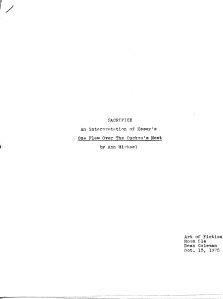
The title page of a much-lacking freshman attempt.

The title page of a much-lacking freshman attempt.

She did not coach us on thesis statements or methods of breaking the analysis into chunks of ideas supported by evidence from the text. Instead, she quarreled with our assertions, asked probing questions of our thin but possibly promising claims, and confronted us with the obvious. I was astounded by this approach to education, 180 degrees different from what I had encountered in high school. After Liz made her comments on my One Flew over the Cuckoo’s Nest essay, I picked up the book and immediately read it again–something I had never done before.

I had drawn parallels to the Christ narrative, a rather obvious way for a beginner to explore Kesey’s novel, but had completely failed to recognize that if you’re going to draw such parallels there comes a point where you need to recognize what the novelist does with the idea of “sacrifice”–what is gained (if anything) by it, and what purposeful and ironic twists the writer does to that narrative, and to what end(s). I was onto something when I wrote about the ‘earthly’ aspects of the characters but lost that thread in my allegorical pursuit.

My professor pointed out that I had “seriously limited the impact” of my paper’s argument–at that time, I had no idea that a literary analysis actually a form of argument–by transforming the novel into something it wasn’t, ie, a retelling of the Christ narrative. I love what she next wrote:

“That’s just not adequate to one’s experience of a novel in which earthly pleasures (the more earthly the better, it seems) are so unequivocally celebrated…[Kesey’s] vision of triumph has very much to do with being alive–his communion is with the juices of life.”

The communion with the juices of life! She wrote that to a 17-year-old. I’m not sure I got the full impact then, but I sure learned a great deal from her feedback both on the page and in class. And I did begin to write better, more argumentative, more logical papers. It wasn’t the simplest way to learn how to do a close read; but then, a close read of classic literature should reveal complex insights. I had to fight my way through my own assumptions and bad logic. I had to learn to read again, and at first I felt that analysis would destroy the joy I took in reading; but that’s only true if you are unlucky enough to have a professor who insists that the students’ interpretations align with the teacher’s opinions.paper002

Dr. Coleman has strong opinions about literature–and education, and political engagement, and many many other subjects. Yet I never felt she was pushing her interpretations onto us students; it seemed to me she was pushing me to do better work, to think more clearly, to read with more enthusiasm, with an alert mind. My engagement with literature, art, and much more owes a lot to her…I had always loved to read but had been in many ways a lazy reader.

I’m pretty much cured of that now!

Hinges, Hopkins, “Buckle! AND…”

Thinking about poetry again, at long last. A colleague directed me to a lovely little online post in which poet Catherine Barnett describes her attempts to create a physical analogy of poetry as hinge: here on the University of Arizona site.

Barnett writes:

As a poet, what interests me about a hinge is its two defining qualities: a hinge—like other devices—connects objects; it serves as a point of connection, a joining, a joint. But so is glue, a screw, a nail, a hasp, a clasp, a knot, a lock. What distinguishes a hinge from most other forms of connecting is the fact that it allows relative movement between two (or more) solid objects that share an axis.

In a poem, a hinge word or moment or gesture allows you to have both continuity and gap; unity and difference; such “hinges” keep the parts of the poem in some working relationship to one another and at the same time allow the poem to retain some of what Aristotle calls the unities of time and place.

How radically or loosely you want the hinge to open is a matter of temperament.

I love that idea of temperament juxtaposed with relative movement, continuity and gap. I’ve long mulled over the concept of joinery as a metaphor for some of the things that happen in poetry (even if “poetry makes nothing happen,” I do wish people would remember Auden’s next phrase that “it survives/In the valley of its making”). The hinge offers another analogy that Barnett hints at though doesn’t fully develop in her brief piece. I felt inspired to explore a poem that I think demonstrates the concept of the hinge.

The Windhover

To Christ our Lord

I caught this morning morning’s minion, king-
dom of daylight’s dauphin, dapple-dawn-drawn Falcon, in his riding
Of the rolling level underneath him steady air, and striding
High there, how he rung upon the rein of a wimpling wing
In his ecstasy! then off, off forth on swing,
As a skate’s heel sweeps smooth on a bow-bend: the hurl and gliding
Rebuffed the big wind. My heart in hiding
Stirred for a bird,—the achieve of; the mastery of the thing!

Brute beauty and valour and act, oh, air, pride, plume, here
Buckle! AND the fire that breaks from thee then, a billion
Times told lovelier, more dangerous, O my chevalier!

No wonder of it: shéer plód makes plough down sillion
Shine, and blue-bleak embers, ah my dear,
Fall, gall themselves, and gash gold-vermillion.

Aside from the fabulous alliterative sound-joy and astonishing rhythms of this poem, it offers powerful, realistic description of a bird that manages to operate symbolically if the reader chooses to interpret it that way (as Hopkins surely meant his readers to do). I propose that there are several hinges in this poem, most spectacularly the center line in the center stanza, exclamation and capitalization marking the spot. It is at this point in the poet’s observation that pride, plume, brute beauty suddenly buckle: the falcon wings fold, plunge, AND…the bird breaks into the dangerous shine that makes the viewer’s heart leap at the sight.

Perhaps there is a moment when the bird’s shape resembles a cross in the sky. Perhaps the sun behind the gleaming feathers sends out shimmers like flames, the glory of God illuminated. Or it’s just a falcon, handsome and gliding on the big wind, but that hinge in the poem’s line serves to alert us to the gap (the hinge-like action of wings an unintended simile) and the continuity of the poet’s observation.

There are other hinges that work in the piece, such as the hyphen in its odd place at the end of the first line, promising “king” but leading instead to the string of D sounds that drum through the second line; the closed hinge of “Stirred for a bird” opening wide into the surprising exclamation that hangs of the axis of a long dash “–the achieve of; the mastery of the thing!”

I’m not sure I’m going to attempt Barnett’s original idea of making a poem physically into a hinge (though I have some tantalizing thoughts about ways one could accomplish that); I hope eventually to write about the joinery analogy. Meanwhile, however, I’m spending the evening with Hopkins’ “Windhover” in my mind. A pleasant way to open, or to close, a mild day late in autumn.

~

Reading in Allentown

Tonight, I will be reading at one of my favorite places: A public library. With one of my favorite fellow-writers, April Lindner.

Information on my Events page. More later…

Still more difficult books

I am perpetually out to confound myself.

After reading Larson’s odd but lucid koan-like “biography” of John Cage’s creative interpenetrations with Buddhism, I have begun Maurice Merleau-Ponty’s 1961 text The Phenomenology of Perception. Already I have encountered some thoughts in Merleau-Ponty that relate to the indeterminate, a concept that excited Cage and that Larson demonstrates shares a great deal with Zen. But reading Merleau-Ponty is more challenging than reading Larson’s book, as I have less background in early 20th-century philosophy than I do in Zen studies. I enjoyed reading Bachelard’s imaginative, image-based take on phenomenology because I could relate to it on a poetry level even when I missed some of the philosophical antecedents (or contemporaries) he references. That possibility isn’t available to me with Merleau-Ponty.

I do appreciate that his writings were formulated before technologies that made neurological processes visible and while psychology was still bickering with the “hard sciences” about empirical measurements. (Actually, that bickering continues in some areas of study.) I do not think Merleau-Ponty would agree with, say, E. O. Wilson’s rather reductionist idea of consilience. Yet clearly, the philosopher was willing not to discount the sciences or empirical study–he just felt those areas were not of particular use to a philosopher, particularly a phenomenologist.

The body is what we have with which to experience the world, Merleau-Ponty tells us. But the human body is limited by its perceptual experiences. Structures–and that includes abstract structures such as thought–appear to have recognizable patterns, and the perceiver may posit cause and effect as a result. But another body may perceive differently, due to a different biological process or a different time or any number of physical or environmental variables. We perceive yellow with the cones and rods of our human eyes; the dog or the bee, the spider or the hippopotamus, may have eyes that do not see yellow as we do. Is yellow a quality or a perception? Merleau-Ponty seems to be saying (I am not very far into the book, so I  may be in error) that science cannot be objective, even though it is science that made us question our senses: “We believed we knew what feeling, seeing, and hearing were, and now these words raise problems.”

And how does this all relate to consciousness? Maybe I’ll figure that out as I go along.

ann e. michael poet

~

Here’s a sentence I love because it speaks to me of poetry and the arts on the level of ambiguity: “[Science, with its categorization] requires that two perceived lines, like two real lines, be equal or unequal, that a perceived crystal should have a definite number of sides, without realizing that the perceived, by its nature, admits of the ambiguous, the shifting, and is shaped by its context.”

Or perhaps by observation? A little Uncertainty Principle going on there. I feel that good poems change when observed, and change in the context of the reader’s time, place, experience; that they possess ambiguity not in the sense of rhetorical wishy-washiness but in the rich sense of complex possibilities, indeterminacy, transformation.

~

I’m especially pleased to have found Bernard Flynn’s article in The Stanford Encyclopedia of Philosophy (the link to the entire article is above), which ends with the following reflections on Merleau-Ponty:

If we think how the thought of Merleau-Ponty might prolong itself into the 21st century, or as it portends a future, then we cannot not be struck by the fact that his philosophy does not entertain any conception whatsoever of an ‘apocalyptic end of philosophy’ followed by the emergence of some essentially different mode of thought. Unlike Heidegger, there is no anticipation of an ‘other beginning’, also there is nothing like Derrida’s ‘Theory’ which is waiting in the wings to displace philosophy, and unlike Wittgenstein, Merleau-Ponty’s thought does not await the disappearance of philosophy. In the academic year 1958–1959, Merleau-Ponty gave a course at the Collège de France entitled “Our State of Non-Philosophy.” He began by saying that ‘for the moment’ philosophy is in a crisis, but he continued, “My thesis: this decadence is inessential; it is that of a certain type of philosopher…. Philosophy will find help in poetry, art, etc., in a closer relationship with them, it will be reborn and will re-interprete its own past of metaphysics—which is not past” (Notes de cours, 1959–60, p. 39, my translation). After writing this he turns to literature, painting, music, and psychoanalysis for philosophical inspiration.

The theme of the indeterminate frequently recurs in the thought of Merleau-Ponty. Philosophy is enrooted in the soil of our culture and its possibilities are not infinite, but neither are they exhausted. In an essay entitled “Everywhere and Nowhere, ” Merleau-Ponty explicitly reflects on the future of philosophy, he writes that philosophy “will never regain the conviction of holding the keys to nature or history in its concepts, and it will not renounce its radicalism, that search for presuppositions and foundations which has produced the great philosophies” (Signs, 157). In his Inaugural Address to the Collège de France, he claimed that “philosophy limps” and further on that “this limping of philosophy is its virtue” (In Praise of Philosophy, 61).

What will philosophy do in the 21st century? It will limp along.

Apparently, I shall be limping along with it.

Energy & stamina

I have been thinking about energy and stamina, and the difference between the two, and how they relate to creative practice. The word “energy” conjures up, for me, vigor and forcefulness, vitality, strength–a sort of bustling intensity, the kind my son exhibited when he was five years old, for example. I have never considered myself a particularly high-energy person.

Think of the cat. A cat is capable of intense bursts of energy but will also husband that energy until the moment it’s needed. The cat will also sleep most of the day, storing up energy for the necessary predatory expenditures of strength. The feline form of energy use does not suit me very well, though I am partial to naps.

Stamina, however–stamina I have possessed. Stamina is also strength, also energy, but it is of a different nature. Plodding sometimes, headlong other times, but steady in the main. The sort of focus and determination a person needs to get through the long haul strikes me as stamina. Stamina is the energy to endure.

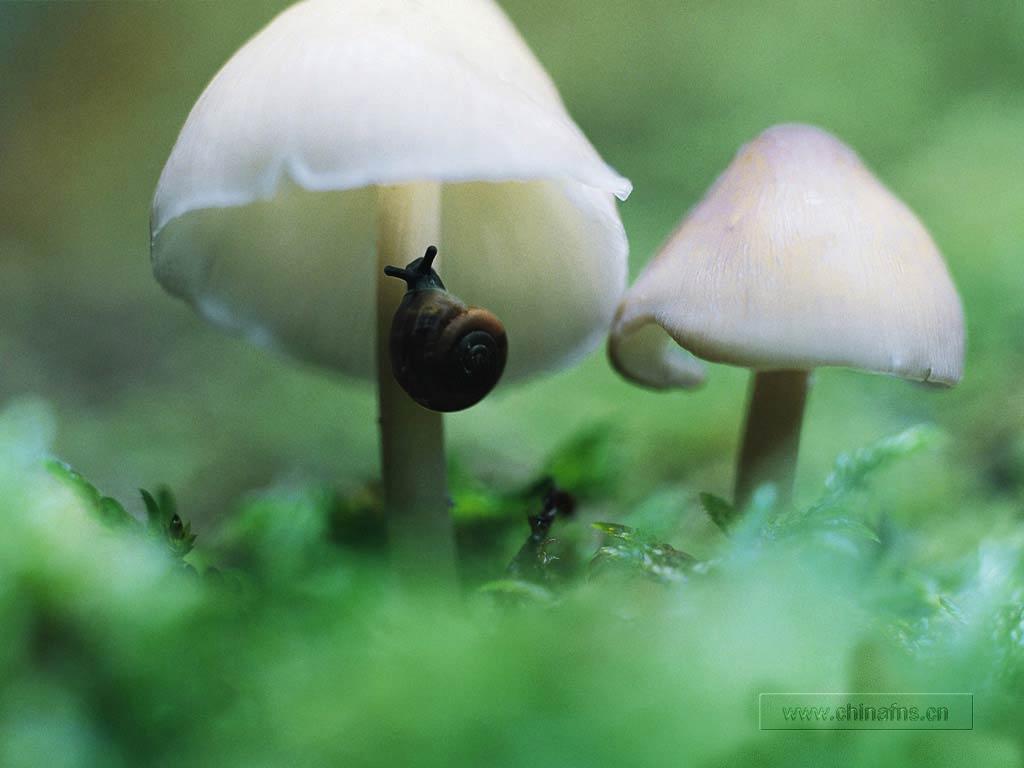
free kewlwallpaperWe have the mayfly and the bee, always buzzing actively, bursting with lively energy. Or the cat, conserving and then pulsing with strength and force. And we have the snail, constant and enduring, slowly edging its way toward its object.

My writing practice requires endurance, because I only occasionally get flashes of inspiration or insight and rarely feel surges of creative energy. Nonetheless, I have been told I am a “prolific” writer (by whose standards, I always wonder; compared to Georges Simenon and Alexandre Dumas, I am a piker). I think the reason is that I keep on. Everyone experiences setbacks, rejection, dry spells, discouragement, dull days. How we choose to deal with those situations becomes part of our practice of the discipline of art, and many approaches “work.” Whenever I read biographies of artists of any kind, or interviews with poets and writers and choreographers and composers, I recognize that (despite post-modernist critique) the life, in terms of personality and approach, does to some degree influence the art.

But the results are impossible to stereotype. A talkative, energetic artist may produce quiescent, meditative art. A dour personality can produce hopeful poetry, a still and soft-spoken person may create fierce, kinetic work.

A highly energetic person like Rimbaud can “burn out” on a major art form rapidly (though his busily-spinning, adventurous life kept going). And then there are the energetic sorts who just keep making work with boundless, apparently inexhaustible fire (see Simenon). One method or personality is not better nor more suited to art than another.

~

This is my minuscule revelation for the day: The one time I visited a shaman, I was told that my totem animal is the snail. The idea gave me a moment’s pause, but then seemed somehow very apt.

Except I was a little queasy about the slime trail.

~

I decided I can reframe the fact of slime once I recognize its purpose. It is not merely a lubricant, helping the gastropod to glide along, but also a glue that enables the creature to climb difficult surfaces, walls, and even ceilings. The layer of mucous also acts to protect the snail from dehydrating.

There must be a metaphor there somewhere. Poetry as…snail slime?

~

Time to keep plugging away, I  think.

Silence (John Cage, Zen, head-noise)

Slow Muse blogger Deborah Barlow–artist, critic–recommended Kay Larson’s recent book on John Cage, Where the Heart Beats. Silence was so significant in Cage’s work and thinking that, given my recent reflections on noise or lack thereof, this seemed the right time to pick up that text. Lo and behold, synchronicity of several kinds. The author, Kay Larson, thanks John Daido Loori, a rōshi of the Mountains and Rivers order of zen Buddhists and long-time abbot of Zen Mountain Monastery near Woodstock, NY. She studied with him beginning in 1994.

In 1992 and 1993, I attended two weekend retreats there; the brief days remain vivid in my memory. Perhaps more on that another time. Haiku is involved…and silence.

Recently, given some irregular bumps along the walk of life that have led to excessive “head-noise” (my term for stress I can’t quite let go of), I have been returning to some zen-influenced texts and trying to remember to breathe and to be here now. Arne Naess’ writings on joy and environment and Buddhism–I’ve just finished reading a collection of his essays–dovetail very neatly into this reflective book on Cage’s life, work, and influences. Larson’s “Zen” approach to writing about Cage is so gentle and refreshing that reading this book soothes me. I find within myself a kind of inner silence, my breathing returning to its slower, quieter pace, as I read the brief selections of prose Larson uses to explore the life of the mind of this peculiar and innovative artist/composer/writer.

Very like philosophical analogies, Confucian fables, parables of many cultures, koans, meditations, prayer and other forms of contemplative practice.

What reduces head-noise? For me, the best strategy is calmness, but I am not an adept at meditation. I have sat zazen badly, and learned much from the practice of sitting zen badly, but I have never managed to make meditation a genuine practice in my life. Deep breathing and slow movement, such as tai chi or qi gong, seem to work better for me. In addition, the Quiet Place. I settle down better when I can detach from computer, phone, electric lights, appliances. Art reduces head-noise: art requires attentiveness. Poetry, yes. Gardening, walking out of doors–good choices. Music, sometimes.

Philosophy, not so much. (Alas.)

Politics? Weather reports? Analysis? ….as the Buddhist monks might say: mu. Translation into teen-speak from five years ago: “not.”

And also, compassion. The practice of compassion keeps a person attentive and also relaxed. It is a form of active prayerfulness, of acceptance of self through the acceptance of others. After the bruises and bashings of a presidential election year in 21st-century United States, a little compassion would reduce the malaise and anxiety we have had to endure intellectually, emotionally, and–in the wake of bad storms on the east coast–physically.

I give you Quan Yin, or Guanyin, or Kannon Bodhisatttva, known as Avalokitesvara  in Sanskrit and termed the goddess of mercy, a counterpart to the Christian Jesus or Mary. This being represents the compassionate, merciful, kind, non-judgmental, accepting aspect of the cosmos, the universe, or god. I realize that it seems I may have wandered a bit far afield of Cage at this point. But read Larson’s book; I haven’t drifted as far from my topic as it seems.

And just because it does seems as though I am rambling considerably in this post, I think I can close with a poem from my collection Water-Rites, and somehow make it fit with these topics:

Intervention

I am thinking about the cowbirds who fought
in my driveway this morning
and how they struggled, one overbearing the other,
pecking at its head, keeping it pinned
to gravel. I wonder, now, why I chose to stop
and free the losing bird from its aggressor,
lift its bloodied damp body in my hands,
rescue it even though
it was also a cowbird, a pest
that usurps the nests of thrushes—
although I respect the dominion of beak & claw,
I want to preserve the generation
of songbirds; there was no reason for me
to intervene, no logic but somehow I felt
surely there is a place,
in the battle that is this world,
for the mandate of compassion.

© 2012 Ann E. Michael

Another Reading reading

On All Saints’ Day, November 1st, I’ll be reading poetry in Reading Pennsylvania–again! And this time, I’ll be accompanied by my fellow Goddard alumna, the dynamic and talented Barbara DeCesare, author of Jigsaw Eyesore and Silent Type.

Reading, PA is home to GoggleWorks, a former goggle-making factory that now serves as studio, theater, and gallery space for Berks County area artists and craftspeople of all kinds. Small, struggling cities like Reading are turning to the arts as a means to fill abandoned factory space and create an economic and cultural reason to keep downtown areas alive. Sometimes these efforts succeed, sometimes they don’t. GoggleWorks opened in its current incarnation in 2005. So far, that’s a 7-year run, supported through grants and donations and rent. I am optimistic about GoggleWorks and about other such endeavors, including Bethlehem PA’s Banana Factory, which is a little closer to my neighborhood. I strongly believe the arts belong in our neighborhoods, in our school curricula, and in our lives.

I’m thrilled, therefore, to be reading from my book, Water-Rites, at 6 pm November 1st at GoggleWorks’ Cucina Cafe.

And I’m thrilled to be reading with Barbara, whose work is funny, poignant, imaginative, fierce, and charming by turns.

November 1st is the Day of the Dead in Mexico, a good day for elegies and to celebrate the lives of those we’ve loved and lost. I will be thinking of David Dunn, among other dear ones. And in honor of All Saints’ Day, I may also read a poem or two about saints; recently, I’ve composed a few imaginary lives of saints poems.

I have no idea what Barbara DeCesare has up her sleeve for this event, but it is certain to be delightful. If you are in the region, stop by at 6 pm. I believe an open mic follows the reading.

water-rites by Ann E Michael

Not a dry spell

October arrived in a remarkably ordinary way, considering how inconsistent the weather in my valley has been during the past year. There were a few clear days of brilliant sky, some heavy breezes with leaves beginning to drift into the lawn, a couple of glorious autumn days–mild and crisp–followed by a spate of rain and humid air (and toadstools and mushrooms cropping up everywhere), a further yellowing and reddening of foliage, and then, chilly rain.

This is “normal” weather for our area in early- to mid-October. Although the heavy skies and damp chill are not always welcomed by residents, including me, the gardener in me feels relieved. We need the rain and the coming dormancy. The birds relish the late, large insects that frequent gutters and fields, ponds and puddles, providing proteins for a trip south or for winter ahead. Seeds need the watering-in and the cooling-down. Trees need reminders to store their nutrients deep inside when the cold air really sets in.

And pretty soon, I will have bulbs to plant. I want the soil to be moist enough to dig up and the ground temperature cool enough to keep the daffodils still and quiet for several months.

Some years, I write prolifically in autumn; it’s as though the change in season effects a kind of transition within me, and creativity abounds. Other years, not so much. I do notice that when I spend a good deal of time out in the garden, I write more. This fall has not been that kind of season. I have been busy with writing tasks that do not exercise the philosophical or metaphysical side of myself–though I have been writing, most of the work has been reviews, proposals, pedagogy.  I will be posting links to the reviews and essays on the sidebar to the right, adding to the list…

Should fortune–and the Muse–smile upon me, there may be a few new links to poems, as well, in the coming weeks. In November, I’ll be giving a few readings locally. In January, I’ll be teaching Introduction to Poetry again, and I’m eager to try new texts for my students.

Perhaps the post-equinox period will have a creative harvest after all.