“The difference between Despair/And Fear”

~

Events such as the tsunamis in Indonesia and Japan, devastating earthquakes or hurricanes that result in high death tolls, industrial accidents that destroy communities—these seem impossible to control and blame is hard to place, even in the latter case. News coverage in such situations tends to focus on damage and recovery efforts, then shifts to the next drama. Tragedies wrought by specific human perpetrators, however, become media spectacles here in the USA. The same few seconds of terrible footage repeatedly fill television and computer screens; viewers feel drawn into the activities of SWAT teams and reporters and the compelling speculations of forensic psychologists, terrorism experts, social commentators, politicians, witnesses. There are heated exchanges on social media forums.

~

I’m beginning to believe societies get the popular culture they want or, alas, deserve (late Rome’s “bread and circuses,” anyone?). The circuses give us what society’s members, apparently, want to consume. Art, however, offers what they need, whether or not they want it. During times of media frenzy, when the culture in which I live seems numbed by “infotainment” and nonstop visual and audio coverage of tragic events, I find myself turning to art—usually poetry—for grounding, for solace, for affirmation of the human spirit and for a way to confront human truths.

~

I do not suggest that poetry necessarily comforts. Often, it wears me ragged, forces me to wrestle with ambiguities, to question my values. Sometimes, art brings me to tears.

I do not consider these results to be negative results. These reactions are human reactions; I am reminded of my humanity through my engagement with art.

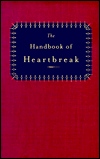
A good little anthology for times of grief is The Handbook of Heartbreak, edited by Robert Pinsky. Pinsky’s selections cover the human spectrum of sorrows: broken romances, dead pets, war, disaster, family and social losses and the desolate emptiness of depression, sorrow that is concrete and existential, spiritual and personal and cultural.

~

Speculation is something inquisitive minds do well, but it is easy to believe our speculations, to forget they are merely imaginings that may or may not be valid. When a crime becomes a widely-broadcast web of information blips, the suspect is forejudged in the court of public opinion; I feel concerned about our nation’s commitment to the concept of innocent until proven guilty in a court of law (how on earth will that be possible?). What irks me most about media coverage of the Newtown, Virginia Tech, Aurora, Tucson, Boston Marathon, Columbine and other killings is the retreat into a kind of contorted deductive reasoning based on imaginative constructions of human intent and purpose—the search for motivation that drives the forensic end of these crimes becomes a news story led by experts who imply they can get to the truth. But can we ever know the truth? Each human being is unique and ultimately unexplainable, and often the way we are best reminded of that fact is through art: fiction, theater, paintings, poetry. On his New Yorker blog, Adam Gopnik notes:

Experts tell us the meaning of what they haven’t seen; poets and novelists tell us the meaning of what they haven’t seen, either, but have somehow managed to fully imagine. Maybe the literature of terrorism, from Conrad to Updike (and let us not forget Tolstoy, fascinated by the Chechens) can now throw a little light on how apparently likable kids become cold-hearted killers. Acts of imagination are different from acts of projection: one kind terrifies; the other clarifies.

~

We need clarity.

~

I might add that in my day job, I work with young people between the ages of 17 and 24, day in, day out. These young adults experience varying levels of frustration, confusion, numbness, fear, anxiety, excitement, need for risk, need for security, withdrawal, social discomfort, and inner turmoil. I cannot look at the perpetrators of recent civilian massacres without thinking of my students. I do not mean that I am wary or that I think one of my students might snap; what I mean is that I feel compassion for the conflictedness each human being is capable of feeling and that I understand all too well that not all of us are capable of contending with that conflict.

Some of us can accomplish through acts of imagination the confrontation with what terrifies or numbs us. These people include our artists. Those who cannot express or embrace the confrontation are at risk of projecting the inner conflict, fear, or insecurity elsewhere, as Gopnik makes clear.

Can art make us safe? We live in the world: not an inherently safe place. I think if we embrace what art offers us we will not be in retreat from the truths of the human experience but will learn to confront truths, even those that are uncomfortable. Art gives us insight, a step toward understanding. Can art grant us clarity? I think so.

Therefore, Emily Dickinson (305):

The difference between Despair
And Fear—is like the One
Between the instant of a Wreck—
And when the Wreck has been—

The Mind is smooth—no Motion—
Contented as the Eye
Upon the Forehead of a Bust—
That knows—it cannot see—

~


Mortise & tenon

In a post late last year, I examined a Gerard Manley Hopkins poem for the way the lines and images might be considered as hinges. Another metaphor for how poems work–one I have been churning in my mind for a couple of years now–is joinery of another kind: mortise and tenon. What joinery does in woodworking is allow the cabinetmaker to connect separate pieces of wood together in such a way as to allow a little movement as the wood responds to temperature and moisture changes. Good wood joinery requires experience and thoughtful attention, as there are often additional challenges such as connecting end grain to long grain. Amateurs resort to screws, nails, and glue to cobble projects together because joinery takes time to learn and requires technique and practice that the average DIY “carpenter” does not possess.

True craftspeople learn, practice, and employ conventional joinery techniques and often develop their own signature styles. The craft of woodworking parallels the craft of poetry: there are tools and techniques, strategies and conventions, patterns to follow, and inventions and innovations to create. Both crafts join together materials that seem alike (wood to wood, words to words), and yet it can be damned hard to get those connections to hang together solidly and make a coherent and stable whole.

~

Odate's

Odate’s “Pride of New England” [1982] photo: Laure Olender

~

My friend Toshio Odate was trained as a shoji maker and has worked as an educator, artist (sculpture), and craftsman-in-wood for most of his 82 years. Possibly his best-known book is the practical but also spiritual Japanese Woodworking Tools: Their Tradition, Spirit and Use. This text will teach you how to choose, care for, sharpen and use traditional Japanese hand tools, meanwhile illuminating the history and spirit of the woodworking craft in Japan. Toshio reveres the work of humans, the human touch, the effort of making that goes into a handmade object; and his sculptural pieces reflect his passion. The large sculpture above, Pride of New England, stands on his property under the hardwood trees and above the nearby creek. Nothing holds these huge slabs and trunks of wood together but hand-cut joints: mortise and tenon, mostly.

~

I’m going to try to explain a connection between poetry and joinery through a brief examination of the poem “Whereof the Gift Is Small” by Maxine Kumin. This poem appears here, and I think you ought to check out the link to a Q & A on this poem, as it is enlightening and amusing (as Kumin so often is).

Whereof the Gift Is Small

       Henry Howard, Earl of Surrey

And short the season, first rubythroat
in the fading lilacs, alyssum in bloom,
a honeybee bumbling in the bleeding heart
on my gelding’s grave while beetles swarm
him underground. Wet feet, wet cuffs,
little flecks of buttercup on my sneaker toes,
bluets, violets crowding out the tufts
of rich new grass the horses nose
and nibble like sleepwalkers held fast—
brittle beauty—might this be the last?

~

This lovely small poem is framed by phrases from Henry Howard, Earl of Surrey’s sonnet “The Frailty and Hurtfulness of Beauty,” so right away we have an old poem joined to a new one; and as Kumin admits in her commentary on the piece, “Picking lines from others’ poems is hazardous and I don’t recommend it.” Woodworkers will recommend that old, seasoned wood not be joined to green wood for practical reasons. Good reasons, too. But that does not mean one should never attempt it or that it cannot be successfully done. A master like Maxine Kumin can succeed–but with caution.

How might one approach the joinery of words as apparently distant from one another in tone or image as “sneaker” and “rubythroat”? The grave of the gelding (a gap, into which something solid may be placed) gives the reader one opening. There is also the stepping-down aspect of the images, each connecting to the next. The bird appears higher in the poem, quite literally, up there with the lilacs fading on their tall stems; but the alyssum blooms much lower to the earth, as do the bleeding hearts where the bee is busy. The grave and beetles take us deeper. Then, up ever so slightly, to the low-growing buttercups and the damp cuffs of the speaker’s trousers and the noses of still-living, grazing horses…with a “brittle” reminder that this season is short (“the gift is small”). If you are familiar with Surrey’s poem, there’s a marvelous resonance here, though I feel Kumin’s tenor is a bit less cynical than Surrey’s.

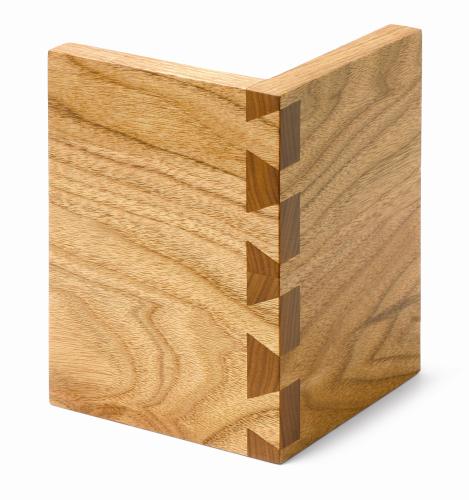
dovetail joint

dovetail joint

Kumin’s poem is not a full sonnet, and some of her end-rhymes are slant. A modernity pervades her piece, yet the older poem’s language and sensibility are evoked nonetheless. How elegantly she achieves this balance. I think the first joint in the poem appears at line 4, at which point the nature imagery of the first three lines, which could incline to the romantic, solidly connects with the real fact of death. This line also introduces us to our speaker: the gelding is “my” gelding. Line 6 provides another clear connection: the speaker here exists very much in the present moment, wearing sneakers, noticing the buttercups. This line fits into the poem like a well-cut dovetail, linking the pastoral descriptions with the reflective mode the speaker turns to after observing the horses. And there, between the em dashes, we find Surrey’s “brittle beauty,” a tenon that fits the space and holds the entire brief poem together.

Good joinery is often invisible except to those who appreciate the work and take the time to look for it. Toshio solved the engineering challenge of constructing his sculpture through a process of reflection, experiment, experience, and revision. How like a poet’s work that seems to me! When I told him I feel his work is analogous to poetry, he was initially flabbergasted. Maybe the surprise stemmed from a difference in the approach to poetry across cultures, or maybe from a difference in the way a plastic artist perceives a largely abstract art like poetry. Maybe I could not explain my idea adequately to a person for whom English is not a first language. Actually, I’m not certain he believed there is as much human touch and hand-work involved in poem-making as there is in woodworking or the sort of made-by-hand sculpture Toshio does. We agreed not to fully understand one another.

About a year later, I attended a special event at his home, a celebration of the Object as Being, for which I composed a poem. That summer, he called and said, “I think maybe I understand now what you mean.”

~

endnote: If you’re interested in learning more about Toshio Odate, here is a 1996 article from The New York Times and a 2009 blog post (including a short video) from Tom’s Workbench, as well as a short on making shoji screens–from Martha Stewart’s network.

Arts festival

Early autumn is a lovely time for festivals. The city of Easton, PA–situated on the Delaware River–is hosting its 15 annual Riverside Festival of the Arts. There will be music, art shows, food, etc. on September 22 and 23.


At noon on the 23rd, I will be reading poetry with Diane Lockward at the amphitheater. Next to the river: a perfect site to read from my book Water-Rites.

~

The link is here. Or check the Events tab above.


Poetry, art, & a little bit more about libraries

After writing about some memorable libraries lately, I realize that I have been able to pursue my passions–indeed, discover my passions–largely through the help of these marvelous civic institutions. It is time I brought my posts back to those passions, however, particularly to my love of poetry.

My family introduced me to poetry through nursery rhymes and hymns and taught me to love narratives through story-telling of several kinds, so the foundation for my lifelong love of stories and poems existed before I ever set foot in a library; but books solidified and focused my various enthusiasms, and libraries offered more books than I could hope to read (though I tried!). Libraries led me not only to novels and poems but to books on visual art, art museums, artists, art history, and art criticism. If I couldn’t get to the Louvre or Rijksmuseum, to Venice or to Rome, I could borrow an art book from the library and be on my way via imagination.

When I got to college, I spent many hours in the library on campus borrowing books I couldn’t afford to buy. Few of those books were required for my academic studies; in fact, I don’t recall doing much research for term papers. I was reading up on and diversifying my own interests, often unrelated to coursework. A look back at my undergraduate transcripts reveals only two classes specifically devoted to poetry, but I recall reading many poetry collections in the campus library. As a junior, I had a work-study job in an office in the library basement. When my hours were up, I’d walk upstairs to the stacks.

I was finding my own way to what I loved.

~

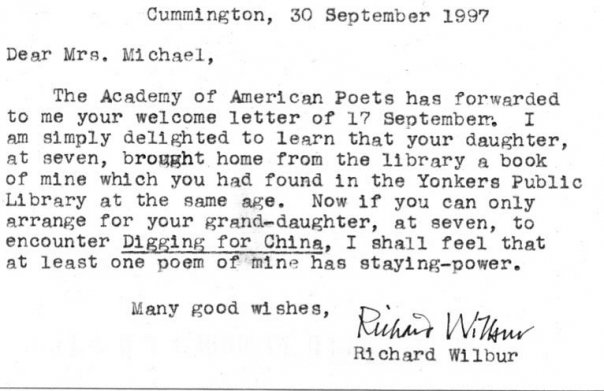
Needless to say, once I had children of my own, we visited the library often. Years ago, I wrote to the poet Richard Wilbur to tell him about my 2nd-grade daughter’s encounter with Digging for China and how, nearly 30 years earlier, I had been fascinated by the book too. He replied with this modest note. June 2009, I saw Wilbur at the West Chester Poetry Conference. What a talented writer, and what a sweet man.

~

Richard Wilbur

Libraries & book love

In my last post, I drifted onto the topic of libraries–and stirred up images of favorite places. Libraries have certainly been among my favorite places and loom large in my childhood memories. Two of those libraries were new when I entered their doors: the Grinton I. Will Library in Yonkers, NY, which opened in 1962 (I first visited in 1964) and the W. Leslie Rogers Library in Pennsauken, NJ, which opened its doors in 1971. I recall a few distinct discoveries even from my first-grade forays to the Yonkers library. It was there I discovered Richard Wilbur’s Digging for China, a book I adored.

Free public libraries represent one of the best uses and most noble purposes of the tax dollars and philanthropic gestures of citizens in a democratic society. These buildings, some grand and some exceedingly modest, harbor banned books and out-of-print books and sections devoted especially to children’s books; a library admits of free speech and liberated thinking for people of all ages. A library, by its very existence, reminds citizens that education matters and that information can be free, can be borrowed, can be disseminated and shared.

When I was a child, libraries were safe places to hide, to explore, and to pursue my own interests–which often varied quite a bit from the interests of my peers. The library in Pennsauken offered me an early education on visual art. I probably borrowed every book in the place that had anything to do with art or artists, from Aesthetic Inquiry; Essays on Art Criticism and the Philosophy of Art to The Agony and the Ecstasy. The library stocked a book chronicling  the letters of Theo and Vincent van Gogh as well as huge, heavy, hard-cover museum books with color plates of famous artwork. Some of these were stamped more than a few times with my library card’s number.

I also borrowed, and read–enthusiastically and, occasionally, dutifully–classic novels that I had somehow learned I “ought” to read. I read a fair number of junky novels, too, and young adult fiction, and children’s books. Even though I was nearly ten when Leo Lionni’s Frederick was published, I loved it and never considered it a “little kid’s book.” Interestingly, Frederick the mouse gathers images and turns them into words. He is a poet. (A word-artist).

Books: Anything, everything, as bibliophile overlaps with autodidact.

Books were my first and often my best teachers, though I have been fortunate enough to have had some wonderful teachers (formal and informal) in my life. One of them, my grandmother Edna Michael, will always be closely associated with libraries in my heart and memory. She was the Story Lady at her small-town library in South Whitley, IN; and my siblings and I spent many hours in the small white building that housed South Whitley’s free circulating books. We read, and we listened to her read. She would don “an olden-times dress” she’d designed and sewn herself, tie on a large matching bonnet, and gather the town’s youngsters in a circle on the library floor for story time.

She always left the library with at least a couple of grownup books for her own reading material. I was proud to be like her.

A few years ago, the town enlarged its library, added a new children’s wing, and dedicated it in my grandmother’s name. Edna Michael, the Story Lady.

I’m pretty proud of that, too.

ann e michael

The South Whitley Library as it was in 1967, with my grandmother in her Story Lady attire.

Poems that help us to endure

I’ve recently completed reading Eugenia Semyonovna Ginzburg’s memoir Journey into the Whirlwind. What has struck me about the memoir is, in particular, Ginzburg’s reliance on poetry as a means to enduring prison, deprivation, oppression.

In several selections, she reiterates how reciting or recalling poetry–Pushkin, Pasternak, Blok, Mandelstam, and lesser-known (to us Westerners) poets such as Tyutchev, Chorny & Nekrasov–gave her hope or encouraged her to keep on in the face of awful situations, or just to remind her that others have endured harsh and terrible conditions and found the means to express themselves despite it all.

I believe poems–and art of all varieties–help us to endure. Some poets who have helped me to endure include Anna Akhmatova, Mark Doty, Mary Oliver, Gregory Orr, John Donne, Yehudi Amichai, Stanley Kunitz, Donald Hall, Emily Dickinson, Adrienne Rich, Marie Ponsot, and others. Too many to name.

Who has helped you to endure? Whose art, whose poetry, whose stories, whose music?

When we reflect on these creations, perhaps we can learn more about ourselves.

“The Atlantic”

 Atlantic by John Sevcik

A few years back, I was privileged to join John Sevcik, his wife Lynne Campbell–who is also a marvelous painter–and a few art students and friends for three lovely days of art talk and plein air painting sessions and terrific food at a beach house in NJ. This painting, by John Sevcik, inspired the following poem, which appears in Water-Rites.

The Atlantic

She and her mother
are knee-deep in water
their backs to the shore

What they discuss
as they look eastward
you cannot hear–

breakers, the wind,
the natter of laughing gulls
cover their conversation

Besides, you are busy
fathoming the sea’s tones
and mixing the sky–

Trying to stake claim
to the reflective shallows
between you and them

At this hour
they are your subjects
as the sea is

and what they say
she will share with you
later. Or she won’t.

It doesn’t matter, you
have set down on canvas
their communion

And your own conversation–
the one between mind’s eye
and artist’s hand.

~~~

Many thanks to John Sevcik for allowing me to post his painting here on my blog. To see John’s other works and find out about gallery showings, visit him at his web page. He is also a teacher, poet, playwright and actor.

Art and “human intelligence”

I’ve gotten almost to the end of Brian Boyd’s intriguing and well-argued book On the Origin of Stories, which makes fairly large claims about sociality, cognition, theory of mind, art, and storytelling (ie, fiction) given an evolutionary perspective (art as adaptation). The first 200 pages lay the foundation for his claims; he provides evidence from the “hard” sciences, most often biology and neurology, and from archeology, anthropology, and psychology, to back up his theory that art is an evolutionary adaptation humans developed in order to live as social animals. And that art is necessary for human cognition in terms of further developing intelligence and the ability to communicate among our peers: it is cognitive play, practice and skill strengthening for mind and muscle.

Big claims, and occasionally hard to “prove” from the hard sciences. I believe he does a good job with that set of proofs, but I’m not a scientist. His claims based on social sciences—anthropology, sociology, psychology—are very convincing; but many people have arguments with those fields because they are so apparently subjective. Most exciting to me is the way Boyd synthesizes neurological findings with evolutionary developments.

Actually, most exciting to me are his chapters on the Odyssey, but that may be because I am a literature geek. He essentially writes a literary analysis of the Odyssey based upon the inferences and findings in the first half of this book (evolution) rather than the customary literary analysis grounded in, say, context or culture of style or theme, ad infinitum. The resulting analysis is, for me, a truly exciting way to look at Homer’s work and why it matters now, as well as why it mattered then.

Boyd comes close to making the assertion that Homer made Socrates possible, and hence all of Western civilization’s philosophy and social intelligence. Of course, he is careful not to go that far in his argument—he steers as far as he can from logical fallacies— but the thought certainly feels planted in the reader’s mind. His argument does suggest that metacognition in human beings is the definer that makes us human, and art as more-than-play separates human from not-human. He also demonstrates that the Odyssey offers great leaps beyond older epics and posits that the author(s) composed the epic for contemporary audiences that were capable of intelligent, sophisticated, “modern” thought processes; the piece is therefore not primitive literature, as some critics claim.

Boyd’s work has also turned my thoughts to how the attributes of attention, perspective and foreknowledge, overturned expectations, audience-sociality, false belief, cooperation and competition work in the poem as well as in narrative. Granted, many poems have a narrative framework, however thinly sketched, but not all of them do. When there is no narrative frame, these other aspects of storytelling (audience expectations in particular) take precedence and can be employed in almost infinite ways, bounded only by imagination and the willingness of the reader to pay attention as the writer earns that attention through a host of innovative or traditional skills.

A last thought…I spent the long weekend visiting octogenarian friends, both of whom are wonderful tellers of stories. The value of such people to human society is priceless:

“Story by its nature invites us to shift from our own perspective to that of another, and perhaps another and another.”  ~Brian Boyd

Outside the (type) box

Many years ago, back when there was a career called typographer, I was one. I apprenticed to typographers because I had superior proofreading skills, a background in art and design, there was a recession, jobs were few, and I was a quick learner. In an essentially blue-collar job, I was decidedly outside the box: I was a 21-year-old female with a BPhil in philosophy and literature. But I was a terrible waitress. So, in desperation, I essentially talked my way into a job at a typeshop in New York.

A voracious reader all my life, I felt attracted to the potential type offered for expression via the medium of words. I’d studied art since the second grade, so the aesthetic side of typography fascinated me, too. I got into the business just as the field was waning due to the innovations offered by phototype methods, digital typography, and the invention of desktop publishing. Nevertheless, typography kept me fed and housed for a few years while I learned to discern the differences between various counters, serifs, descenders, dashes,  x-heights, weights and the rest. I read books on the history of type design and the history of the alphabet itself. My obsession with words and letters kept me inside the typography box, though I suppose I was often more like a stray Caslon e in the Helvetica drawer.

Wood type was no longer in use, but I used to purchase wooden type fonts–the individual letters–and type cases, because they are so folk-art-appealing and so potentially useful. As collectors began to scour flea markets for wooden type, I bought metal fonts and slugs instead; I’m particularly fond of ampersands and dingbats. (If you’re in Wisconsin and you want to see what the age of wooden type in the USA was like, check out the Hamilton Wood Type and Printing Museum.)

Two of the shops I worked at still used metal type occasionally, though they had mostly switched to digitally-mastered film type; and one shop boasted three Linotype machines. Two of the machines worked. The other was there for parts. The typesetters were all WWII veterans, and the smell of molten lead wafted through the building…it really felt like the end of an era. And it was.

Mergenthaler’s Linotype machine

Working at typeshops engaged my brain in novel kinds of problem-solving and detailed observation, taught me about the lives and careers of men who could have been my great-uncles, satisfied–sometimes–my yearning for aesthetics in the workaday world. An elegant logo or headline still pleases me. I learned about all kinds of odd and wide-ranging things while proofreading, too, while I marked up thousands upon thousands of proof pages; and during my breaks, I read novels. One old-timer at a shop I used to work at told me, “Every proofreader I ever knew read books on his break.” He shook his head as if that were sheer lunacy.

Today, I might note that every computer programmer I know spends his or her break time (and post-work hours) at a computer. It is nice to love something about the work one does for a living.

Typographers today are designers and computer graphics folks who understand how to digitize and digitally set and “cut” fonts for virtual pages. The design tolerances are different, though the challenges of readability and clarity and appropriateness remain. As for proofreaders, there are fewer every year, even though we certainly could use them. AutoCorrect and SpellCheck are woefully inadequate proofreading systems, as I constantly remind my students who don’t know your from you’re or their from there or then from than.

And as for me, I have moved from proofreader and typographer to tutor, instructor, poet…jobs that suit me a bit better, where my quirkiness is more tolerated and thus more conventionally acceptable. I continue to admire thinking and being that is outside of the box, however, and in that spirit I offer you some artwork that moves type outside of its outmoded, old-fashioned box. Click on the cityscapes link to find metal-type cityscapes by Hong Seon Jang. For what artists can do with letters, see also my earlier post on Steve Tobin’s sculpture, “Syntax.”

Fragments…

I just want to re-blog this brief and thought-provoking piece by Michael Klein in Ploughshares:

Notes on Narcissism and the Line

Klein’s musings have inspired me to go back to my drafts of the past year and look more closely at fragments, lines, and the self in the poems.

I’ve also discovered, via Deborah Barlow’s delightful art-centered blog, Slow Muse, the art and prose of Altoon Sultan. Reading and viewing creative pieces and creative critical thinking is a marvelous spur toward one’s own creative endeavors. Although I do risk spending more time online, reading and viewing, than I ought…

Enjoy!