Back to metaphor

I recently read James Geary’s entertaining book I Is an Other–The Secret Life of Metaphor and How It Shapes the Way We See the World. Geary takes his title from one of Rimbaud‘s letters, calling this phrase metaphor’s “principal equation”:

Metaphor systematically disorganizes the common sense of things–jumbling together the abstract with the concrete, the physical with the psychological, the like with the unlike–and reorganizes it into uncommon combinations.

I like this definition because it feels more complete than the typical definition of metaphor as a comparison without the use of the adverbial comparative (i.e., no “like” or “as”). Indeed, metaphor probably forms the basis of language itself; while that conclusion’s much debated in semiotics, linguistics, and other scholarly disciplines, common sense and common usage strongly suggest that even thought itself–in terms of how we think internally about the world–employs metaphor as an underpinning.

Maybe I believe so because I’m a poet. Geary, as it turns out, has written some poetry, though he’s best known for his books about words, word origins, wordplay, aphorisms, witticisms, and the like. (He’s also got a TED talk…everybody’s got a TED talk…)

As to poetry, and how metaphor behaves in the poem’s context, I like what Geary says here (although in this excerpt it’s not actually poetry he’s discussing, but rhetoric):

Readers actively retrieve a metaphor’s meaning, just as a punch line requires listeners to resolve a joke’s incongruities for themselves…though the speaker may make the metaphor, the hearer makes its meaning. Hearer and speaker are accomplices; the one unpacks what the other presents. In terms of creativity, producing a metaphor and penetrating one are almost the same act.

I think the above lines go far to explaining why I love to read poetry and also provide implications as to why poems can be so damned difficult to compose. The poet endeavors to create a context and container for an often-unknown audience who will nonetheless need to invest, one hopes willingly, in the process of reorganizing the surprising (metaphor) into the recognizable.

And what a fine task that is!

2011A-rainbow

Berrying

Each year, dill starts going to seed as the beans plump out almost overnight. It’s time to make dilly beans, if you can stand to work in the kitchen, canning–as my grandmothers always did, without the assistance of air conditioning.

No, thanks. I prefer beans fresh. I rise as early as I can and harvest them before the sun gets too high. This morning, I remembered to look for blackberries, too.

IMG_5460

Turns out this is a good year for blackberries. The canes are loaded with fruit and weighted with vining wild grapes and honeysuckle. The latter bloomed rather late this year and are still putting forth fragrant flowers. The marvelous scent made berry-picking quite soothing.

Soon, the catbirds and orioles and everyone else will be harvesting these berries. Despite their thorns (which didn’t deter me, either).

~

It has been far too hot to work in the garden, however; so I have been writing, and submitting work to literary journals, and even painting a little–something I have not done in years. Finding ways to be both creative and relaxed. Much needed.

Seemingly small stuff

Things to view, things to think about.

Sub Rosa’s post on floral aesthetica here.

IMG_4663

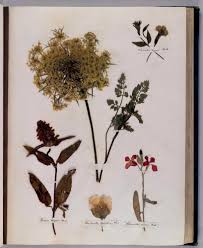
Emily Dickinson’s herbarium, thanks to Harvard (it takes a few seconds to load) here.

qalace ed

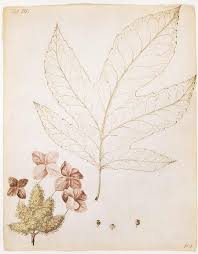
William Bartram‘s 18th-century drawings of American flora.

bartramx

~

Lovely words from Lesley Wheeler, and so true for me, too: “…reading and writing puts me in an honest place. Plus, while poems contain struggle of all kinds, they also constitute separate worlds it can be a great relief to enter, because good poems are not unjust or disruptive of bodily integrity.”

Beach reading

Mock orange and honeysuckle scents pervade the evening air. It’s the season of lightning bugs in the meadow and fireworks on Fridays at the local AAA baseball stadium over the hill. While I was preparing for the reading (this evening, in New Jersey!), I sat on my back porch surrounded by my own poems.

It’s interesting to look at one’s work and find “old friends” among the poems. Even among work I wrote thirty years ago, there are a few poems that I’m happy to meet up with again.

poster


Now to garner the stamina to do what needs to be done!

Resting

Taking a breather. Pausing along the path.

sit-up-poetry-art


This poem is thanks to Michael McClintock.

Courting, sparking*

Early June. Honeysuckle on the breeze. New graduates on the move to wherever they are fortunate enough to get jobs. Blessings & good luck!

Many local songbird species fledged during the last week or two, and now the courting has begun for the second brood of spring.

IMG_5396

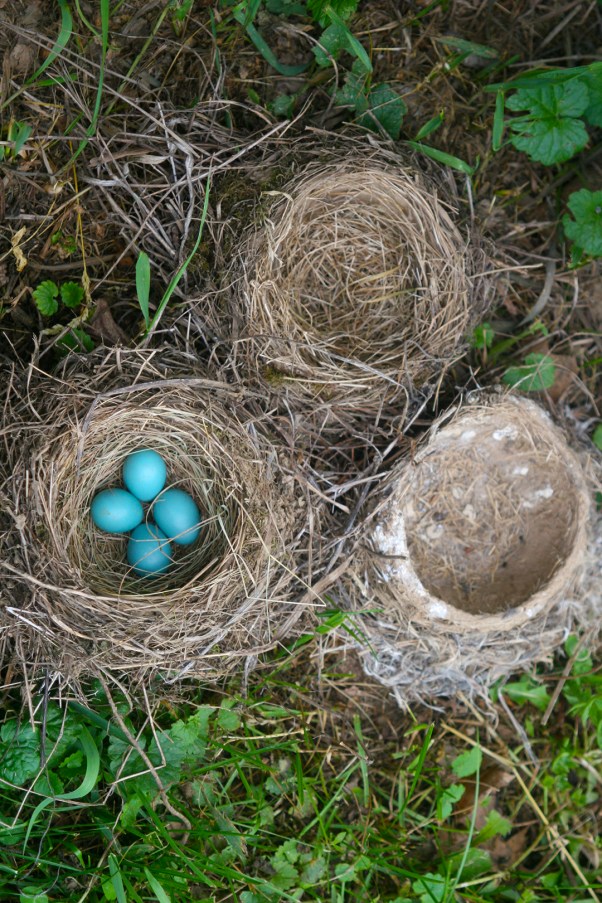
Robins’ nests: one never completed; one abandoned; one used, the fledglings flown.

~~~

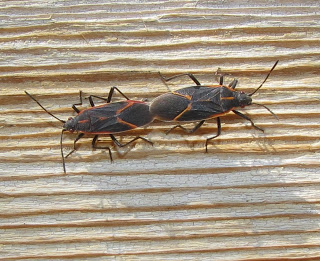
Meanwhile, among those bearing exoskeletons, pheromones also drift upon the air. I saw quite a bit of this activity during my lunch break. I was sitting by the library, next to ash and maple trees, prime feeding and hatching spots for boxelder beetles.

boxelderPairCO1a

Boxelder bugs mate in June here. This photo by bug-master Eric Eaton, co-author of the Kaufman Field Guide to Insects of North America

This is a good place for me to make a plug for one of my favorite bloggers, the anonymous author/photographer/entomology geek known as standingoutinmyfield.

~~

Meanwhile, I have been contending with some minor but niggling health issues and hope to get those sorted out soon, because I will be reading poetry at the beach on Monday, June 18–Cape May, New Jersey [hooray!]. Info appears on my Readings & Events page.

~

* Yes, Joni Mitchell fans, yes.

Haiku, moon, peony

During busy times, we may need a few moments of solitary reflection.

~

381-1233891708GdW7.jpg

Full moon moonlight
Sony Cyber-shot DSC-V1
10/800s, f 2.8, ISO 100, 7 mm

253142_2101392498695_2412222_n


~
flower moon
fireflies enlighten
the pear tree
~

I’m currently reading David Bayles’ and Ted Orland’s encouraging little book, Art & Fear. Nice reading to tuck around the edges of a few full weeks.


Nesting

Nesting. I’ve just finished reading Sarah Robinson’s thoughtful, gentle book by that title, which has offered me interior space at a time I need it. Deborah Barlow does a lovely review here.

9780981966717.jpeg

~

Outside my window every morning…conference of the birds.

The Conference of the Birds (or The Speech of Birds, or The Bird Parliament) is a Persian (Sufi) poem by Attar of Nishapur, an allegory of sorts in which the hoopoe instructs the other birds on how to find their king, which they can do by following the path of the right way to live. Here is an excerpt from the 1888 FitzGerald translation:

Behold the Grace of Allah comes and goes
As to Itself is good: and no one knows
Which way it turns: in that mysterious Court
Not he most finds who furthest travels for’t.
For one may crawl upon his knees Life-long,
And yet may never reach, or all go wrong:
Another just arriving at the Place
He toil’d for, and—the Door shut in his Face:
Whereas Another, scarcely gone a Stride,
And suddenly—Behold he is Inside!—

There are more adept, contemporary translations such as those by Dick Davis, Sholeh Wolpe, or others. This one’s copyright free and thus available here.

conf-birdsThe poem inspired the title composition of one of my favorite jazz albums of all time, this one by The Dave Holland Quartet, recorded in 1972. A college friend who loved Anthony Braxton’s music introduced me to this record, and it was one of the things I had in common with my dear David Dunn–early in our friendship, we learned that we loved some of the same poets and some of the same music.
~

Nesting season. The earliest fledglings have begun to leave their temporary homes. Some birds seem to return to their house sites–or perhaps their offspring do so. There are ledges here that shelter robins’ nests every year; there are certain trees the orioles seem to favor over and over again.

My children “fledged” some time ago. One’s returning to the house soon, but only for a visit. All homes, no matter how long loved and lived in, are only temporary shelters.

smallnest2


Linkage

Thanks to a student who pointed out how many of the links to the right (on this blog page) were inoperable, I have finally updated them. Well, most of them; I have limited time for tweaking around on my WordPress settings page.

Links appeal to me because they mean connection. The interconnectedness of the web parallels the many relationships among human beings, societies, and environmental entities from forest to desert, as well as infrastructural connections from town to city and across waters and the physiological connections that make life in a carbon-based embodiment possible. And neuro-connections that maintain our pulses and our consciousness–without such linkages, what would we be?

linkage-5 University of Utah

see link in para. 3

Our genetic linkage influences what we look like, what forms of illness or robustness our bodies possess, and the likelihood of carrying those traits to our offspring.

When we link ideas or concepts or theories, the resulting concatenation can be innovative, revelatory, novel–even if the result is a failure, there’s much to learn from trying to solve the puzzles we encounter when putting together unlike things.

Writing a poem, for example, involves such a combinatory effort. Combinatory logic is a mathematical concept but an intriguing metaphor for what poets do when we mash together observations with ideas and emotions and whatever values each writer operates under.

Linkage permits us to steer things, too, and to integrate systems elegantly:

baesystems-parallelhybridrives_OEMoff highway

[thanks to OEM Off-Highway]

So, please check out the links to my work and to the interesting sites on the right of the page on this post. And likewise, links below (yes, I am still taking part in reading blogs on the Blog Tour!)

On capital letters in poems and making craft choices in poetry, an interesting blog post by Marly Youmans.

And Leslie Wheeler on whether a poem can be a monument.

~

May you remain always connected, one way or another.

Whelmed

The other day, I mentioned to a friend that I anticipate a busy May, what with sundry beloveds graduating and having birthdays, and visitors from far places, and the end of the academic year at my place of employ, and prime planting-out-the-vegetable-garden season upon me…

She said perhaps I am overwhelmed.

All of the above events are wonderful things. And I have considerable help in accomplishing them, so there are no great burdens on my shoulders. Overwhelmed sounds, well, overstated. That got me thinking about the words overwhelmed and its opposite, underwhelmed–is there a “whelmed,” just on its own?

Turns out there is (archaic, notes Merriam-Webster):

WHELM transitive verb
1. to turn (something, such as a dish or vessel) upside down usually to cover something; cover or engulf completely with usually disastrous effect
2. to overcome in thought or feeling
intransitive verb to pass or go over something so as to bury or submerge it

And its source is Middle English (thank you, Online Etymology Dictionary):

early 14c., Middle English whelmen “to turn upside down”… Figurative sense of overwhelm as “to bring to ruin” is attested from 1520s.

Maybe I am whelmed, then, as per definition 2 above; the feeling I have doesn’t jive with the connotation of “to bring ruin.”

At any rate, I herewith offer some diversions by writers of other blogs and sites instead of my own work–with the exception of the first link on “Say It Today.” Read and explore and allow what’s delightful to wash over you without disastrous effect.  :)

GTJ75603_2

From Haverfordwest Library, accessed through Casgliad y Werin Cymru

~

Brothers & Storytellers, a brief essay of gratitude at Say It Today

~

Lesley Wheeler’s delightful, on-the-spur-of-the-moment, Day 29 of National Poetry Month poem should amuse those who write poetry and those who meditate and…well, just fun.

~

Donna Vorreyer on writing “a whole lotta poems.

~

Kelli Russell Agodon on writing a poem a day (and forgetting about quality).

~

Finally, Theodora Goss on love, home, and work–priorities that feel pretty “right” to me.