AWP conference 2013

I am heading up to Boston next week with about nine thousand other writers, writer-educators, writer-publishers, academics, and business people. The annual Associated Writing Programs conference will be in session March 6-10. I posted about the conference briefly last year...and last year’s conference introduced me to Brian Boyd’s work on cognition and storytelling. So I am hopeful that this year’s programs and panels will prove equally enlightening.

The conference offers a chance to meet or at least hear some of my favorite writers and to talk with interesting colleagues. Best of all, there are thousands upon thousands of books and literary magazines to browse. If I feel shy, I can interact with books at the Bookfair and “meet” my fellow writers through their polished texts instead of face-to-face (or body-to-body in the packed bar). The main problem with any event of this kind is the lack of places for introverts to regain equilibrium. At AWP, there are quite a few introverts; and people tend to claim a spot by a window, balcony, or corner somewhere in the conference area and send out “don’t disturb me, I’m recharging” body-language signals. Or they eat alone in the restaurant without looking too uncomfortable about the status of solo diner.

Writers understand.

~

Lori A. May offers her insights on the conference here, with a focus on people who are considering graduate school programs. I will be participating in a panel on that topic: the Low-Residency MFA. My main interests, however, remain bibliophile-oriented: discovering poets whose work I haven’t encountered before, finding new books by favorite poets, learning who is editing which long-running journals, and finding new journals to peruse.

By contrast, here’s a lovely, very funny article by Kay Ryan that appeared in Poetry magazine in 2005. The second paragraph sets the tone:

Once, when I was about twenty-five and not yet entirely aware of the extremity of my unclubbability, I did try to go to a writers conference. Thirty minutes into the keynote address I had a migraine. It turns out I have an aversion to cooperative endeavors of all sorts. I couldn’t imagine making a play or movie, for instance; so many people involved. I don’t like orchestral music. I don’t like team sports. I love the solitary, the hermetic, the cranky self-taught. Make mine the desert saints, the pole-sitters, the endurance cyclists, the artist who paints rocks cast from bronze so that they look exactly like the rocks they were cast from; you can’t tell the difference when they’re side by side. It took her years to do a pocketful. You just know she doesn’t go to art conferences. Certainly not zillion-strong international ones, giant wheeling circuses of panel discussions.

How, then, one wonders, can it be that I have just come back from AWP’s annual conference in Vancouver, treading upon a lifetime of preferring not to?

I fear I am rather in her camp. I do like orchestral music, but I prefer chamber ensembles. I don’t care for team sports. I love the solitaries, the St. Simeon Stylites of the world; there’s a bit of the hermit in me. Crowds–shudder! Yet a conference of writers at least offers the promise that I will be among others who understand how I feel and who feel that way themselves now and then.

St. Simeon Stylites

St. Simeon Stylites

Another advantageous aspect to this event is that I get a chance to talk about poetry and creative writing with people who are as passionate about it as I am. I can discuss the logic and music behind free verse line breaks and learn contemporary writers’ opinions about the sonnet. Is the metaphor dead? Does symbolism have any place in modern writing? Is hypertext the new L=A=N=G=U=A=G=E poetry? Does anyone understand the significance of the tattoo that says “December 10, 1830” on that young woman’s arm? (It’s Emily Dickinson’s birthday). I can talk about my book Water-Rites with people who are working on getting their own poems published and discuss current projects with folks who are sure to have ideas and advice to share.

So the event is worth a bit of discomfort on my part. If I get too overwhelmed, I can go back to my room or walk the chilly Boston streets or have a chat over coffee with just one person at a time.

Or maybe find a pillar in a park somewhere. I think I recall one at Bunker Hill….
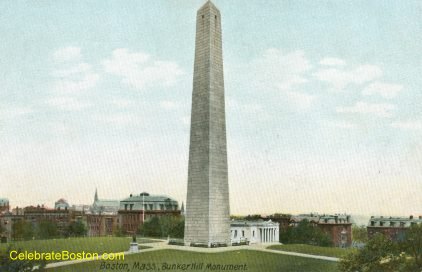
bunker-hill-monument

Difficult criticism

I have a list of books to read, yet I am often reading something else. Something I have stumbled on in the library or on a friend’s site or bookshelf…

The most recent of these is Rosanna Warren’s Fables of the Self, a book of essays on lyricism in poetry that has a distinctly classicist bent. It’s an odd book, though, because there are tightly-controlled, scholarly critical essays in here and also memoir; the book closes with a journal witnessing her father’s dying. I’ve found the personal pieces thought-provoking and often lovely. I’ve found her criticism scholarly and difficult.

The fault is mostly mine: I have very limited background in classicism. No Latin, no ancient Greek, few readings of the classic writers even in translation. By the classic writers I mean such early Western poets as Horace, Virgil, Catullus, Theocritus, Ovid, Sappho, Euripides (but also Dante, Milton, etc.). These are foundational works, but they did not act as my foundation for poetry or poetics; I studied them later in my readings of poetry–and not in a scholarly way. Warren kindly offers translations for all of the original dead language passages she quotes, so she understands that her audience may be less familiar with the texts than she is. Nevertheless, I find this book quite difficult to read, since I am always stopping to look things up or re-read a paragraph and make certain I am following her exposition or argument.

It is challenging to me to read a discussion of, say, Mark Strand’s poetry that uses Horace’s odes or the poems of Alcaeus to demonstrate the thread of the pastoral that appears in Strand’s work. Yet by reading these essays, I learn about the alcaic lyric stanza and can pursue more on that topic if it interests me. I can go to Horace knowing a little more what to expect (as I only know his most famous/familiar georgics). I’m reminded of being in my 20s and reading Proust (yes, all the way through); I kept taking notes on what else to read…Racine, for example…as those allusions appeared in the novel. As a result, I got quite an education–if a rather eccentric, autodidactic one–in classic French literature and art and music. Then I read Hugo and Flaubert and Baudelaire. My life would be less rich if I hadn’t been moved to pursue those references beyond the text.

Similarly, I am likely to be reading more of the classical literature, and perhaps to understand it a bit better (as to how it relates to contemporary life and art) thanks to Rosanna Warren.

When the going gets tough, the tough get reading!

Freedom above utility

S. Polgar is mentioned in Tough's book. Her website is here: http://susanpolgar.blogspot.com/

Susan Polgar is mentioned in Tough’s book. Her website is here: http://susanpolgar.blogspot.com/

One of the gifts I received this year is the book How Children Succeed, by Paul Tough. It’s a quick read that dovetails many of my interests: education, psychology, character, motivation, philosophy, & childraising, among others. There are several aspects of the book I could write about here; but today my frame of mind has wrapped around one particular passage having to do–well, in the book, with chess–but metaphorically and personally, with why I bother to write poetry.

In the chapter titled “How to Think,” Tough offers the stories of several chess-for-children programs and connects these endeavors with education, as well as with traits of persistence, grit, and critical thinking skills. He cites examples of chess masters the world over, of child prodigies, and of chess teaching methods; then, he connects these strands with the notion of learning “character.” That’s one of the book’s arguments: that character is learned, made up of other habitual traits, that it is not the same as temperament. One skill that good chess players learn is how to fail, how to overcome confirmation bias in decision-making, and how to immerse themselves through the habit of study (persistence). This does not mean that chess players naturally extend these abilities to other areas of their lives, but they could do so since they do possess these abilities. Tough finds it fascinating that many chess players still manage to screw up other areas of their lives…they do not choose to extend, or apply, their chess traits to things like academics, career, or personal relationships.

So choice (“volition” as he terms it, though he defines volition as closer to willpower) interferes with our application of learned ‘good’ habits. Ah, the old ‘free will’ trap…

~

But I digress.

The part of this chapter that grabbed me is a quote from chess master Jonathan Rowson. He says: “the question of chess being an essentially futile activity has a nagging persistence for me…I occasionally think that the thousands of hours I’ve spent on chess, however much they have developed me personally, could have been better spent…[yet] chess is a creative and beautiful pursuit, which allows us to experience a wide range of uniquely human characteristics.”

Sounds familiar to me. People say the same sort of thing about writing poetry. Then Rowson says chess is “a celebration of existential freedom, in the sense that we are blessed with the opportunity to create ourselves through our actions. In choosing to play chess, we are celebrating freedom above utility.”

Oh, that says it so well. Freedom above utility–choosing to create myself through my actions, which allows me, as poet and as sentient being, to experience all of those messy and sorrowful and complex and delightful human characteristics.

~

I have spent my 10,000 hours writing and am “expert” at it, yet it has brought me not money nor favor nor fame. So why pursue the path? Because it is beautiful and freeing. Because it is my form of gift–I have a small talent that I have labored at, but I am not “gifted” as a writer…yet I can see my way to thinking of my poetry as part of the gift economy Lewis Hyde elaborates upon in his book The Gift (which I’ve mentioned in a previous post). Ambition is not the same as willpower, and I do not have single-minded willpower in the task of promoting my work or my persona as a poet–no “poetry diva” am I. But I do have persistence in this one area: the writing practice and all it entails; and I do have experience with it, and I possess deep and abiding curiosity about poetry and gratitude that it exists and that I can continue to try my hand at it.

Even if it seems futile or pointless or non-productive to some people.

~

As an aside, I note that David Orr’s recent book Beautiful & Pointless: A Guide to Modern Poetry has been both enthusiastically and scathingly reviewed, so I must get to it soon. Perhaps Orr’s work will clarify my thinking on the non-remunerative, generally unacknowledged occupation that chose me long ago.

Or perhaps it does not need clarifying. Perhaps celebration is enough.

Still more difficult books

I am perpetually out to confound myself.

After reading Larson’s odd but lucid koan-like “biography” of John Cage’s creative interpenetrations with Buddhism, I have begun Maurice Merleau-Ponty’s 1961 text The Phenomenology of Perception. Already I have encountered some thoughts in Merleau-Ponty that relate to the indeterminate, a concept that excited Cage and that Larson demonstrates shares a great deal with Zen. But reading Merleau-Ponty is more challenging than reading Larson’s book, as I have less background in early 20th-century philosophy than I do in Zen studies. I enjoyed reading Bachelard’s imaginative, image-based take on phenomenology because I could relate to it on a poetry level even when I missed some of the philosophical antecedents (or contemporaries) he references. That possibility isn’t available to me with Merleau-Ponty.

I do appreciate that his writings were formulated before technologies that made neurological processes visible and while psychology was still bickering with the “hard sciences” about empirical measurements. (Actually, that bickering continues in some areas of study.) I do not think Merleau-Ponty would agree with, say, E. O. Wilson’s rather reductionist idea of consilience. Yet clearly, the philosopher was willing not to discount the sciences or empirical study–he just felt those areas were not of particular use to a philosopher, particularly a phenomenologist.

The body is what we have with which to experience the world, Merleau-Ponty tells us. But the human body is limited by its perceptual experiences. Structures–and that includes abstract structures such as thought–appear to have recognizable patterns, and the perceiver may posit cause and effect as a result. But another body may perceive differently, due to a different biological process or a different time or any number of physical or environmental variables. We perceive yellow with the cones and rods of our human eyes; the dog or the bee, the spider or the hippopotamus, may have eyes that do not see yellow as we do. Is yellow a quality or a perception? Merleau-Ponty seems to be saying (I am not very far into the book, so I  may be in error) that science cannot be objective, even though it is science that made us question our senses: “We believed we knew what feeling, seeing, and hearing were, and now these words raise problems.”

And how does this all relate to consciousness? Maybe I’ll figure that out as I go along.

ann e. michael poet

~

Here’s a sentence I love because it speaks to me of poetry and the arts on the level of ambiguity: “[Science, with its categorization] requires that two perceived lines, like two real lines, be equal or unequal, that a perceived crystal should have a definite number of sides, without realizing that the perceived, by its nature, admits of the ambiguous, the shifting, and is shaped by its context.”

Or perhaps by observation? A little Uncertainty Principle going on there. I feel that good poems change when observed, and change in the context of the reader’s time, place, experience; that they possess ambiguity not in the sense of rhetorical wishy-washiness but in the rich sense of complex possibilities, indeterminacy, transformation.

~

I’m especially pleased to have found Bernard Flynn’s article in The Stanford Encyclopedia of Philosophy (the link to the entire article is above), which ends with the following reflections on Merleau-Ponty:

If we think how the thought of Merleau-Ponty might prolong itself into the 21st century, or as it portends a future, then we cannot not be struck by the fact that his philosophy does not entertain any conception whatsoever of an ‘apocalyptic end of philosophy’ followed by the emergence of some essentially different mode of thought. Unlike Heidegger, there is no anticipation of an ‘other beginning’, also there is nothing like Derrida’s ‘Theory’ which is waiting in the wings to displace philosophy, and unlike Wittgenstein, Merleau-Ponty’s thought does not await the disappearance of philosophy. In the academic year 1958–1959, Merleau-Ponty gave a course at the Collège de France entitled “Our State of Non-Philosophy.” He began by saying that ‘for the moment’ philosophy is in a crisis, but he continued, “My thesis: this decadence is inessential; it is that of a certain type of philosopher…. Philosophy will find help in poetry, art, etc., in a closer relationship with them, it will be reborn and will re-interprete its own past of metaphysics—which is not past” (Notes de cours, 1959–60, p. 39, my translation). After writing this he turns to literature, painting, music, and psychoanalysis for philosophical inspiration.

The theme of the indeterminate frequently recurs in the thought of Merleau-Ponty. Philosophy is enrooted in the soil of our culture and its possibilities are not infinite, but neither are they exhausted. In an essay entitled “Everywhere and Nowhere, ” Merleau-Ponty explicitly reflects on the future of philosophy, he writes that philosophy “will never regain the conviction of holding the keys to nature or history in its concepts, and it will not renounce its radicalism, that search for presuppositions and foundations which has produced the great philosophies” (Signs, 157). In his Inaugural Address to the Collège de France, he claimed that “philosophy limps” and further on that “this limping of philosophy is its virtue” (In Praise of Philosophy, 61).

What will philosophy do in the 21st century? It will limp along.

Apparently, I shall be limping along with it.

The value of noise

Having posted several times on the value of silence, I feel I ought to balance things out by writing about the value of noise. These thoughts likewise stem from my recent reading: Kay Larson’s book about John Cage, creativity, and Buddhism.

This morning, there were a few hours of intermittent sunshine; the air, still nippy from a recent cold front and some high winds, had warmed up a few degrees. I felt inspired to prune some shrubs and start the rather significant task of removing fallen branches from the lawn. I did not realize how big a job this will be until I started the work because the grass is long and the leaves provide a bit of cover. Every few steps, though, I encountered clumps of twigs, broken branches, sticks of all sizes. We won’t want to run a lawnmower over this mass of debris, and it will get caught in our rakes when we try to remove the leaves. The best way to rid the lawn of storm-downed branches will be the old-fashioned way: human power, gathering one or two sticks at a time. The fresh air streamed into my lungs, the sun shone on my back. I pulled on my husband’s old sweater and my daughter’s old coat and my son’s gloves and my own boots and started to work.

What I noticed this morning was noise. John Cage, a man whose later compositions often engaged with silence, also loved noise. His percussion pieces were scored for tin cans, plates, pipes and modified pianos, and he was prescient about the incorporation of electronically-produced sounds into music. I love reading about his experiments with noise, and today I recognized the music in everyday sounds very clearly.

Today’s noises:

Leaf-crunch. The damp leaves produce difference tones from the dry ones. Leaves of different species vibrate in a range of tones depending upon their thickness, brittleness, serrated shapes, oiliness.

Vehicles. The roads are not terribly close to the house, but when the trees are bare we get a range of vehicle sounds from as far as the highway. Large trucks still growl, wheeze, squeal, rumble, and beep as neighbors get trees removed from their properties and department of transportation crews work at street clean up. Cars drive past.

Somewhere, a leaf-blower. Several chainsaws in the distance.

Mockingbird–not all of them have flown south just yet. The buzzy twittering of starlings and small flocks of sparrows. Woodpeckers drilling at trees.

My breathing.

The sound of the nippers and hedge clippers, the sound that pruned branches make as they whoosh and scratch and shimmy earthward and get tangled in the shrubs. The different noises of a cut made on dead wood and on live wood. The snap of twigs. The silken whisper of long grass underfoot.

Creak and groan of the walnut trees as a stiff breeze hits the woodlot. A dog, barking. The hens, chuck-chucking in their run.

The telephone from inside my house. An overhead jet.

And it isn’t cacophony; it’s a kind of music, certainly. The randomness and the patternedness work together. As do the silences.


Here’s one of Cage’s most melodic works, “In a Landscape,” very apropos … very lovely.

YouTube/John Cage “In a Landscape” Stephen Drury pianist


Silence (John Cage, Zen, head-noise)

Slow Muse blogger Deborah Barlow–artist, critic–recommended Kay Larson’s recent book on John Cage, Where the Heart Beats. Silence was so significant in Cage’s work and thinking that, given my recent reflections on noise or lack thereof, this seemed the right time to pick up that text. Lo and behold, synchronicity of several kinds. The author, Kay Larson, thanks John Daido Loori, a rōshi of the Mountains and Rivers order of zen Buddhists and long-time abbot of Zen Mountain Monastery near Woodstock, NY. She studied with him beginning in 1994.

In 1992 and 1993, I attended two weekend retreats there; the brief days remain vivid in my memory. Perhaps more on that another time. Haiku is involved…and silence.

Recently, given some irregular bumps along the walk of life that have led to excessive “head-noise” (my term for stress I can’t quite let go of), I have been returning to some zen-influenced texts and trying to remember to breathe and to be here now. Arne Naess’ writings on joy and environment and Buddhism–I’ve just finished reading a collection of his essays–dovetail very neatly into this reflective book on Cage’s life, work, and influences. Larson’s “Zen” approach to writing about Cage is so gentle and refreshing that reading this book soothes me. I find within myself a kind of inner silence, my breathing returning to its slower, quieter pace, as I read the brief selections of prose Larson uses to explore the life of the mind of this peculiar and innovative artist/composer/writer.

Very like philosophical analogies, Confucian fables, parables of many cultures, koans, meditations, prayer and other forms of contemplative practice.

What reduces head-noise? For me, the best strategy is calmness, but I am not an adept at meditation. I have sat zazen badly, and learned much from the practice of sitting zen badly, but I have never managed to make meditation a genuine practice in my life. Deep breathing and slow movement, such as tai chi or qi gong, seem to work better for me. In addition, the Quiet Place. I settle down better when I can detach from computer, phone, electric lights, appliances. Art reduces head-noise: art requires attentiveness. Poetry, yes. Gardening, walking out of doors–good choices. Music, sometimes.

Philosophy, not so much. (Alas.)

Politics? Weather reports? Analysis? ….as the Buddhist monks might say: mu. Translation into teen-speak from five years ago: “not.”

And also, compassion. The practice of compassion keeps a person attentive and also relaxed. It is a form of active prayerfulness, of acceptance of self through the acceptance of others. After the bruises and bashings of a presidential election year in 21st-century United States, a little compassion would reduce the malaise and anxiety we have had to endure intellectually, emotionally, and–in the wake of bad storms on the east coast–physically.

I give you Quan Yin, or Guanyin, or Kannon Bodhisatttva, known as Avalokitesvara  in Sanskrit and termed the goddess of mercy, a counterpart to the Christian Jesus or Mary. This being represents the compassionate, merciful, kind, non-judgmental, accepting aspect of the cosmos, the universe, or god. I realize that it seems I may have wandered a bit far afield of Cage at this point. But read Larson’s book; I haven’t drifted as far from my topic as it seems.

And just because it does seems as though I am rambling considerably in this post, I think I can close with a poem from my collection Water-Rites, and somehow make it fit with these topics:

Intervention

I am thinking about the cowbirds who fought
in my driveway this morning
and how they struggled, one overbearing the other,
pecking at its head, keeping it pinned
to gravel. I wonder, now, why I chose to stop
and free the losing bird from its aggressor,
lift its bloodied damp body in my hands,
rescue it even though
it was also a cowbird, a pest
that usurps the nests of thrushes—
although I respect the dominion of beak & claw,
I want to preserve the generation
of songbirds; there was no reason for me
to intervene, no logic but somehow I felt
surely there is a place,
in the battle that is this world,
for the mandate of compassion.

© 2012 Ann E. Michael

Libraries & book love

In my last post, I drifted onto the topic of libraries–and stirred up images of favorite places. Libraries have certainly been among my favorite places and loom large in my childhood memories. Two of those libraries were new when I entered their doors: the Grinton I. Will Library in Yonkers, NY, which opened in 1962 (I first visited in 1964) and the W. Leslie Rogers Library in Pennsauken, NJ, which opened its doors in 1971. I recall a few distinct discoveries even from my first-grade forays to the Yonkers library. It was there I discovered Richard Wilbur’s Digging for China, a book I adored.

Free public libraries represent one of the best uses and most noble purposes of the tax dollars and philanthropic gestures of citizens in a democratic society. These buildings, some grand and some exceedingly modest, harbor banned books and out-of-print books and sections devoted especially to children’s books; a library admits of free speech and liberated thinking for people of all ages. A library, by its very existence, reminds citizens that education matters and that information can be free, can be borrowed, can be disseminated and shared.

When I was a child, libraries were safe places to hide, to explore, and to pursue my own interests–which often varied quite a bit from the interests of my peers. The library in Pennsauken offered me an early education on visual art. I probably borrowed every book in the place that had anything to do with art or artists, from Aesthetic Inquiry; Essays on Art Criticism and the Philosophy of Art to The Agony and the Ecstasy. The library stocked a book chronicling  the letters of Theo and Vincent van Gogh as well as huge, heavy, hard-cover museum books with color plates of famous artwork. Some of these were stamped more than a few times with my library card’s number.

I also borrowed, and read–enthusiastically and, occasionally, dutifully–classic novels that I had somehow learned I “ought” to read. I read a fair number of junky novels, too, and young adult fiction, and children’s books. Even though I was nearly ten when Leo Lionni’s Frederick was published, I loved it and never considered it a “little kid’s book.” Interestingly, Frederick the mouse gathers images and turns them into words. He is a poet. (A word-artist).

Books: Anything, everything, as bibliophile overlaps with autodidact.

Books were my first and often my best teachers, though I have been fortunate enough to have had some wonderful teachers (formal and informal) in my life. One of them, my grandmother Edna Michael, will always be closely associated with libraries in my heart and memory. She was the Story Lady at her small-town library in South Whitley, IN; and my siblings and I spent many hours in the small white building that housed South Whitley’s free circulating books. We read, and we listened to her read. She would don “an olden-times dress” she’d designed and sewn herself, tie on a large matching bonnet, and gather the town’s youngsters in a circle on the library floor for story time.

She always left the library with at least a couple of grownup books for her own reading material. I was proud to be like her.

A few years ago, the town enlarged its library, added a new children’s wing, and dedicated it in my grandmother’s name. Edna Michael, the Story Lady.

I’m pretty proud of that, too.

ann e michael

The South Whitley Library as it was in 1967, with my grandmother in her Story Lady attire.

Philosophy of cities

I’m going to let the late Lewis Mumford speak for himself in a couple of excerpts from The City in History. Even though I love history and have perused many a book on the subject(s), I learned a great deal about Western history from this book. What intrigues me most as I’ve read, though, is Mumford’s roles as historian-as-sociocultural-critic and historian-as-philosopher. When writing a book of this scope, no matter how founded on data, archeological and textual records, it’s hard for this writer to avoid thoughtful forays into philosophy. Mumford looks forward, too, speculating on city life in the future–and he takes rather a dim view of where megalopolises were heading in 1961. He was prescient indeed. While today’s citizens may argue that his judgments are overly negative, it is difficult to refute the accuracy of his speculations, particularly when he foretells the modern city’s environmental impact on society and on earth’s resources.

So much of the book is a warning: cities have a tendency to collapse, and there are reasons for that. Such reasons have to do with greed, power, poorly-applied technology, lack of foresight, overcrowding, ignorance of the need for balance in any system–governmental, agricultural, environmental, social, economic, etc. He sounds like a Cassandra at times, and we all know that aphorism about being doomed to repeat history, as does Mumford. But ultimately, he makes a passionate call to creativity and human life, warning us not to let our burgeoning technology reduce human activity to the level of the hive. He revels in the arts, in the conscious purpose of human living, in the genuine communication among persons, and in the joys available to those who understand an organic system must be balanced.

[He refers to men and mankind using the typical non-gender-neutral language of the era, which I am not going to alter in these excerpts.]

green

A bit of green…

Here he is discussing the “Green Matrix.” Remember, he’s writing in 1961!

~

“The maintenance of the regional setting, the green matrix, is essential for the culture of cities. Where this setting has been defaced, despoiled, or obliterated, the deterioration of the city must follow, for the relationship is symbiotic. The difficulty of maintaining this balance has been temporarily increased, not merely by the incontinent spread of low-grade urban tissue everywhere, dribbling off into endless roadside stands, motels, garages, motor sales agencies, and building lots, but by the rapid industrialization of farming itself, which has turned it from a way of life into a mechanical processing business no different in content or aim or outlook from any other metropolitan occupation…”

~

Following Mumford’s observation that overpopulation is often a result of privation, rather than the expected other way around, and leads to the “bursting” of the city as a healthy, organic system, he notes (with clear reference to his much earlier chapters on the decline of Rome):

“No profit-oriented, pleasure-dominated economy can cope with such demands: no power-dominated society can permanently suppress them. Should the same attitude spread toward the organs of education, art, and culture–man’s super-biological means of reproduction–it would alter the entire human prospect, for public service would take precedence over private profit, and public funds would be available for the building and rebuilding of villages, neighborhoods, cities, and regions on more generous lines than the aristocracies of the past were ever able to afford for themselves. Such a change would restore the discipline and the delight of the garden to every aspect of life; and it might do more to balance the birthrate, by its concern with the quality of life, than any other collective measure….significant improvements come only through applying art and thought to the city’s central concerns, with a fresh dedication to the cosmic and ecological processes that enfold all being…the best economy of cities is the care and culture of men.”

The care and culture of “men” meaning, “human beings”: that’s a lovely purpose for a city–or a nation–a noble one, and one too many people tend to forget as we occupy ourselves with the busy-ness of our own isolated lives.

~

Of note: The USA’s 50 “greenest” cities…which does not mean they are good cities by Mumford’s definition, but which is probably a good start. Click here.

Short books and re-reading

~

clockWhen life gets busy and over-scheduled, even an inveterate reader may find she has to give up some of her precious book time to life’s other adventures and responsibilities. Philosophy and meditation require enough time for reflective, slow thinking; a hectic week precludes such activities. Creative thinking gets funneled into problem solving of a more mundane and practical variety. Creative writing? It may have to move, temporarily one hopes, to a back burner.

Last week was one of those over-scheduled periods when I take advantage of brief, unscheduled minutes to read short books. The beauty of reading short books is that the best short books reveal depths upon re-reading–one of the beauties of poetry as well. And if those short books happen to be books of poetry? “More’s the better,” as my great-aunt used to say.

During my crazy week, I managed to read three short collections of contemporary poetry, all by poets with whom I am personally (if marginally) acquainted. All three books are wonderful: layered, varied, well-crafted, interesting, moving, refreshing, surprising reflections on and of modern life with enough empathy and reach toward the “universal” to keep the poems valuable beyond today’s context. All three books are going on my re-read list so I can study and savor them again later, yet each collection is vivid and entertaining enough to read when crunched for time.

~

Will Greenway’s 1999 collection Simmer Dim was published by University of Akron Press and offers the reader a travelogue to many places in the world without as well as the more interior worlds of memory, relationships, and reflection. Greenway writes in both free verse and in rhyme, which he employs so well it seems natural even in the informal diction his work often takes.

April Lindner’s 2012 collection This Bed Our Bodies Shaped was published by Able Muse this summer. The poems offer the sense of a personal speaker, suggesting intimacy that is revealed subtly through well-crafted lines and images of flowers, scene-settings, and  allusions from the classic to the modern (rock n roll). Lindner presents the woman’s perspective as individual, surprising, and non-stereotypical; when she writes about jobs, a lover, motherhood, or menopause, her observations are often quirky but wonderfully observed.

Elaine Terranova’s 2012 collection Dames Rocket was published by Penstroke Press. I love Elaine’s work, steeped as it is in the natural world, plausible and tactile, yet positively ascendant in tone. Her memoir-type poems evoke the kind of childhood that is fast becoming historical, and her awareness of that fact–the fact of aging–gives these pieces poignancy and occasional irony.

~

All three books are also available on Amazon.com. Or ask your librarian to locate a copy for you.

Amazon…

The second week of August is always a busy one for me. There’s little time for reflection–or writing.

I do have some news to impart, however: Water-Rites is now available on Amazon.com at this link. In the best interests of my publisher, Brick Road Press, I’m going to request that you order from the press itself if you can.

Thanks!