Reading by day

While I await the eventual drying-out of the garden soil so I can plant a few early veggies and herbs, it seems a good time to ready a few more poems. I’m revising, drafting, but not sending out work. That feels comfortable at the moment; anyway, I much prefer writing to submitting poems.

I’ve also reserved myself some quiet hours to read books of poetry and a novel or two. Jessica Cuello’s Yours, Creature just arrived in my mailbox, and I’m on an Isabel Allende kick at the moment, so I definitely need some time to devote to reading. My husband, who tends to do his reading in the evenings, recently forwarded a Washington Post column by Stephanie Shapiro about why so few people read for pleasure during the day. Its title is “Why Does Daylight Reading Feel So Wrong?” She writes, “Although I am retired, I find it hard to allow myself an afternoon with a book or a long magazine article. Just the thought of settling onto the sofa in daylight hours, especially on weekdays, smacks of laziness and stirs up guilt. If I must sit at all, it should be at a desk or a countertop to do something ‘useful’— answer an email, write a grocery list, look up a recipe, what have you.”

I’m sure this is a common feeling, but it isn’t one I acquired, probably because my dad was ALWAYS sitting around reading a book, newspaper, or magazine–day or night. Reading during the day seemed normal to me. It still does, I’m happy to say.

~ Here’s a poem from my chapbook Barefoot Girls.

Night Drawn

I drew the night
with a number 2 pencil
I'd sharpened with
a Girl Scout penknife.
It was 1969. Night
needed blurred edges
so I smudged at it
with two fingers of my
right hand. And then
night left its prints
on my thumbs and palms,
somehow, on the yellow
print blouse and blue
jeans I wore.

I sketched shadows
the way I saw them
under beds and outside
windows, how they
deepened the early hours
when Grandmother
wakened by gaslight
to start her chores--
in darkness
which I learned to draw
with a pencil and
which stayed on my skin
the whole day.

Legacy vs the present

For National Poetry Month, I’ll be posting a poem here every few days…something from one of my books and chapbooks.

First, though, musings on why it matters to me that my poems get collected in book form. I’ve been asked about this by a few people recently, sparked by conversations about the changing technology of “print,” and also artistic purpose, and even the concept of legacy. If I were a visual artist–say, a painter–there would be objects my hands had produced. Even a mediocre painter creates something apparently lasting or worth something. You die, and your paintings go to family members or to flea markets where people can purchase them (for the frames if nothing else…). A ceramicist may make truly useful things such as bowls and mugs; those items can last and be used, even if they end up in thrift shops or post-apocalyptic archeological digs. Maybe the painter or potter isn’t remembered, but the product endures for awhile.

But poems? So many people leave behind sheaves of unread, unpublished, perhaps private writing, much of which won’t resonate with anyone. Even if it could, the chance that anyone would care enough to sort through before burning or recycling and uncover a heretofore unknown genius is vanishingly small. I, for one, am not writing for eternity or for the future. I write for the now. The main reason I want to get books in print is that the product (a book! I love books!) matters while I’m here. After I die, no one will want my pile of drafts, old journals, revisions, false starts–not even my children. And why should they? Will future society value archives of anyone, let alone very minor poets of the early 21st c? Maybe the demise of technologically-based societies is right around the corner. All the more reason to work in and for the present moment. If I garner a few readers today, I feel blessed.

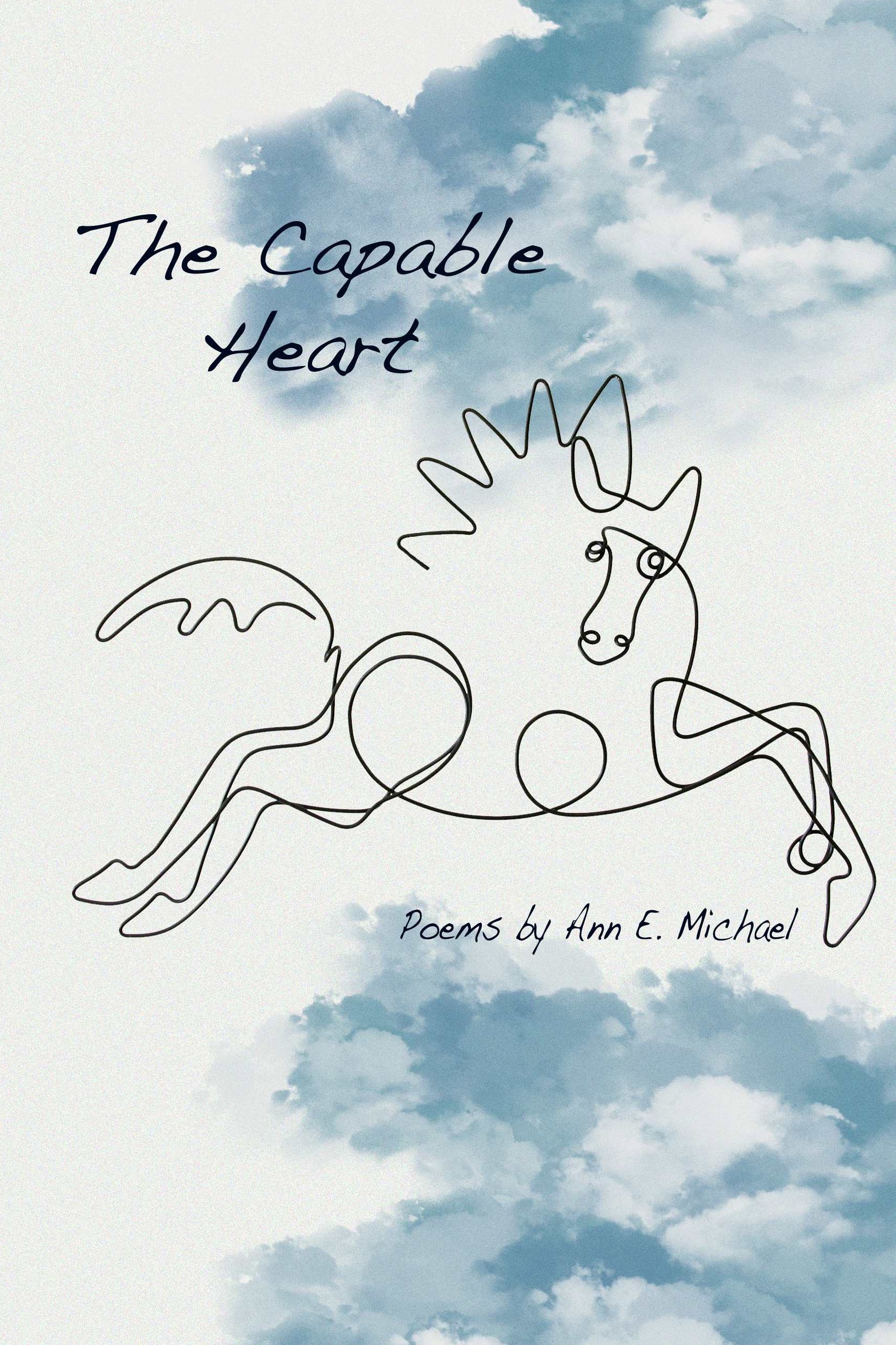
~ Today’s poem is from my 2011 FootHills Publishing chapbook The Capable Heart.

No Long Farewells

The weedy field.
On the rise beyond,
armies of brown corn,
ready to fall.
Willow looses streamers,
yellow kites
floundering in
tall grass.
I look at my hands,
fingers gold. We
walk past grapevines.

Later I think of this day
as a drafty barn,
sun on its walls,
clouds high beyond rafters:
roofless.
Nothing blocks our vision
for once. No blinders.

There is little time
for long farewells.
A light goes on.
Your bus is leaving now.
Moon follows you home.

Throwing mud

This week, I got the potatoes in the ground; last week, it was spinach. In between, a lengthy late-March cold snap and yes, more rain. But also a visit from a Dear One and a trip to parts of Pennsylvania I seldom have had reason to explore. Although I have lived in PA’s Lehigh Valley for nearly 40 years–longer than I have lived anywhere else–I confess a lack of familiarity with many areas of the Keystone State. Philadelphia and its suburbs I know well, and Reading and Lancaster, to a lesser degree; and our family often visits Gettysburg. We travel west and north to go camping now and then. I’ve been to Pittsburgh a few times and seen Falling Water and the Cathedral Trees and both branches of the Susquehanna River. Penn State just twice, once when I was chaperoning high school sophomores to History Day competitions.

Pennsylvania is a big commonwealth: 46,055 sq miles. It’s a good place for poetry, though I leave it to poets such as Harry Humes and Jerry Wemple (among others–looking at you, Dave Bonta) to explore its varied climate, geography, history, and culture. Mostly I stay within the confines of my own back yard, which is large and varied enough to inform me for a lifetime.

But the Dear One had planned to give her dad a pottery workshop with a well-known potter, Simon Leach, as a 70th birthday gift. That birthday fell during covid, however; the long-delayed weekend in Millheim PA thus did not take place until this past week. I have never placed my hands on a potter’s wheel (though I ought to try it sometime) and just went along for family togetherness and to visit the arboretum at Penn State, slightly out of season but still a very pleasant place to walk, by myself, on a cold but sunny Sunday. It rained on Saturday, so I sat by the fireplace at our B&B and read novels. Could anything be more perfect?

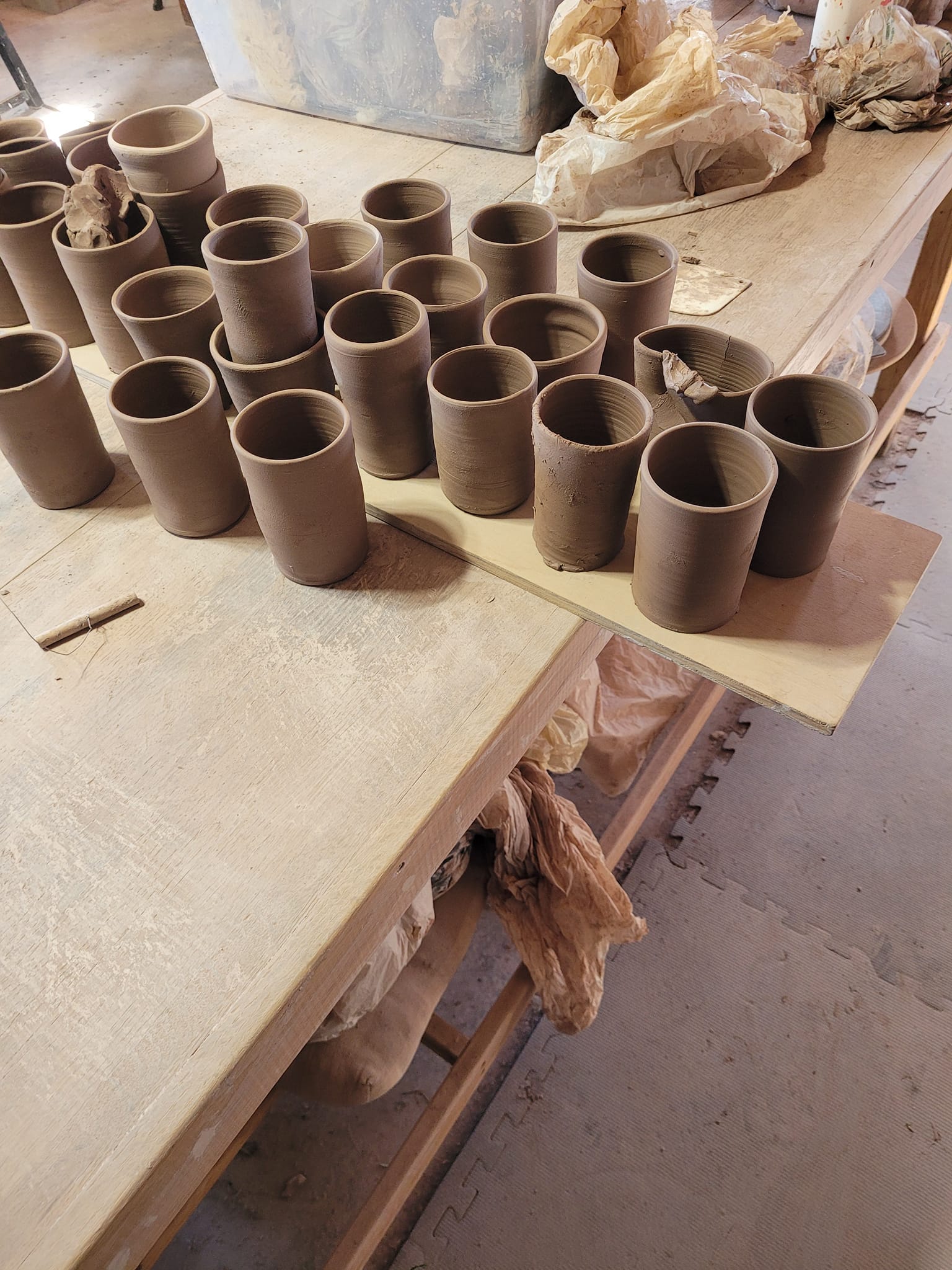
The task of Leach’s workshop was to practice making cylinders. It was a muddy job indeed. Here’s a photo of some of the student results. Dear One is quite adept at cylinders; indeed, she’s a good potter and sells much of her work, a skill she enjoys when she’s not providing emergency medical care to dogs and cats.

Leach uses the slogan “Keep practicing!” Yeah, that’s how you get to Carnegie Hall, right? But it is also how people get better at any skill, even those who are preternaturally talented in music, art, dance, etc. That includes writers. I have to remind myself that it is now time I got back to my routine of writing, revising, and the practice practice practice part of composing poems. The garden, the daughter, the travel, and the novel-reading have been splendid distractions, but as National Poetry Month approaches (April!), I ought to get myself back into routine.

A routine’s generally looked at as mundane–a tedious necessity. It needn’t be that way, I keep reminding myself. It can be as fun and messy and surprising (or frustrating) as throwing mud.

clay cylinder practice in Leach studio

House concert

I can only recall ever attending one house concert. It was during my college days–1977 or ’78–and took place at a large Victorian house in Ann Arbor, MI. We sat about on chairs, sofas, stairs, and the floor to listen to blues/folk singer and guitarist extraordinaire, David Bromberg. It was a pleasant environment in which to hear the musician–an intimate and attentive audience, a sense of camaraderie and shared appreciation, and quite comfortable. But I never managed to attend another house concert…usually, such events are fairly private and by invitation (as I think that one was), so you don’t hear about them until after they’re over.

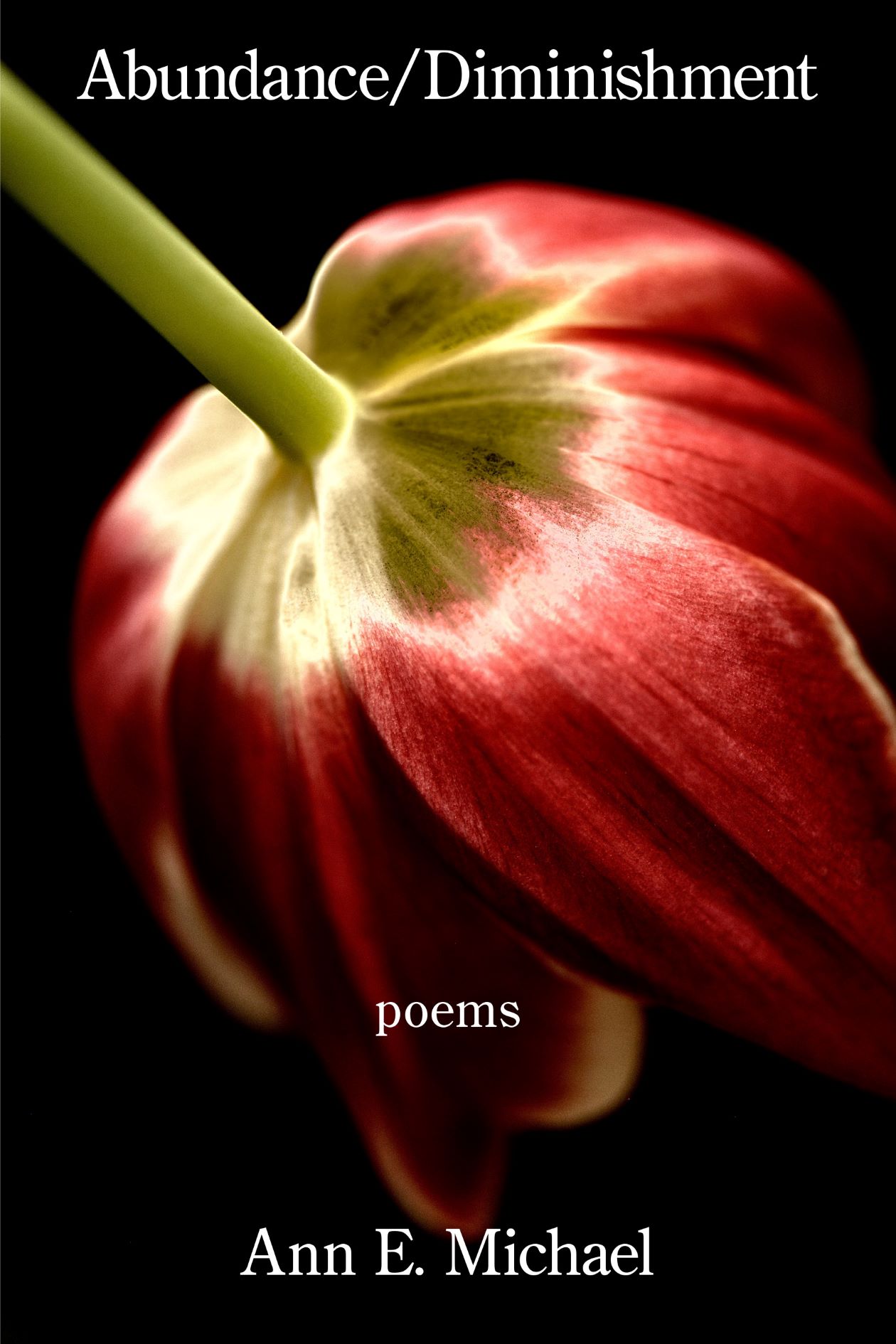
I was therefore delighted when friends suggested that they hold a “house concert” or, in this case, a house reading, so that they could share my poems with some acquaintances. A new audience! A comfortable, non-intimidating space, terrific food, and the kindness of people willing to listen to a bit of poetry…what’s not to like about that? There were over a dozen folks in our friends’ pleasant home, and at the close of an evening of wine and food and conversation, I was asked to read and talk about my poems. And promote my new book (which is now available to order on Amazon).

My gratitude overflows, Don and Jeannie. You’re the best!

An unexpected aspect of the house concert event was that it was delightful to meet the “audience” first, before the reading–a reversal of the usual order, and very helpful in getting me to feel more comfortable not just in presenting my work but in deciding which poems to read. In addition, the cozy atmosphere meant listeners felt free to ask questions and continue the conversation to include thoughts on song lyrics, “private” poetry (that people write for themselves alone), favorite poets, and the context of the work of poetry in the world.

That was such a marvelous evening. And up ahead, somewhat similar in nature: on March 27, at 7 pm, I will be joining poets Marilyn Hazelton and Susan Weaver–two members of the writing group that I’ve been part of for decades–and folk singer, radio host, teaching artist, and community arts leader Dave Fry for one of Dave’s monthly “Dave’s Night Out” events at Godfrey Daniels, a listening room in Bethlehem PA. Dave has been generous enough to have hosted me with other poets on stage at the coffeehouse before, and the experience was terrific. His guitar accompaniment enhances the sonic delights of poetry. I’m looking forward to this one. Tickets are $15, I think, and they keep Godfrey’s running as a non-profit arts venue in our region.

I’m happy to see this book in the world. Copies can also be ordered from Kelsay Books.

~

Life story

My current slow-read is K. Setiya’s book Life Is Hard: How Philosophy Can Help Us Find Our Way. While there are many aspects of this philosophical book that interest me and pertain to current or recent experiences in my life, something that gained my attention regarding writing is the author’s suggestion that the concept of failure as a loss is bound up with cultural narratives. If we imagine our lives as arcs with the aim of goals, journeys’ ends, attainment of heart’s desires, finding true love, and the like, Setiya argues, it is too easy to feel that we are failures, and to despair or grieve. Maybe we should not be so caught up in narratives, he suggests.

Hmm. As a poet who writes a good deal of what may be termed “lyrical narrative” work and as a human who loves a good story, I’m more drawn to theories of story-as-essential-to-humans; I’m thinking here of Daniel Dennett and Brian Boyd, about whom I’ve blogged in the past (I will place those links at the end of this post). Nonetheless, poetry is often writing about what is NOT a story; some of my favorite poems have no story per se to tell, yet they move me to reflection and/or to emotional resonance. Hence they feel deeply significant.

Photo by Elliot Ogbeiwi on Pexels.com [Despair]

And if you have happened to click on the links to the right of this page that lead to my poetry online, or purchased and read my books (thank you, dear readers!), you are sure to find several pieces that are not even remotely narrative. As someone who has struggled with self esteem and ambition, and often felt myself a failure, Setiya’s philosophical undoing of the concept that a well-lived or meaningful life entails having “successes” comes as a relief. Whether one decides to accept his idea–I guess that’s up to you. It’s a book worth reading given how anxious contemporary American citizens seem to be and how powerless and despairing we often feel.

Colleagues have often asked why I don’t write fiction, and I respond that much as I love stories, I am no good with plots. It occurs to me that I cannot imagine writing a memoir, either. First, my life doesn’t strike me as being all that interesting, and second–I don’t think of my life in plot lines. It has been, instead, a series of experiences that mainly connect because my body and my ego-self are being carried more or less randomly through life on earth while I observe the world and participate in whatever moment I happen to find myself inhabiting. So it seems I need to locate a book Setiya mentions, Jane Alison’s Meander, Spiral, Explode. Whenever I get around to reading and reflecting on it, I’ll post here.

~

Here are links to posts about art, storytelling, narrative urges, etc.

~

Artistry, art

Wednesday evening I participated in a lovely (if under-attended) event at a local listening room, Godfrey Daniels Coffeehouse. The venue’s been in existence nearly half a century and hosts many a folk, blues, and folk-rock band/singer-songwriter, as well as the occasional puppet show, jam, open mike, children’s event, and poetry reading. Quite a storied place. Dave Fry, one of the co-founders, offers a monthly “Dave’s Night Out” during which he invites songsters, singers, lyricists, musicians, and poets to take the small stage and present their work as well as discuss their working process–with Dave himself and with the audience. It’s a wonderful opportunity to exchange creative and artistic ideas in public. The poets were me, Danielle Notaro, and Cleveland Wall. Dave’s take on the evening is here.

On the way home, my beloved and I had a discussion about artistry and “being an artist.” As he is from an artisan/craftsman background, he does not think of himself as an artist. The term seems a bit “elevated” to him. And while he is a creative problem solver–crucial to being an artist–I see why he does not consider himself an artist.

Some of that thinking is simply semantic, however, a perception based on someone else’s definition of an artist. Beloved asked me, “Do dancers or musicians consider themselves artists? Do you consider yourself an artist?” Good question, and the answer’s probably individual (i.e., it depends).

I mean–do I consider myself a poet? A writer? Let alone an artist. I immediately thought of a Substack post by my friend, journalist (journalists are writers!) Peter Moore, in which he publishes an excerpt from his post-college diary. Brave man.

“On the ferry from France to Folkestone I floated on a rising tide of words words words: “I must enter into the intense feeling I had while riding the Tube this morning,” I wrote, “that I honestly feel like a writer, that it was just a matter of time and effort before I am recognized as one. I hope and trust that this is prophetic.”

https://petermoore.substack.com/p/r2e-excerpt-46-the-rising-tide-of

Yeah, I remember feeling those particular 22-year-old feels and the questioning that accompanies them. I am certain that similar enquiries appear in my old journals, though I may have been more cynical and less trusting than Peter was. He closes this post by saying: “Meanwhile, all those blank pages were screaming at me. Fill them with what, aside from intense living?

“Pretensions to artistry!”

~

Which is not to say that poets and writers and dancers and songwriters are not artists. It’s just that some of these folks think of themselves as artists, and others think of themselves as artisans, or craftspeople, or creative innovators, or…name it what you will. Poetry is a form of creative expression, and if you (dear reader) categorize that as art, then it is. If my poet colleagues think of themselves as artists, I respect that and will not argue. Perspectives, right? Not the same as pretensions, although I will admit that in my opinion, there are some people who write poems, and other things, a bit pretentiously. I have been guilty of the same, especially when I was young and getting the practice underway. Pretentiousness may even be a kind of motivation. We learn humility as we practice our missteps.

Contemporary Western society casts a great deal of gravitas and status on the word “artist.” So to answer my spouse, I replied that well…I do consider myself a writer and a poet, but I seldom think of myself as an artist. However, if you think poets are artists, I am an artist. Because I do indeed think of myself as a poet. I cannot get away from that urgent need to observe, imagine, interpret, restate, turn into metaphor, reflect, create into form, and otherwise do the making (Poiesis) of word play.

Reading poetry

I find I’m drafting poems again, though most of them fall on the melancholy side of tonality. It’s odd because I’m not feeling exceptionally melancholy myself. Granted, the news cycle’s enough to make anyone feel a bit low; but my internal weather isn’t so bad, and the end of February has arrived with peculiar mildness this year. Last year, we were still covered in snow at Valentine’s Day. Could still happen–but the snowdrops and the crocuses are open, as are the iris reticulata.

~

Spending time reading contemporary poetry books may be a contributing factor to my flurry of new drafts. In the past two weeks or so, I’ve enjoyed perusals of books by Ocean Vuong, Lynn Levin, Jaan Kaplinski, Cleveland Wall, Kim Addonizio. I’m also reading Ian Haight’s newer (unpublished) translations of some Nansorhon poems, a process accompanied by research into the precepts of Taoism and its heavenly denizens and hierarchies. I need some context if I’m going to get as much out of her Taoist poems as I’d like. Thanks to Ian’s research and translations, I did some study of this poet and her work ten years ago; but I focused more on her family situation and constraints and did not examine the most religiously-influenced poems.

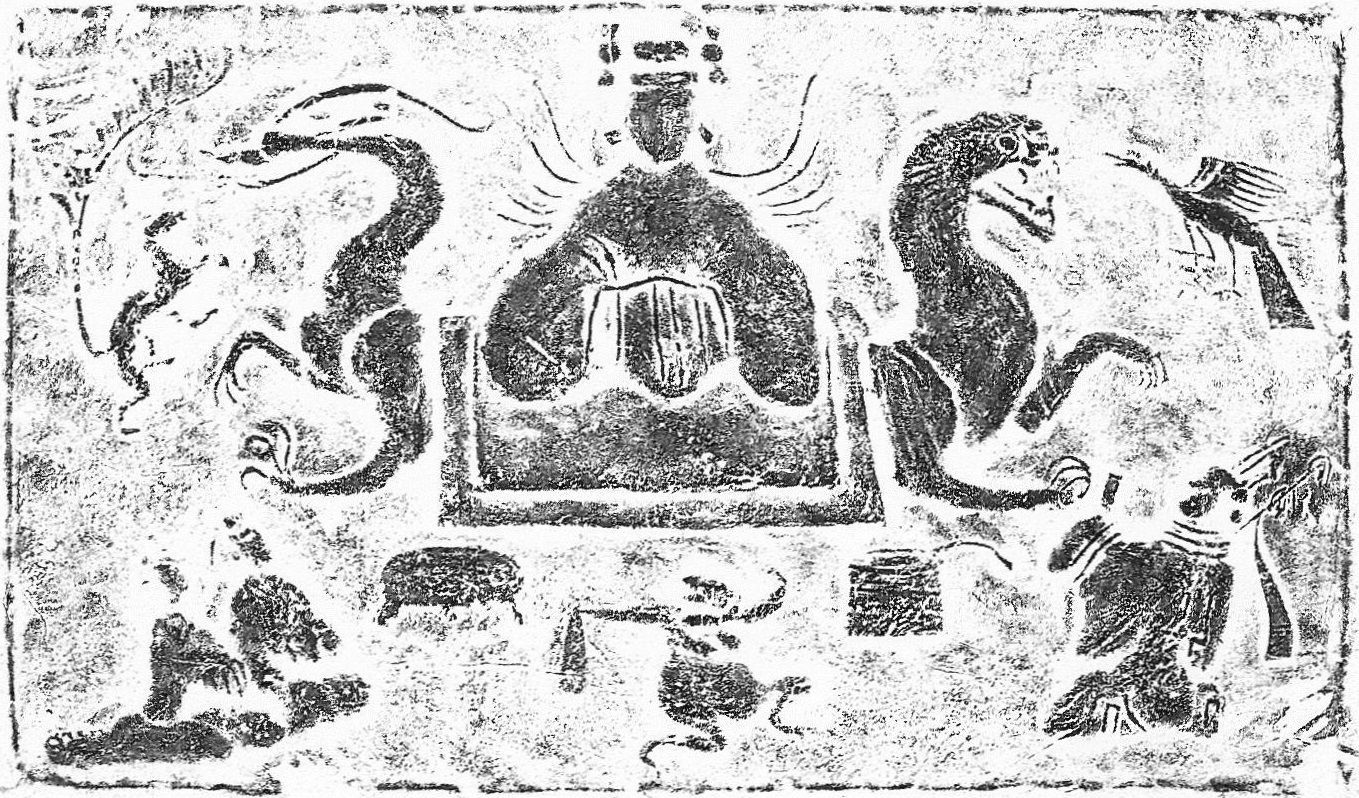
One Taoist goddess whose realms and attributes intrigue me is the Queen of the West, also called Queen Mother of the West, or Xiwangmu 西王母. She’s the mythical source of the peach of immortality and was likely important to Nansorhon as a powerful, much-worshiped female deity. Indeed, she’s invoked in several of the Nansorhon poems.

“Rubbing of a brick relief from the Han period, showing the Queen Mother sitting on her throne. To her right hand, a nine-tailed fox (jiuwei hu 九尾狐) and a dragon are facing each other, and to her left, a three-legged crow (sanzu wu 三足烏) and a tiger are facing each other. Just in front of the Queen Mother, a toad is dancing.” See http://www.chinaknowledge.de/Literature/Religion/personsxiwangmu.html (caption text by Ulrich Theobald, 2010).

~

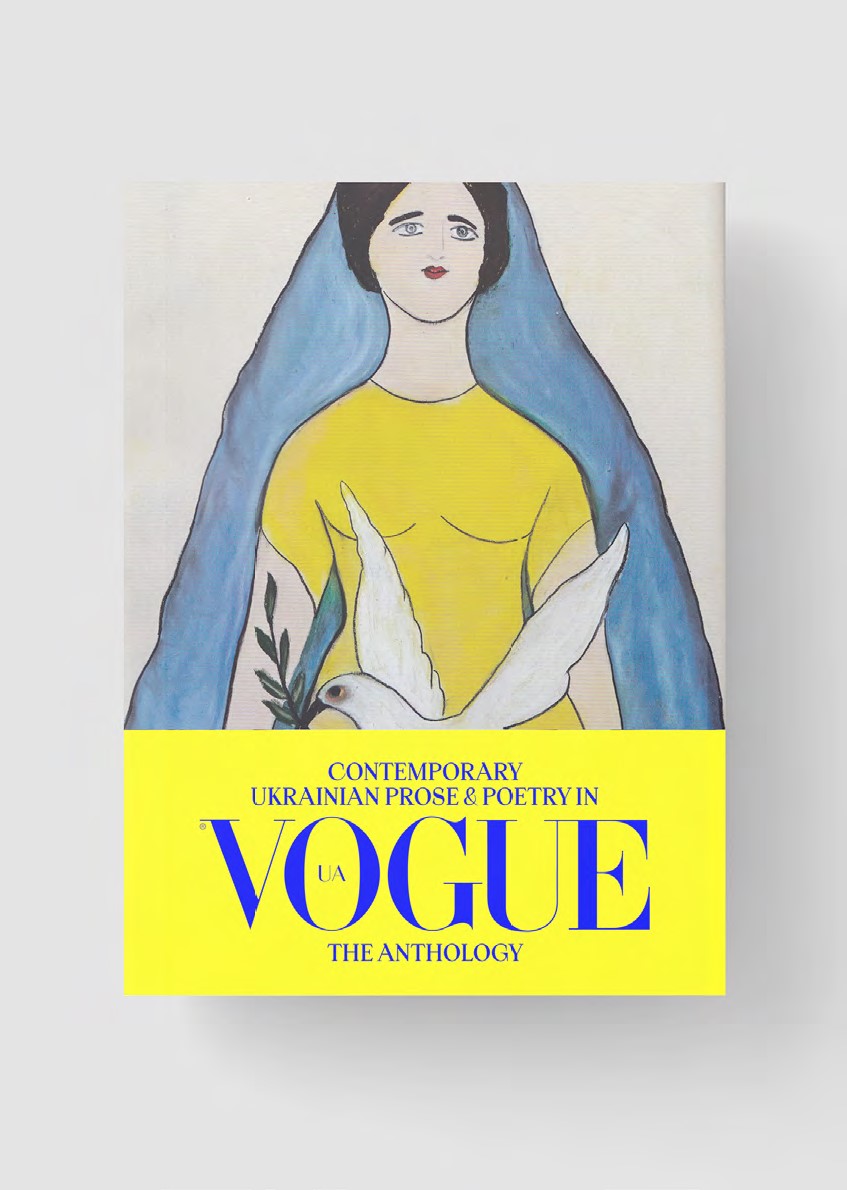
Other translations I’m reading are from Ukrainian. One of my husband’s colleagues is working in exile on Vogue Ukraine, and the magazine plans to publish a print anthology of contemporary Ukrainian writers–as early as next month!–marking the one-year anniversary of the start of the Russian hostilities aimed at Kyiv. She sent me a few selections of the poems and prose that will appear in the book, and I’m impressed by the writing and the breadth and depth of the literature. And also heartbroken.

Vogue UA had been planning its 10-year anniversary celebration when Russia invaded. The magazine rapidly pivoted to online-only, and its editorial team decided to publish a commemorative print book titled, rather significantly, 9 1/2 Years of Vogue Ukraine (and if you are curious, you can purchase it here). Yes, it’s a high-end fashion magazine–not my usual jam. Proceeds support various Ukrainian cultural organizations (museums, libraries) and female veterans.

The forthcoming book, featuring contemporary Ukrainian prose and poetry, will appear on the Vogue UA site in March or April. I’ll keep my readers apprised…from what I have seen so far, the anthology will be well worth reading.

In deepest fog

Autumn here was a bit dry, but as we approach the winter solstice–mild temperatures, rain, and many days of fog. Fog seems apropos. My mind has been fuzzy lately, clarity of intent and expression lacking. It’s one reason I have not been blogging.

When the air temperature gets up to 45° or 50° F, stinkbugs come out of their torpor and slowly climb up the window screens where they have been hiding or buzz noisily about the rooms, acting as sleepy and undirected as I feel. True, the daylight’s dwindling, and that makes many of us go into a sort of hibernating mode, mentally if not physically (likely a bit of both). True, the Fall semester at the university is in its last week or two and, as usual, is wearing on me.

Also true, it’s hunting season until the 10th, and the deer may be grateful for the fog…at any rate, taking advantage of it. It’s not all negative. Water molecules in the air can be good for plants, hydrating them after a dry autumn. Fog means less dry skin for those of us who wander around outside.

But let’s face it: fog encourages molds and increases the chance of traffic accidents and tends to head people into a low-barometer frame of mind. Foggy-headed. Brain fog. Here’s an informative breakdown of fog’s kinds and outcomes (yes! of course there are categories of fog!) https://mrcc.purdue.edu/living_wx/fog/index.html Some of my readers may find poetry in these categories.

Just before dusk this afternoon, I stood at my window and marveled at the dense cloudiness of the valley, at the stark bare trees snaking their way up through the pale damp air. I felt a twinge of European Romanticism: Caspar Friedrich’s “Wanderer above the Sea of Fog” and all that. The view was analogous to my fusty mind. All sorts of possibilities out there in the mist, nothing to strike toward, no path, potential risk. But beautiful in its way. I thought to myself, “There is something hidden in all this, and among the hidden-ness, things that are dear and familiar to me, not just fearful unknowns.”

The garden is there. The deer. The beech tree, some of its leaves still clinging. The bank voles and the red squirrels, the holly bush, the daffodils underground that will emerge in April. My fog will clear.

Then darkness overtook fog, and the coyotes called their carols in the moist air.

Prose starts

In a recent post, I mentioned that one of the challenges of writing a speaker in lyric or lyric narrative poetry is that readers assume the voice, experience, or perspective of the speaker completely aligns with that of the poet. It’s especially confusing if the writer reveals that one poem does arise from or act as memoir/lived experience when other poems by the same author–that seem like memoir–are fictions.

I admit to being among said poets: my collection Barefoot Girls contains poems based on memories of my teen years in the 1970s, yet the stories therein are invented. Sometimes a poem starts as something that “really happened” but does not work well as a poem when I stick to the truth as I recall it. Journalism is not poetry (usually). Thus, in the revision process, the so-called truth gets reimagined…in order to craft lines that are better as poetry. I know that people who don’t write poems find this fact difficult to grasp.

I keep a journal–have done so for decades–and I tend to start poems one of two ways, either from image-based phrases I jot down or from prose entries. The latter approach, from prose, may indeed have a basis in lived experience. Here, I offer a concrete example.

The draft below started as prose but may evolve into a prose poem, may evolve into free verse, or may end up as metrical or formal, blank verse or pantoum. Or it may end up in the “Dead Poems” folder of forgotten drafts. Right now it consists mostly of lived experience, though I’ve already begun to fictionalize a few moments, blur a few lines about the ride in the car (there was another passenger), what he may really have said (heck, my memory’s not that accurate) and where my thought process went. I’ve also played around with line breaks and indents to help me visualize phrasing and rhythm. This is the way I often work.

I believe models and examples of creative working methods help to clarify what artists do. Yet some of it–especially among geniuses–is inspired, mysterious, and cannot be described. I wish I felt that inspiration more often. But I do not mind doing the work of rethinking, reimagining, revising.

~

My Son Drives Me from West LA to Pasadena
 
…talking the whole way about the job he loves,
new friends, old friends, how he spends
            his leisure time; where we can eat,
what he thinks about social movements and
government policies, whether it’s worth buying
            patio furniture, what we should do
next time I visit
 
and I’m listening, honest I am, but I’m also observing—
I can’t call it a landscape, really, as the view’s
            a swath of highway many lanes wide and
city blocks for untold acres dotted by walls of vivid
bougainvillea, beige buildings, tall palms under a sky
            perfectly cloudless, flat.
 
Then, a shift of geographic formation leads into
scrub brush, spotty suburbs, highway narrowing to
            a mere six lanes, and he says I’ll notice
real change once we get into the hills; the weather’s
usually predictable here, it’ll be a fine day. I’m listening,
 
but I’m also recalling times—many times—I sat
behind the wheel when he was far too young to drive,
            watching the road through the windshield
of the family car and listened to him tell me the thoughts
that flashed through his mind like a summer field of fireflies.
            Those trips I was privy to a newly-forming
perspective on the world, it was as though I listened to his
young mind crackling with ideas,
listened, and listening, with a joy I’ve never abandoned.
 
~


Photo by Anthony Celenie on Pexels.com

Relevance

The virus year has left me questioning the relevance of my poetry practice to the world of literature, such as it is. I have not been sending work to journals. I have not spent much time on revisions nor on going through my work in order to assemble another manuscript (or two).

My father suffered awhile, then died–what can I say? It has been hard to write, especially given the mental challenges of learning a host of new technological platforms and completely redoing my syllabus to adapt to the changed methods of college classroom instruction and tutoring. How does the saying go? “I ain’t as young as I usta be.”

Given that the year has been even more of a media frenzy and social norms chaos than the years preceding it, the word unprecedented has been overtaxed into meaningless syllables; and the word relevance has taken on a sort of socially-annointed value that leaves me certain I have nothing to contribute except more noise. Why bother to write poems? It may be that there are more useful ways I can spend my “senior years.” Reinvent myself as an advocate or mentor in some other field: gardening/environmentalism, education, literacy, hospice care…

Maybe I could just go back to hobbies. Photography, embroidery, sketching and painting, flower arranging, hiking. Or take up some new craft or endeavor. Maybe birding. And am I then somehow engaging in more or less relevant processes?

Garth Greenwell has an essay in a recent Harper‘s, “Making Meaning,” in which he poses questions about the concept of relevance as it relates to art and concludes that he disagrees with “relevance” as a critique criterion, one “that feels entirely foreign…to the real motivations of art.”

If I had a question like that on my mind as I tried to make art, I would never write another word.

Greenwell

These words, to me, are encouraging; while I may not buy into every point of Greenwell’s essay, the fact that someone other than myself (and a better writer than I) wrestles with aspects of relevance confirms my discomfiture as–well, valid? In his case, critics suggesting the less-than-relevance of his fiction are those who think stories about gay men and their sexualities and their stories are too “niche” to be relevant to readers of literature. A far cry from my own form of irrelevance, which is that my poetry is too tame and nature-oriented and dissociated from the suffering, disoriented, unequal, unjust world of human society to be truly relevant to readers. I am no performer, but a writer:

When I consider the subject matter of a work of art, I want to talk; when I consider its form, I want to contemplate.

~

…I do believe in the universal, that some commonness in human experience can be communicated across gulfs of difference, and I believe that art can give us access to it.

Greenwell

The essay is worth reading in its entirety, as some of its assertions deserve discussion. Especially noteworthy is Greenwell’s anecdote about reading and loving Augustine’s Confessions, a text I re-read and still love for many reasons, not one of which is due to religious beliefs. Greenwell says Confessions is still relevant today because of Augustine’s creative and relentless questioning and the ways he expresses his own confusion, “making bewilderment itself a tool for inquiry.” Yes! Among, of course, many other things.

Why do we make art? Maybe just for the challenges it presents, the inward puzzles we invent for ourselves and must solve for ourselves or leave unsolved. I’m looking out my window at snow coming down just now, a wet snow that sits heavily on the pine branches and lends a “clean” look to the surrounding fields and lawns. Relevant takes a prepositional phrase: the snow, the meadows, the hedgerows are relevant to my experience, if to no one else’s; if so, I suppose I compose/make art for myself…and if others find resonance there, the work is done by the reader, or on the reader’s part.

A good definition of art, it seems to me, might be the science of making meaning-making tools.

Greenwell