Dave’s night out

10562470_10152820751072089_440768678543981394_o

Sunday, September 14, 2014
7:00 p.m. ~$10.50

Godfrey Daniels listening room
4th St. Bethlehem PA

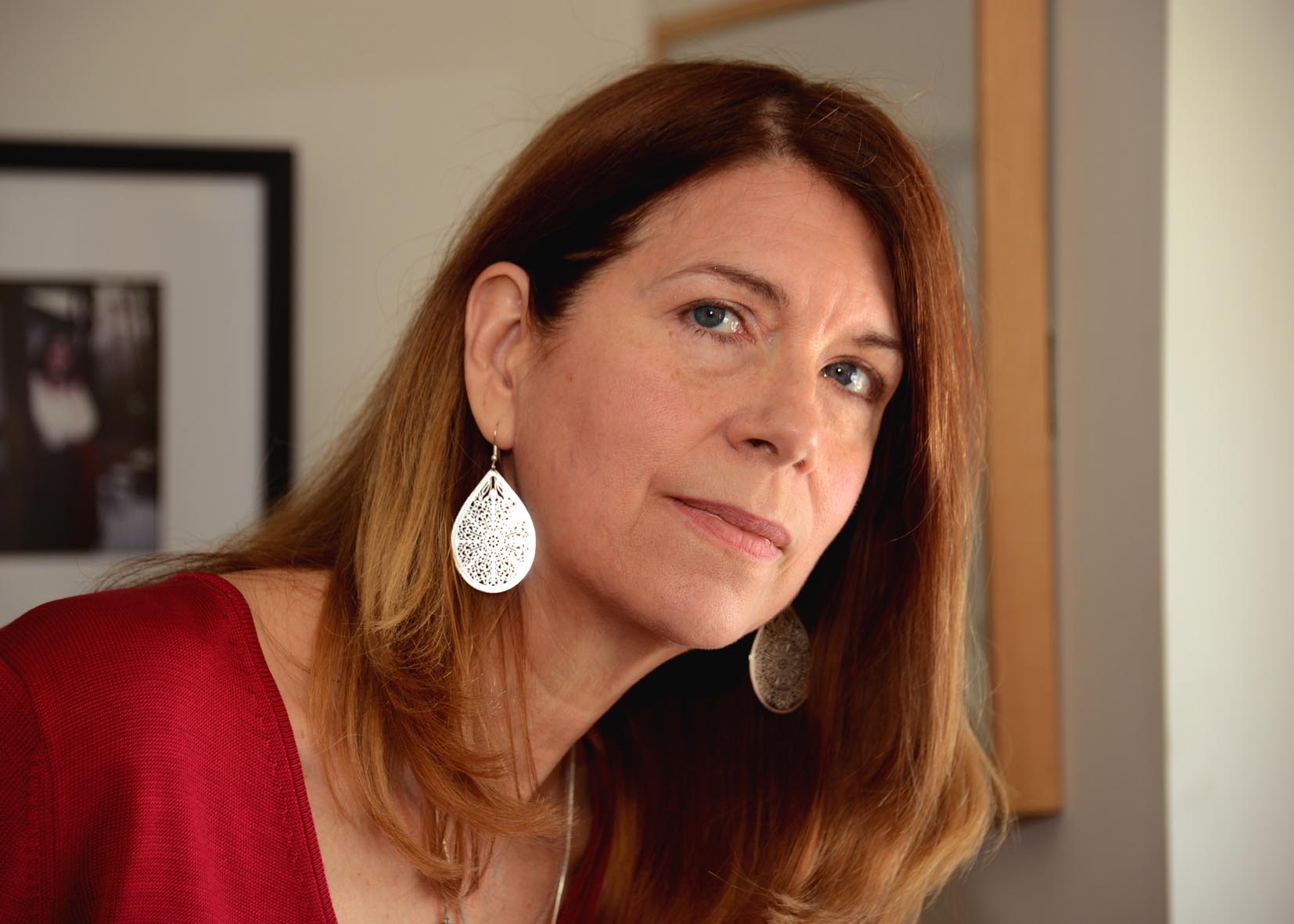
Ann E. Michael with Danielle Notaro and musician/host Dave Fry
featured at Dave’s Night Out

“Tonight’s Dave’s Night Out explores the artistry of regional poets Ann E. Michael and Danielle Notaro. Both are established and published poets in our community. Tonight, we will explore the art of writing for a living, the world of creating and publishing verse in this modern world, idle chatter about the artist’s life and stimulating conversation with the audience. A very unique evening in the arts.”~~

Giving in secret

“All the poems I have written were written for love.” ~ W.H. Auden

But when you give to the poor, do not let your left hand know what your right hand is doing, so that your giving will be in secret…” Matthew 6:3-4

~

Acts of compassion, great or small, are good for us. I state this not because of ancient Greek philosophers’ concepts about the Good, nor out of any religious dogma, but because psycho-neurological studies almost definitively align with this aspect of received wisdom. Hanson writes, “Compassion draws on the anterior cingulate cortex (ACC) and insula,” which help us observe (or “read”) the reactions of others, an action critical to the survival of a social species. It turns out that when we pay attention to others, we are more likely to help them; that’s how the average human brain works.

Unfortunately, human beings often stop paying attention once we think we have ascertained another person’s intentions and have passed an internal judgment upon them. We tend not to attend past that initial observation. Thus, we may miss actual intentions. Usually this miscommunication of intent leads to problems, but not always. Some people desire to hide their deeper intentions, and not because those intentions are “evil” or even merely narcissistic.

Viz: W.H. Auden, as portrayed in this quietly-written, reflective essay by Edward Mendelson in The New York Review of Books (March 2014). Mendelson begins:

W.H. Auden had a secret life that his closest friends knew little or nothing about. Everything about it was generous and honorable. He kept it secret because he would have been ashamed to have been praised for it.

Auden was a Christian who had an often challenging relationship with his religion (being homosexual did not help with the dogmatic wrestling match). In this essay, Mendelson says that “Auden had many motives for portraying himself as rigid or uncaring when he was making unobtrusive gifts of time, money, and sympathy. In part he was reacting against his own early fame as the literary hero of the English left.” The author also looks at Auden’s era: Fascists, Nazis, dictators, and how they managed to sway so many potentially and otherwise “good folks” to bad causes, the use of “good/evil” in the literature and intellectualism of those times and the writers who used celebrity to lionize their causes–a posture Auden found distasteful.

Yet Auden was willing to make himself distasteful, socially awkward, arrogant, in the service of a hidden compassion. There’s no good word for this in English. “Modesty” does not suffice. “Humility” does not quite hit the mark, either.

~

It seems to me that Auden, and others like him (there are others, many undiscovered), chose to follow Jesus’ words in Matthew 6:3.

A contemporary person may ask why all the modesty. After all–a good deed is a good deed. Does keeping it “hidden” increase the inherent goodness? Are anonymous philanthropists somehow more authentic to the concept of compassionate giving than those who allow their names to grace buildings and organizations? Those people who benefit by good works and kind acts–surely they feel a desire to thank whoever is responsible, so why disguise the giver?

~

One possible answer: compassion does not need a specific object, though that is generally how we learn compassion in the first place.

The gratitude a human being feels when he or she is the receiver of a kind, anonymous act has no immediate object. We do not know whom to thank. Although the receiver’s response may initially be one of suspicion, in most cases the sense of gratitude will be directed more widely into society; the receiver of a kindness is more likely to be kind to others, to perceive others as potentially benefactors or at least to view other people with less suspicion and envy–because the secret donor is somewhere among all of us.

The secret gift works to spread compassion to all sentient beings.

~

It turns out that, as far as the brain is concerned, doing good sets up a kind of feedback loop. Doing good for others improves how good we feel in general. Not how good we feel about ourselves in an egotistical way but how good we feel mentally, emotionally, and even physically.

Love is all you need

Love is all you need

We not only write for love. We live for love.

~


Books, burning

“Every burned book or house enlightens the world; every suppressed or expunged word reverberates through the earth from side to side.” ~Ralph Waldo Emerson, “Compensation”

I have taken this quote out of context–Emerson wrote this sentence as part of his reflection on compensation: he was questioning the received doctrine of his era that evil-doers flourish on earth and the just do not, therefore Heaven is God’s compensation for the trials of being a Good human being. Emerson did not accept this doctrine out of hand and theorized that, through just laws, people could make compensatory actions operable on the earth. He recognized, too, that sometimes evil people fail to thrive and compassionate, just people manage quite well. The received wisdom was merely received, not wise. Nonetheless, I find “Compensation” essentially dualist. And it is, truly, a sermon.

In the paragraph that contains the above words, Emerson suggests that there is always compensation of some kind for any act, for good or ill, that suppression cannot be maintained–the volcano will surge eventually–that the martyr never dies in vain because from his or her action will arise, in time and through the flaws and the perfections of Nature, some form of (often surprising) compensation. Hmm. Sounds a bit similar to Karma.

~

And I am thinking, again, of books and what they offer. My students tend to consider books as information solely (I do not generally teach the kind of young person who reads novels or philosophy). This is, we have been reminded continually, the Information Age–so that approach to books seems well-founded. Then there are our other means of information-gathering, largely through technological devices. These phones and various screens are mighty distracting and designed to be so. Yes, Fahrenheit 451 was prescient. Does the book-burning in that novel begin a revolution? Not in the predicted ways.

~

More prescient writing (found, by the way, in books): Neil Postman, back in 1985, commenting on the prescience of Orwell’s 1984 and Huxley’s Brave New World in Postman’s must-read cultural criticism, Amusing Ourselves to Death. In his foreword, Postman writes

What Orwell feared were those who would ban books. What Huxley feared was that there would be no reason to ban a book, for there would be no one who wanted to read one. Orwell feared those who would deprive us of information. Huxley feared those who would give us so much that we would be reduced to passivity and egoism. Orwell feared that the truth would be concealed from us. Huxley feared the truth would be drowned in a sea of irrelevance. Orwell feared we would become a captive culture. Huxley feared we would become a trivial culture, preoccupied with some equivalent of the feelies, the orgy porgy, and the centrifugal bumblepuppy. As Huxley remarked in Brave New World Revisited, the civil libertarians and rationalists who are ever on the alert to oppose tyranny “failed to take into account man’s almost infinite appetite for distractions”. In 1984, Huxley added, people are controlled by inflicting pain. In Brave New World, they are controlled by inflicting pleasure. In short, Orwell feared that what we hate will ruin us. Huxley feared that what we love will ruin us.

~

Is there compensation for being drowned in a sea of irrelevance? What might that look like?

~

Perhaps these are a few of the reasons I often need to turn from information to poetry.burning


Poetry Readings~September

Please check out my Events Page here, especially if you are not too far from Pennsylvania’s Lehigh Valley or Berks County. I will be participating in two quite different poetry events during the second week of September.

The first event presents the culmination of a years-long project of collaboration between educators/writers/photographers Hernán Pereira, Pamela Daza, and Lucia Ramos in Iquique, Chile and Dr. Karen Jogan of Albright College in Reading, Pennsylvania. There will be a gallery of photographs in the library at Albright and a celebration of the book’s publication the evening of September 11. Arturo Prat University and Albright College have been able to sponsor this project through a competitive teaching innovation project. The book’s title: So Far..So Close/Portada y Contraportada: Contemporary Writers of Tarapaca & Pennsylvania.

The anthology presents poets from both Chile’s Atacama Desert region (Tarapaca) and Pennsylvania’s eastern/northeastern counties. Interviews with the poets provide insightful mini-biographies and are accompanied by wonderful photographs. Here’s mine:

photo by H. Periera

photo by H. Periera

I have previewed the book, through the magic of .pdf files, and found it fascinating to read about the backgrounds of these writers, their writing processes, their creative influences.

The Pennsylvania writers include some colleagues I have known for awhile, yet the editors’/authors’ choice of inquiries and the settings of the photographs evoke aspects of these writers that inform and delight. It should be an interesting evening, and the public is invited.

~~

The second event takes place in Bethlehem, PA at Godfrey Daniels–a listening room/coffeehouse in the American Folk tradition. Dave Fry, folk troubadour extraordinaire, hosts a monthly “Dave’s Night Out” concert there at 7 pm on Sundays. Most of the time these events feature singers and musicians; but Dave branches out to storytellers and, on Sunday the 14th, to poets Daniel Notaro (author of Limn the Mask) and me.

602043_614706205212099_1317517254_n

We’ll be reading from our work and conversing with one another, with Dave, and with the audience. $10.50 at the door.


Here’s something lovely

Last year at this time, a hiatus; and again this year–for the same reasons! I am about to retreat to the 19th century for two days, and then to re-establish myself among incoming freshman students. If you follow my blog, I suggest you check out my pages tabs or some of the links on the right side of this theme page. Lots of cool stuff. :)

Ann E. Michael's avatarann e michael

…from Maria Popova at the Brainpickings site: book loving and writing and art and literacy and library connect to produce this event/display at the New York Public Library. I was in the city just last week–rats, I missed this. (But I did see Ken Price at the Metropolitan Museum of Art and spent part of a lovely afternoon at Untermyer Park again).

~ Please click on the links! (I know they’re kind of hard to see on this theme)~

MEANWHILE…

I’m on blogging hiatus again while I get accustomed to my work week and while we prepare for the Goschenhoppen Folk Festival (or on Facebook here) this coming Friday and Saturday. Not a time to get much writing done, nor much reading.

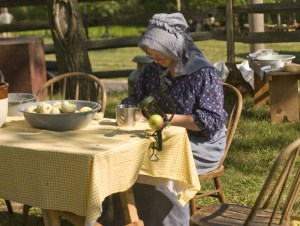
A festival participant prepares apples for drying A festival participant (19th c) prepares apples for drying

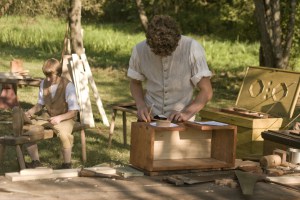
Young apprentices (18th c) at work Young apprentices (18th c) at work

View original post

Hymns & yearning

Around 1996, my friend and colleague Alla Borzova, a contemporary classical composer of considerable talent, asked me to help her “trans-literate” the libretto of her cantata Majnun Songs from Russian into English. She had composed the piece in Russian, so the English version had to fit the existing music. The cantata is based on the story, made famous in the Arabic world through the works of the poet Nizami, of Majnun and Layla…a story of abiding, and forbidden, love. Majnun, “Madman,” finds his purest self through this unrequited love for Layla as he wanders the desert creating poems praising his beloved.

One selection of Borzova’s cantata that I particularly love is called, simply, “Hymn.”

A hymn is a song, either of praise or worship, usually both. We may worship a god or many gods; or a beloved, human or non-human; or a value or other abstract concept (generally personified) such as nationhood. In this case, the poet worships his Layla.

Wiktionary says–and I have checked several other sources–that the word “hymn” derives from Middle English ymne, borrowed from Old French ymne, from Latin hymnus, borrowed from Ancient Greek ὕμνος (húmnos). Links courtesy of Wiktionary. The húmnos was part of ritual and sung to praise gods or heroes, but the ode genre easily lent itself to songs praising a loved one or merging the idea of human passion with a “higher” passion. Which is one way to read The Song of Songs attributed to Solomon, and which is one way some readers have interpreted the Majnun cycles as well: relating the sexual-passion-into-spiritual-purity to religious fervor, by analogy.

This seems a particularly human level of the consciousness continuum: the ability to blend several similar relationship ideas, as is so obvious in our uses of symbols, metaphors, analogies and similes. The resulting hymns can be wildly transcendent, alloys of passion, lyric poetry, imagery, rhythm, and tones when the music melds with the rest. Schiller’s “Ode to Joy” as presented by Beethoven, for example. Few hymns attain such a pinnacle, but the effective ones–religious and secular–reach listeners in a way similar to the best poetry and create the same kind of surprising prickle in the mind and body. It may be a sense of glory or a sense of awe, or a sudden shiver of beauty, unity, or wholeness, or an indescribable feeling of love greater than oneself, or the awareness of a keen yearning.

Yearning seems to me to be the over-arching tone in Borzova’s “Hymn.” In this two-minute piece, what comes through is a yearning for the beloved so deeply and for so long that what finally matters is not the being-together but love itself–eternal.

You can listen to it here:

~

In what ways, and through what means, do we relate our lives, our selves, and our world to love? There’s a question I have lately been meditating upon.

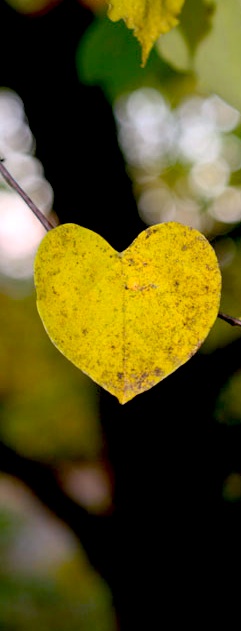
Redbud leaf in fall

Difficult writing?

Here’s Will Buckingham on writing and difficulty. Worth a read! I don’t know how to embed the blog into my post, so here’s the link.

http://willbuckingham.com/the-pleasure-and-difficulty-of-writing/

Writing can indeed be a pleasure–most of the time! There are periods of difficulty when I feel frustrated, but those periods make for puzzles and challenges; and I enjoy puzzles and challenges. They push me, force me to stretch a bit, engage with what’s not so simple or superficial, change my perspective, alter my expectations and assumptions, discover something new. I learn from these experiences. I would not want life to be easy all the time, nor would I want creative writing to be easy all the time. Although it’s pleasing to lie in a hammock on a mid day and sip a cold drink and listen to the birds and read a book…pleasure also encompasses inventive challenges. Motivation. Inspiration. Different forms of joy.

Buckingham mentions a biography of the writer and artist Tove Jansson, best known in the USA for her Moomintroll series but clearly a creative artist of the first rank. I’d put this book on my reading list, but it is at present only available in Finnish! Marina Popova at Brainpickings has posted some of Jansson’s vivid illustrations of Alice in Wonderland here.

On the pleasures of difficult reading, please see my past posts here, here, and here.

Mixed/media

~

From J. M. Barrie’s Peter Pan: “Fairies have to be one thing or the other, because being so small they unfortunately have room for one feeling only at a time.”

~

From W. H. Auden: “…poetry might be defined as the clear expression of mixed feelings.” For Auden, this communication of mixed feelings didn’t mean ambiguity; it referred to double focus–seeing or feeling or otherwise knowing two conflicting feelings simultaneously. Something that, according to Barrie, fairies could not do.

~

The mixed-ness of life presents many of its irritants, but also many of its joys. Think about the amazing complexity of a human being, a consciousness, a sentience: the mish-mash of experiences filtered through a mish-mash of other experiences and through unique neurological channels. I relish the fringes and edges of things such as meadows, rivers, horizons, roads, neighborhoods, and cultures. Combinations are more interesting than homogeneity. Paradoxes are more exciting than indelible rules.

I appreciate the design of formal gardens, or swaths of tulips; but a cottage garden interests me for longer, as do bogs and wetlands and the borders of woodlands. Most of the poems I love best, those that resonate the deepest and longest, express multiple and mixed possibilities. I enjoy poetry that can be interpreted several ways, or that twists back on itself and points out a paradox or a different focus, poetry that opens up perspectives and challenges expectations and perceptions. Mixed media, mixed expression, mixed feelings, mixed perennial borders, mixed forests, mixed neighborhoods…these juicy collages of experience keep the brain lively and interested.

They also pose good challenges for meditation. One can concentrate or focus on the unity of the disparities, for example. Lose yourself in a meadow.


Pro+crastination

procrastination (n.) Look up procrastination at Dictionary.com
1540s, from Middle French procrastination and directly from Latin procrastinationem (nominative procrastinatio) “a putting off from day to day,” noun of action from past participle stem of procrastinare “put off till tomorrow, defer, delay,” from pro- “forward” (see pro-) + crastinus “belonging to tomorrow,” from cras “tomorrow,” of unknown origin.

This, thanks to OE, the Online Etymology dictionary, a favorite site of mine. What I was hoping to find is some aspect of “pro” as in Latin’s for, ie, the positive side of putting things off until tomorrow. Surely there are times when a bit of delay works toward the desired goals. The more leisurely approach to accomplishing a large task allows a person time to think things through and avoid some of the risks that the jumping-into-the-lake-all-at-once method contains.

At least, that’s my rationalization for putting off the next set of tasks I have set for myself regarding my writing.

~

Delay can be fruitful, if it’s the right sort of delay. Procrastination that arises from distraction, however, tends to be of the less productive sort. When putting things off because of distraction ends up being somehow beneficial, it’s usually just a lucky strike.

~

~

distraction (n.) Look up distraction at Dictionary.com
mid-15c., “the drawing away of the mind,” from Latin distractionem (nominative distractio) “a pulling apart, separating,” noun of action from past participle stem of distrahere (see distract). Meaning “mental disturbance” (in driven to distraction, etc.) is c.1600. Meaning “a thing or fact that distracts” is from 1610s.

The drawing away of the mind. What a perfect description. Just how it feels.

~
 
But the mind can be drawn into the tasks at hand, a Zen-like or Taoist middle-way approach. The steps to the goal neither hard nor easy. The delay can be a time of focus and serendipity, a way to establish equilibrium before proceeding on what appears, initially, to be a daunting project. What belongs to tomorrow is not here now–live the day.
 
My three-month project is to send out two manuscripts, revise and organize my current work, submit new poems for publication, compose an essay and a couple of reviews. But it turns out there are a number of other tasks I had to accomplish before heading into the larger project. It’s all part of the process, during which I have discovered some poetry drafts I had forgotten about and revised older work and found a cache of images and ideas I had filed away “for later.” And I realized I had not finished transferring my poem files into new digital folders… It all needs to be done, but it follows the same general path.
 
Not distracting, exactly. A different form of–positive– “mental disturbance.” The pro aspect of procrastination.


Haiku moment

Time for a brief summer interlude…


© ann e michael 2014

© ann e michael 2014