Bent & broken II

stunned (downy woodpecker)

stunned (downy woodpecker)

This summer, it seems the birds have fledged a bit later than usual–not by much, but enough for me to notice. And this crop of birds seems to be a reckless bunch of adolescents. At least twice a day I hear a soft, feathered body thud against a windowpane.


~


We have taken a few of the actions recommended by the Humane Society (see page here if you want some advice), but some of our windows are quite high off the ground and we haven’t been able to bird-proof all of them. Most summers we hear just a few thuds, find the occasional body of a casualty or rescue a stunned survivor before a neighborhood cat gets it.

This year? I think I’ve heard two dozen thuds during the past 10 days. I am surprised at how many of the injured simply recover from their brief concussion, sit dazed for a few seconds, or continue to fly; but youth is resilient.


~


This woodpecker, for example, was more dazed than most. But it gradually calmed itself into a recuperated state and hopped off my hand and into the hedgerow.

~

dazed but recuperating

dazed but recuperating

~
I always come away amazed at such encounters with “wild animals.” There is so much I don’t know about them. They are gorgeous. I find myself spending long minutes just examining the details of a feather, a toenail (claw-nail?), a tongue, an eye.

It seems a privilege to hold one, and a privilege to let it go.


Even though this bird will no doubt repay me by tearing more holes in the wooden siding of our house.


Well, the birds were here first.

~

Not as lucky, this poor beauty was, alas, “maximally bent and broken.” Like the language of poetry.


IMG_0971

Maximally bent & broken

bent and broken

bent and broken

The linguist/scholar David Crystal writes that “Poetic language is the domain where linguistic rules are maximally bent and broken.”

The context here (in his book The Stories of English) is an explanation of how historians of language accomplish their sleuthing; Crystal notes carefully the differences between written and spoken versions of the same language, not to mention dialects and artistic expression and diversified diction based upon the intended audience, and uncertainty as to region, origin, and date of the manuscripts and texts under scrutiny. He cautions readers not to take linguistic theories and received stories about language evolution too readily; the story is a multitude of stories, examinable from a variety of disciplines and perspectives. Much of the story is ephemeral, being oral/aural and carried on in dialects. A fascinating puzzle, really, full of lacunae and contradictions…and a reminder that when I am in my teaching role, I should remain mindful that Standard English is something of a misnomer. A living language, as Crystal demonstrates, operates on many levels and evolves concurrently with social, economic, religious, and technological trends.

I fervently agree that poetry offers language new routes of expression, a place to expand, warp, and break rules while managing all the same to convey information. The information may be conveyed in surprising ways, though, non-standard ways: neologisms, compound words, old words used in a new fashion, or as a different part of speech. Poetry is a major arena for this sort of experimentation, though not the only one. Further, I am inclined to follow a non-prescriptivist approach to writing  even though my job at the college is to impart the basic rules of Standard English, a task which (alas) tends to involve judging things as less-than-correct or “in need of improvement” for the sake of clarity and general comprehensibility.

Should I therefore be more tolerant of non-standard use of the apostrophe? I’m not quite ready for that, because the resulting texts are still so frequently confusing. The point of good writing is, most often, to convey information–though that could be argued–

~

Crystal points out that much stereotyping of speech patterns and much arbitrary standardizing (to the degree possible) has been due to our creative writers, and compounded by writers’ love-hate relationships with printers (and, later, editors) who rely upon codification. A widely-literate audience benefits from generalized written standards, he notes–but there’s no need to become “Grammar Nazis” despite human beings’ natural inclination to be conservative and, let’s face it, contentious. He takes a sociological all-embracing stance about English, welcoming changes.

Having read this text, I am of the opinion that ours is another of those linguistically-transformative periods of messy additions and alterations thanks, largely, to technologies and the sciences but also to media and particularly social media. [viz, meme. What an adaptable coinage!] As long as I have been teaching, I have reiterated to my students that I am giving them a code, a tool, Standard Written English; the way they speak or write is not wrong or incorrect. It is simply not clear and standardized enough for academic work. Get the right tool for the job!

~

Crystal lauds Samuel Johnson for his zeal for language and languages and dialects, even as Johnson sought to “stabilize the disorder” of English in the 18th C. The author goes on to insert his view that prescriptive, “correct” approaches to the language “prevented the next ten generations from appreciating the richness of their language’s expressive capabilities, and inculcated an inferiority complex about everyday usage which crushed the linguistic confidence of millions” (not to mention enforced class distinctions even further). I need to remember this balance between clarity and variety. I admit I have been a not infrequent eye-roller at the “sloppy, slangy, abbreviated” English of television, tabloids, Twitter, texting, and my students’ lingo. It is refreshing to think of these annoyances as potentially enriching–rather than degrading–to the language I love to read, speak, and write.

When I read poems, I know there are writers who employ archaic words, dialect words, slang words, colloquial syntax, interrupted syntax, irregular capitalization and punctuation, neologisms, invented compound word-phrases, curses, technology terms, scientific jargon, Latin, Spanish, Spanglish, Chinese, obscure place names, alternate spellings (orthography)…and on and on. Some are looking back; others look ahead. Some are encapsulating the moment–now–in the framework of a verse. They bend and break the language in startling, haunting, beautiful, memorable ways. This they can do because a living language allows them to.

Consciousness as multiple drafts

Daniel C. Dennett’s 1991 book, Consciousness Explained, has kept me entertained and interested for a couple of days now. How could I refuse a book with that title? And Dennett–whose conversational writing style appears to toss off one idea after another in quick succession–actually stays mostly true to classic philosophical reasoning in his arguments as he endeavors to make claims for what consciousness is. He begins with phenomenology as one way to initiate the concatenation of empirical science (physics, biology, neurological research) with logic. He dispenses with Husserl and the early Phenomenologists but invents his own form–hyperphenomenology–breaking phenomena into three divisions and exploring each until he arrives at a way to destroy the long-held concept of the mind, hence consciousness, as “Cartesian Theatre,” and replace that model with a construction more biologically sound.

The book is far too complex to summarize, but the concept he develops that most appeals to me is what he calls the multiple drafts theory of consciousness. Dennett draws upon neurological and psychological research as well as past and current philosophical thinking to propose that what we term consciousness may consist of multiple narratives created through physical input, memory processing, and other processes that result in fraction-of-a-second “revisions” in thinking. Narratives! Revisions! As a writer, I can certainly relate to this idea. The theory of multiple drafts consciousness would explain many phenomena, such as the unreliability of eyewitnesses, the repression and re-constructing of traumatic experiences, the embellishment of stories (as Dennett puts it, “What I should have said at the party becomes what I said at the party”)…and it has examples in the way we “tell” fiction, movies, and family stories.

Currently, I am engaged in the work of revising dozens and dozens of poems. Many drafts. Many narratives, many layers. Subtle shifts in perspective or story or language or style–which version is the real me? All of them, across a continuum.

Derek Parfit’s Reasons & Persons suggests some of the same conclusions through a more traditional philosophical approach (harder to read than Dennett’s often-humorous prose which is geared more toward the non-philosopher and which employs considerable neurological and psychological research as part of its rational evidence).

Although these texts intrigue, and are convincing, they remain speculative. For me, the science aspects of the inquiry remove none of the mystery or delight I experience in terms of my own consciousness. Nor do they negate my sense of myself as individual, unique as to perspective, or whole in myself and in the cosmos. I know that many people resist the idea that consciousness is not soul, who feel that scientific research somehow diminishes human beings into–what? Fancy hardware for intelligent software? Automatons with the illusion of free will? Purposeless life forms? Robotic zombies with no moral bearings?

continuum

A continuum version of tao

Apparently, we desire awe; but knowledge doesn’t have to kill awe.

I find myself fascinated with the ideas posed by Douglas Hofstadter wherein he theorizes consciousness-as-continuum (see this post). People love to default to a black & white way of analysis, thinking, and judging, but everything in nature contradicts that concept. No doubt our brains, wired to make quick decisions using the simplest shortcuts, sieve out a great deal of content and then justify later (Daniel Kahneman’s book Thinking Fast and Slow covers this process in fascinating depth). It’s simply easier to think of balance as tao, perfectly harmonious black and white, or to sort people or objects or ideas into yes-or-no categories. But the distinctions are seldom so clear–there’s a continuum that stretches from the black to the white, as in the spectrum, as in the fringes of a forest or a meadow, as in the so-called races of human beings, as in places where societies and cultures meet and often intermingle, as in the coastline of the sea or a riparian environment. And all of those things are awesome, even miraculous.

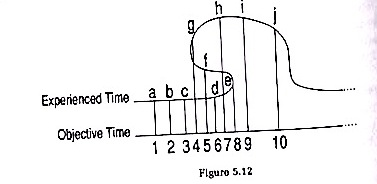
In Dennett’s Chapter Five, “Multiple Drafts vs. the Cartesian Theater,” he offers this diagram:

~

dennett003It’s a proposed version of what happens when we think.

You will have to read the book to decipher this illustration; but I recognize in it the way I tell a story, think about a story, remember an event, record an experience, and the narrative method of the many kinds of stories (many genres, many media) that I love.

One thing it is not is straightforward. We have all those revisions to make, to layer our experiences with, to explore along the fringes of, and to find deeply miraculously awesome. Wading among my drafts now, I feel revitalized. These reflections and revisions are part of my Self as a conscious being in a physical and wonderful world.


Reverberations

Elegant words–and urgent ones. Lee Upton’s book of essays Swallowing the Sea offers the following passages, which are resonating with me today:

“How can we live in the midst of a reality that outpaces our ability to comprehend it? How can the ancient springs of poetry–rhythmic language shaped to be remembered, language that often assumes nature as an inspiration–survive in circumstances that disintegrate memory and nature…?

“Poetry demands that we…actively attend to both the shapes of mayhem and the shapes of controlled order as they are enacted in language. That is, in poetry more than in any other verbal genre, readers bring an expectation that not only do all elements matter down to the comma and the white space at the end of a line and between or within stanzas, but that each of these elements, no matter how widely arrayed, may tug at other elements and condition the whole. The poem is an echo chamber where we listen to the reverberations that otherwise dissolve into the white noise of anxiety.”

~

James Fenton has said, “The writing of a poem is like a child throwing stones into a mineshaft. You compose first, then you listen for the reverberation.”

~


waterfall

Mimesis

Mimesis: “Imitation, in particular. 1.1 Representation or imitation of the real world in art and literature”… “a figure of speech, whereby the words or actions of another are imitated” … “the deliberate imitation of the behavior of one group of people by another as a factor in social change” (OED).

“Nature creates similarities. One need only think of mimicry. The highest capacity for producing similarities, however, is man’s. His gift of seeing resemblances is nothing other than a rudiment of the powerful compulsion in former times to become and behave like something else. Perhaps there is none of his higher functions in which his mimetic faculty does not play a decisive role.” —Walter Benjamin (“On the Mimetic Faculty,” 1933)

~

From time to time, I mull over mimesis and its role in human learning. Research on animal behavior since Benjamin was writing has somewhat undermined his assertion that the “highest capacity for producing similarities” belongs to human beings, but the concept remains generally accurate. What I notice among my students, however, is the human ability to perceive differences. My students much prefer to focus on what makes things different than on what makes them similar, but perhaps the reason is that similarities seem so obvious (due to our capacity for “producing similarities”) that we take them for granted. I introduce poetry to my students as an ancient art derived from exactly what, no one is certain, but likely from invocation or ritual or song or the human desire for narrative–and I tell them that it has been carried along through history by, among other compelling things, mimesis–that mimetic faculty we possess that makes us want to repeat or copy, in order to learn, to love, to pass along, to entertain, to communicate, to enjoy. We can look in the mirror and see another human’s face, or our own faces slightly changed through the process of copying another.

The mimetic urge has a long history among those people who intellectualize. Theories of Media (Univ. of Chicago: W. J. T. Mitchell) glossary offers a concise but comprehensive “mimesis” entry authored by Michele Puetz–the article in which I found the Benjamin quote above. (By the way, the Theories of Media glossary project is a great resource!) As I looked through my go-to philosophy resources, though, I was left with the distinct impression that the concept of mimesis has moved from the realm of the philosophical–Plato and Aristotle are our main thinkers on mimesis in the philosophical arena, so that’s pretty far back–and into the realms of sciences, both social and biological. Mimetic response has been researched, and speculated upon, by psychologists, cultural anthropologists, and neurologists (see the initial excitement about “mirror neurons” in this 2006 New York Times article). The term has found considerable employment in the writings of Rene Girard, whose writings span cultural anthropology, literary criticism, psychology, theology, and philosophy.

Writes Gabriel Andrade, in the Internet Encyclopedia of Philosophy:

“Girard believes that the great modern novelists (such as Stendhal, Flaubert, Proust and Dostoevsky) have understood human psychology better than the modern field of Psychology does. And, as a complement of his literary criticism, he has developed a psychology in which the concept of ‘mimetic desire’ is central. Inasmuch as human beings constantly seek to imitate others, and most desires are in fact borrowed from other people, Girard believes that it is crucial to study how personality relates to others.”

Clearly, human psychology and biology cannot be simplified to mere reflection and copying, but it is equally clear that the metaphor of mirroring can be fruitful as we explore the complexities of mind and consciousness, culture and art. Sometimes I take on the role of educator; and when I do so, I recognize the need for student learners to imitate, to hear information repeated, and to attempt to create their own “similarities.” Sometimes I take on the role of poet; and when I do that, I am clothed in centuries of form, rhythms, sounds, similes, stylings and borrowings and references: copies and reflections, altered through time.

Mirrored Room by Lucas Samaras

Mirrored Room by Lucas Samaras Photo: © Albright-Knox Art Gallery/CORBIS

~
A brief aside: When I was eight or nine years old, I went with my parents to an art museum–it may have been the Chicago Art Institute–and there was an installation of Lucas Samaras’ piece “Mirrored Room.” [See the photo at left.] I was deeply impressed by the mirrored room, partly because it was inside this artwork that I finally understood, metaphorically, the concept of infinity. I was awed by the many diminishing selves I could see, the way a single “I” could change (in size), and by the tricks of light and how easily one could get lost in such a small space.

The mirrors copied me.

Mimesis implies something active, a borrowing, a taking–a kind of theft, on the one hand, and a kind of tribute or ritual motion on the other. It is also inherently continuous. The behavior does not stop at the first copy; it is carried on, perhaps through generations, like DNA.

Here is the brilliant Anne Carson:

“[It’s] what the ancients mean by imitation. When they talk about poetry, they talk about mimesis as the action that the poem has, in reality, on the reader. Some people think that means the poet takes a snapshot of an event and on the page you have a perfect record. But I don’t think that’s right; I think a poem, when it works, is an action of the mind captured on a page, and the reader, when he engages it, has to enter into that action. And so his mind repeats that action and travels again through the action, but it is a movement of yourself through a thought, through an activity of thinking, so by the time you get to the end you’re different than you were at the beginning and you feel that difference.”

~

Carson describes how I feel when I’ve read a poem or novel that moves me deeply. For that matter, it is how I feel when I find a work of visual art, or a play or dance, that seems to speak with immediacy to my own sense of experience, which arouses my passion, compassion, or emotion and alters my entire psyche for awhile– “by the time you get to the end you’re different than you were at the beginning and you feel that difference.”

Sometimes I even manage to compose a poem that gives me that sense of feeling different than I was at the beginning. On those rare times, I may look at myself in the mirror and see a changed face.


Love. Poem.

A beloved member of my family will be marrying in June, and I was asked to find a poem apropos to the celebrants and the occasion. I have written two epithalamiums (or epithalamia) and can testify to the difficulty of composing a good poem that is also a marriage poem. Anyway, in this instance, I wanted to find a suitable long-term-love-commitment poem by someone other than myself. Talk about abundance of choice!

Knowing the celebrants’ interests and tastes narrowed things down a bit, and the poem had to be “short & sweet.” The ceremony will be out of doors on a trail in the Blue Ridge Mountains, which made me inclined to look for natural imagery in the poem–but nothing so dense as to distract from the place itself.

What a splendid task! I allowed myself the luxury of looking at poetry books randomly, paging slowly through anthologies, browsing handouts I’ve collected for and from classes over the years. Just flitting from poem to poem over the course of weeks, occasionally marking something that seemed particularly likely…no pressure…

When I came across the poem “Tree Heart/True Heart” by Kay Ryan, I was startled into admiration.

It doesn’t start off like a love poem. It offers little in the opening imagery to suggest romance, or life attachment, or promise.

It is breathtakingly brief, revolves around wordplay and connotations, sounds lovely when read aloud.

The last two lines clinch the “commitment” in the poem; and the three lines preceding that final, spare, achingly-sweet sentence made me gasp when I re-read the poem, trying to figure out how Ryan managed all this in 16 lines, not one of which contains more than five words.

Love is all you needOkay, now you want to read the poem, right?

It was published in The New Yorker on September 26, 2011 (p. 116), and I am certain that I will be violating some sort of copyright if I reproduce it on this blog.

I hope Ms. Ryan forgives me, though if The New Yorker or her publishers find out, I may have to take this post down. It seems likely to me that The New Yorker has bigger fish to try to catch, however, so here goes. And I am putting in a plug for Kay Ryan’s books. Go buy them, preferably not second-hand, because poets make hardly any money from book sales and no money whatsoever from second-hand sales.


Tree Heart/True Heart

by Kay Ryan

The hearts of trees
are serially displaced
pressed annually
outward to a ring.
They aren’t really
what we mean
by hearts, they so
easily acquiesce,
willing to thin and
stretch around some
upstart green. A
real heart does not
give way to spring.
A heart is true.
I say no more springs
without you.

~

My beloveds–who are an ocean apart at present and miserable about it, and who aim to make sure that each has “no more springs/without you” –agreed that this poem suited their intentions, their personalities, and the leafy stretches of the hiking trail.

Thank you, Kay Ryan. Thank you, human beings, whoever it was who invented the arts, and poetry.

DAY BY DAY, GOOD DAY

Reblogged from Sub Rosa: this artist embodies the meditative idea of practice. It is also a way to approach process, if you are more of a process-oriented person.

Sigrun's avatarsigrun hodne studio

Tag Um Tag Ist Guter Tag

Apropos art & everyday life:

Since 1974, the German artist Peter Dreher has painted nearly 5,000 versions of the same picture: a realistic, life-size image of a plain, cylindrical water glass centrally placed on a blank surface against a white wall.

Peter Dreher “Nr. 44 (Day),” from 1982, in oil on burlap.

Credit 2014 Peter Dreher/Artists Rights Society (ARS), New York and Koenig & Clinton, New York

Here is an excerpt from a beautiful conversation between Peter Dreher and Lynne Tillman (1996)

Lynne Tillman: You said you wanted something that could be recognized as a piece of art not only in a gallery…I wonder what that means to you?

Peter Dreher: I think painting should be open or recognizable to everybody. Everybody. These little paintings of a glass, everybody can understand. You see a glass, you say, “It’s a glass, it’s a nice painting, it’s…

View original post 474 more words

Two springs

I left the budding springtime in eastern Pennsylvania to visit Glasgow, Scotland for six days. Springtime along the north Atlantic was full of gorse blooms, primroses, daffodils beginning to fade (though there were several hillside hosts of golden daffodils worthy of Wordsworthian apostrophe), early tulips, and wildflowers alongside lakes, streams, and rivers, even in the city.

The days are longer than they are at my latitude, and the diurnal length has an effect on many of the bloom times. I saw few saucer magnolias–too windy, too chilly–but there were stellata magnolias and, to my surprise, camellias apparently thrive in Glasgow as long as they are planted in a sheltered area.

I spent a fine Saturday afternoon at the Glasgow Botanic Gardens, which are lovely. The greenhouses there have an excellent collection of carnivorous plants: sundews from South Africa, pitcher plants from North America.

The entire span of days I visited, the weather was sunny. Glaswegians took advantage of the unusual break in the weather and were out in droves, picnicking at the Botanic Gardens Saturday and–on Easter Sunday–wandering Loch Lomond’s shores.

Like many of the rivers, canals, and lakes in the region, Loch Lomond is frequented by swans. It is nesting season, and I was thrilled to find cobs patrolling the waters and the female swans draped elegantly over their large nests. I didn’t see any cygnets, though I saw some ducks and ducklings.

10247279_10203757614005125_5675182446853711106_nMany years ago, my first book of poetry was a collaborative chapbook with my dear friend David Dunn. The book is listed on my Books page, but it is out of print. The title is The Swan King.

I returned home Monday, where my yard is resplendent with daffodils, hyacinths, grape hyacinths, magnolia, forsythia, and a zillion tufts of wild garlic (onion grass, we used to call it) punctuating the green grass of the lawn.

But lovely as my view was this morning, I wish I could have spent longer at Loch Lomond and the Trossachs…

Loch Lomond

Loch Lomond

Poetry readings ~ April

Eastern Pennsylvania Poetry Month events coming up next week.
Please join us!
~~

Wednesday, April 23, 2014

Barnes & Noble Local Authors’ Night
7-9 p.m.

Ann E. Michael and 30+ other Lehigh Valley authors will be signing their books at Barnes & Noble of Southmont Plaza
4445 Southmont Way
Easton, PA 18045
(Rte. 33 and Freemansburg Avenue)

~~
Saturday, April 26, 2014

Whole Heart Home: Poetry & Song from the Real World
7 p.m.

Poetry and song group event hosted by Lisa DeVuono
Ann E. Michael and many others performing at:
Charles Brown Ice House/Sand Island
56 River St.
Bethlehem, PA
~~

Sunday, April 27, 2014
2 pm [in the second floor gallery]

Ann E. Michael and Dan Maguire
Fox Chase Reading Series
Ryerss Museum and Library
7370 Central Ave.
Philadelphia PA

~~

Spotting the White Elephant: Ukraine on the Literary Map of the World

Here is a Fulbright-award-winning comparative lit scholar–Iryna Shuvalova–writing about Ukrainian poetry. I have been watching events in Ukraine (I have friends there); this essay includes some ways poetry and self-expression–and the lively poetry “scene” in Ukraine (not much translated into English)–connect with political events.

“One of the most touching videos from Ukraine’s “Euromaidan” events is the one, in which Serhiy Nigoyan, a member of Ukrainian Armenian community, recites the lines of Taras Shevchenko’s poem “Caucasus”. On January 22, Serhiy was killed by the members of the pro-government armed forces.”

Poetry can be dangerous.

poetryinternational's avatarPoetry International Online

Recently, among the riots in the streets of Kyiv and general unrest in the country, the current Ukrainian government has done two notable steps in recognition of the significance and weight Ukrainian poetry has in the affairs of the nation. The first step was to arrest a young poet together with his two friends and imprison them under alleged incrimination of “organizing mass riots”. The second step was to shoot the Secretary of the National Writers’ Union in the head: thankfully, with a rubber bullet. In light of these two accidents I could not help giving in to the urge of briefing the global community on the present state of literary affairs in the country, where the art of writing is obviously held in such great regard by the officials.

Spot the Question Mark

This country the size of France, squeezed between the European Union in the West and Russia’s…

View original post 1,558 more words