Root

We do not always have words.

Even if language assists in the emergence of consciousness-as-we-know-it, even if the naming of things as sign or metaphor is, as most human beings believe, “uniquely human,” there are the inexpressibles. The things semiotics does not quite register.

Perhaps this obstacle–the obstacle of words themselves–is what made reading David Hinton’s China Root: Taoism, Ch’an, and Original Zen so difficult for me.

~

Vincent Van Gogh, “Tree Roots” Van Gogh Museum: https://www.vangoghmuseum.nl/en/collection/s0195V1962

~

The core practice of Tao seems simple enough, except that our self-identity-based brains do not want to work in that way: not to think of self as “I” at all, but to live in the real world as emergent and ever-changing cosmos watching itself, absent while present, non-being while being, receptive to all change as part of how the cosmos operates, experiencing the hinge of Tao, everything and no-thing. No you or I.

Can I put the concept into words? No. Can David Hinton? Well, sort of (while repeatedly telling his readers that it isn’t possible to put Ch’an into words).

Hinton takes an approach that is partly etymological–based on early and later Han characters in their logograph forms–and partly cultural, namely the influence that Indian Buddhism exerted on existing Tao concepts as Buddhism moved into China during the later Han dynasty. Thus, he divides the text into chapters, each illustrating a significant Ch’an component, practice, or idea.

The logic makes sense, and I have gained a lot of background on culture and Chinese characters in the process; but I cannot call this book an easy read. The blurb says it is “thoroughly gripping” and cites the author’s elegance and clarity. The blurb writer is, however, a Roshi, and thus much more familiar with Zen and writings on Zen than I am. I love the metaphor of the root for many reasons, and that aspect of the book works for me.

~

Another part of the book that resonates with me is the chapter “Rivers-and-Mountains.” After reading Hinton’s explication of the calligraphy and painting meditation practice of long-ago Chinese artists and intellectuals, I have a fuller understanding of Zen as landscape, Zen as poetry, at least as [Hinton theorizes] it was practiced in ancient China. I have always felt drawn into such artworks, and now I have better insight as to why that is.

~

I will have to re-read China Root again and again if I am to understand it, though. Or perhaps just work with more ordinary diligence on landscape meditation made present through poetry.

Even though enlightened awareness–among other things–cannot really be expressed in words. ;)

Festival, virtual

Coronavirus safety protocols continue to affect my teaching at the college and life in general–also, the life of the shared and diverse arts community, near and far. But arts folk are creative folks, by nature problem solvers and think-outside-the-boxers. This weekend, I have been attending the biennial Geraldine R. Dodge Poetry Festival via technological interface (my laptop); it has so far been as mixed and as enlightening an experience as teaching has been for me this semester.

It has been years since I have been at the Dodge in person. Teaching and tutoring are busy for me in October, and I have been free to travel to the festival only once since its move to Newark in 2010. Times have changed, and I have changed. I’m taking notice of what I like and do not particularly like about the virtual platform of the 2020 festival. Bear in mind that I am only marginally tech-savvy and not a person who’s wedded to the screen (television or computer or phone).

First impression, from the “opening ceremony” and an initial panel, is that I like the closeups of the poets–something I seldom had the chance to see when in the crowded auditoriums or tents of past Dodge festivals. As an older attendee, I have to admit I appreciate hearing the readers more clearly. It’s also nice not to have to wait for stumbling about on stage as presenters navigate the stairs, step over wires, chat with emcees, or shuffle through papers and books marked with post-it notes.

There’s a downside, too, of course. I cannot see the holistic figures of the poets, their attire and body language, their posture on the stage. I do not feel the attentive excitement of fellow audience members, hear appreciative murmurs, applause, or the rare but spicy snide remarks. The readings seem somewhat static and prepared (which they have been). The festival thus loses some of its remarkable spontaneity. I suppose I’m referring here to a lost physical community–but all of us should be accustomed to that feeling by now.

On the second night of the event, Pádraig Ó Tuama moderated a panel discussion on the theme “Imagine a New Way” with Martín Espada, Vievee Francis, and Carolyn Forché. The poems were intensely engaging, the readings remarkable; and the discussion among the poets and moderator managed to feel lively and immediate. Oh, notes to take, things I must read, ideas that go ‘pop’ in my head…

The takeaway after day two is that my sense of skepticism about online performance and conference events has begun to wane a bit. True, there is less chance of bumping into colleagues and making connections with fellow poets while grabbing a snack, and the bookstore browsing is not nearly as lovely an experience when the bookstore is online. True, there is much I miss about the hubbub and the buzz of past festival experiences.

Yet it turns out I rather like watching and listening to poets while sitting home in my pajamas and drinking decent, not-overpriced wine in the company of no one but my cat. In fact, at present, the scenario rather suits my mood. And I will be ‘tuning in’ tomorrow.

First frost

autumn
when so much dies
or moves on

toads burrow deeper
after dark covers 
sedge and clover

fallen hickory leaves
ice-rimmed gold
at sunrise

I wake too chilly
at my usual hour
forsake my habit of rising

listen to the nuthatch
and house sparrow
mourning dove croon

give me another minute
beside you in bed
shivering yet shimmering

Practicing

When I was 15 years old and learning to type on my dad’s old manual typewriter, I decided to write my memories; I was composing memoir before I knew what memoir was, under the influence of fiction (David Copperfield). I lost track long ago of where those pages are, but I do recall that I wrote page after page. What on earth would an adolescent who was raised in loving and non-traumatic circumstances in a middle-class New Jersey suburb have had to say that was worth recording?

I wrote about losing a toy bear, and learning to read; receiving second-hand books with joy, reading voraciously, wondering what it would be like to be an orphan, and feeling terrified of dying. I wrote about the attic of our old house and learning to ride a bicycle. There were other things, too, that I can’t remember now. Generally, mundane and typical 1960s-childhood events–and descriptions galore. It felt important to write down the small details.

Perhaps I should have gone into journalism.

These days I’ve no interest in writing memoir. I have kept a journal since I was ten years old, and that constitutes enough self-indulgent scribbling on its own. I treasure, however, the practice all that writing gave me: practice in constructing sentences, employing vocabulary words, creating metaphors, using punctuation in various ways, expressing abstract ideas and describing concrete objects. Writing, learning to write, critique, and revision have been immensely valuable to me.

I’m not sure who I would be if I hadn’t been constantly writing (and reading). Maybe I’d have been a contemplative.

~~

All of which is to report to my readers, who may be experiencing their own obstacles to their art, that –yes– the writing continues in the face of loss and grief, anxiety, and the work of the body in the world, in the mundane spaces of daily grind and in the wakeful hours, and in the containers of dreamwork and consciousness. Right now, the writing is not “good,” not crafted, aware of itself, ready to speak to others than the self. It is, at present, more akin to what the Buddhists call practice.

Photo by Donald Macauley on Flickr | https://tricy.cl/2DSmsmY

~

Keep working, keep practicing, keep breathing.

Short lines, few words

A friend has been sending me the occasional haiku she’s written; she says that the haiku form has kept her busy and creative during a time when her attention feels divided. I am reminded that, in the past, composing haiku has been a useful practice for me, as well–a method of retaining images and moments that might later prove useful in other types of poems..

My colleagues Dave Bonta, Michael Czarnecki, and Marilyn Hazelton, among others, find in haiku and tanka a wide range of possibilities for expression–and compression. Though I suppose that is true for any poetic form or strategy.

I just want to get writing again.

~

This morning I made some attempts at writing again. Writing poetry, I mean–different from my other acts of writing. Writing against frustration, grief, and absence and pain…obstacles, for me, to composition.

If I were a fiercer poet, a fiercer person, I might manage to write in media res, the midst of the goings-on; I might accomplish poems through my anger or sorrow. Instead, I have to wait it out, mull, observe, speculate. It’s just my natural modus operandi.

Maybe I’m lazy, or afraid.

~

No luck with haiku. I wrote a couple of mediocre tanka that might be salvageable once I work on them a bit.

I wrote this–no form, just words. Putting it out there for now, with an illustration. Not exactly haiga, not nearly luminous or complete.

Hey, Muse. This is all I got.

~

Introvert
 
Long-necked gourd
tangled in
its own vine
twists and curls.
There is something
fantastic in its nature,
imprinted in seed,
patterned and tendriled--
an urge to
turn
and flourish
hidden though it is
beneath broad leaves.


zucchino rampicante


Living with history

It’s complicated, history. It engages with things I love, such as art, in complex and often contradictory ways. How did a person with such fascist tendencies write such enduring, challenging work? How could such a misogynist womanizer create paintings of surpassing depth and beauty? Why was a person who was so concerned with the welfare of others so neglectful of his or her family?

Alex Ross, writing about classical music in The New Yorker‘s September 21 issue:

“The poietic* and the esthetic should have equal weight when we pick up the pieces of the past. On the one hand, we can be aware that Handel invested in the business of slavery; on the other, we can see a measure of justice when Morris Robinson sings his music in concert…there is no need to reach a final verdict–to judge each artist innocent or guilty. Living with history means living with history’s complexities, contradictions, and failings…Attempts to cleanse the canon of disreputable figures end up replicating the great-man theory in a negative register….Because all art is the product of our grandiose, predatory species, it reveals the worst in our natures as well as the best.”

People are complicated and contradictory. None is perfect. The worst in our natures can be compelling, even inspirational.

Even in history, where it’s famously said the victors write the verdicts, such verdicts can be overturned, the stories made new, retold from different perspectives, satirized. I love that Ross calls humans “grandiose and predatory” but notes our capacity for creating beauty nonetheless. Rings true in my experience, and sounds a lot like what poets do.

—-

*The terms were coined by semiotician Jean-Jacques Nattiez, with poietic referring to the productive process of art (its creation) and esthetic with the receptive process (its impact upon the listener-viewer-reader).

If you are curious, you can see and hear Morris Robinson singing the bass in Shostakovich’s 14th Symphony on YouTube. (I couldn’t find him singing Handel online).

No better place

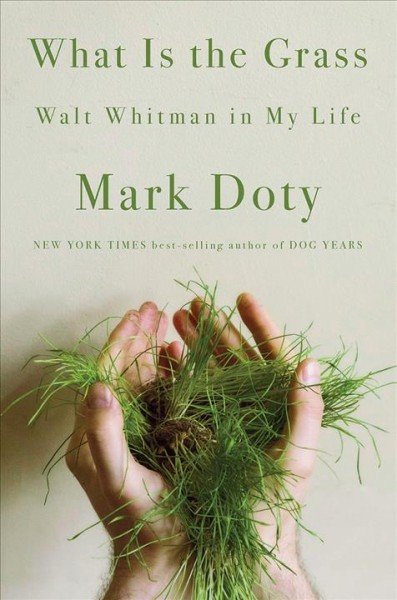
In a time of grief and gravity and gratitude for some wonderfully-lived lives, I happen to find myself reading Mark Doty’s book What Is the Grass? Walt Whitman in My Life.

And I find this paragraph; and for now, I need add nothing more.

The dead are not lost, but in circulation; they are involved in the present, in active participation. Bits of them are streaming through your hand and mine, just as language is circulating through us. Lexicon and materiality forever move onward and outward in the continuous wheeling expansion this world is. This is no mere philosophical proposition on Whitman’s part, not an intellectual understanding but a felt actuality. We are alive forever in the endless circulation of matter. Nothing luckier, stranger, or more beautiful could ever happen. There is no better place.

Turn, turn, turn

As a child, I loved the Pete Seeger song “Turn, Turn, Turn” as sung by The Byrds. My father told me the words came from the Bible, Ecclesiastes 3:1-8 (KJV). Ecclesiastes offers some lovely poems, and Seeger’s interpretation is simple and wise:

To everything (turn, turn, turn)
There is a season (turn, turn, turn)
And a time to every purpose, under heaven

A time to be born, a time to die
A time to plant, a time to reap
A time to kill, a time to heal
A time to laugh, a time to weep

To everything (turn, turn, turn)
There is a season (turn, turn, turn)
And a time to every purpose, under heaven

A time to build up, a time to break down
A time to dance, a time to mourn
A time to cast away stones, a time to gather stones together

To everything (turn, turn, turn)
There is a season (turn, turn, turn)
And a time to every purpose, under heaven

A time of love, a time of hate
A time of war, a time of peace
A time you may embrace, a time to refrain from embracing

To everything (turn, turn, turn)
There is a season (turn, turn, turn)
And a time to every purpose, under heaven

A time to gain, a time to lose
A time to rend, a time to sew
A time for love, a time for hate
A time for peace, I swear it’s not too late

~

Given the time of coronavirus and covid-19, “a time to refrain from embracing” seems apt, and a little painful to contemplate. For me and my beloveds, a time has come in which to mourn and weep, and to embrace, because everything (and every one among us) must reach a time to die. The sweet-natured, intelligent man who took us to a Pete Seeger concert when we were children and told us where to find the lyrics in Ecclesiastes, among many other things, has moved from physical existence to existence in our consciousness–the strange loop of human “being” that none of us understands.

He would have called it soul.

autumn rainbow

Break/change

David Bowie famously invites us–or exhorts us–to turn and face the strange. Necessary, especially during times people are wishing things were as they used to be. Change seems a stranger. We don’t want it at our door.

Facing change presents challenges and requires confronting fears. No wonder people resist; yet change is all there is. Without it, not even death (which is all about change). Just stasis. Not-life instead of no-life; un-life.

For now, a break from blogging, from submitting poems to journals, from sending out my latest attempt at a manuscript, from attending readings and conferences and workshops. I might say “it’s all too much” under current circumstances, but the reasons are more complicated and center around transitions of the not-writing kind.

In time, knowing the way my writing process occurs, these transitions will lead to more writing. More poems. Lots of process.

Meanwhile. I’m in the woods. I’m in the garden. I’m even (I think) going to be in the classroom. But it will all look different.

IMG_6972

@, &, etc.

Decades ago, when I worked in the graphics and typography industry, I became fascinated with ligatures * and “special characters” (which sounds like a euphemism of some kind). Some font designers seemed to share my interest and to design particularly elegant or amusing symbol characters and ligatures as options, though the classic ones have long since gone out of style.

The symbol ampersand supposedly evolved out of the Latin word et (as in et cetera), into “and per se and”–but now it simply means “and.”ampersand

fig2c

That character-ligature-symbol gets used frequently in logos, headlines, labels, cartoons. I like the over-the-top swash versions of ampersand just for fun, though I would not specify them in a design; they tend to be hard to read.

Several of the special characters find employment in legal documentation or academic writing, the only places you are likely to find  ‡, §, and ¶ . They’re quaintly antique, but useful. The symbol for “at,” however, was underused when I worked in the field in the 1970s and 80s. It seemed to be going the way of the §.

What a difference a world-wide web makes! Now, of course, @ is ubiquitous, instantly recognizable, and used in logos, brand names… etc.!

~

What we might notice here is that symbols change over time; status varies as social requirements vary, and what’s considered relevant or useful in one era or with one technology can fall into disuse or neglect depending upon the times. Do we regret their fall from grace? Perhaps for a generation or so, and then “they’re history.” If we value history, we geek around in scholarly or enthusiastic amateur ways, recovering past usages and the social norms of past eras. But we seldom insist upon a return to most of them. What endures overcomes the norms. I am curious as to what will endure.

Yes, this is another one of my analogies to the present moment.

~

@ 6 am
wren & sparrow chitt-errrr
etc.

(Just a lot of twitter noise.)

~~

*The etymology of the word is as follows (thank you Online Etymology Dictionary): c. 1400, “something used in tying or binding,” from Middle French ligature “a binding” (14c.), from Late Latin ligatura “a band,” from Latin ligatus, past participle of ligare “to bind” (from PIE root *leig- “to tie, bind”). In modern musical notation, “group of notes slurred together,” from 1590s; of letters joined in printing or writing from 1690s.

~

cf : The term ligature, when used in medicine, means a thread or cord that ties off a blood vessel. Now you know!