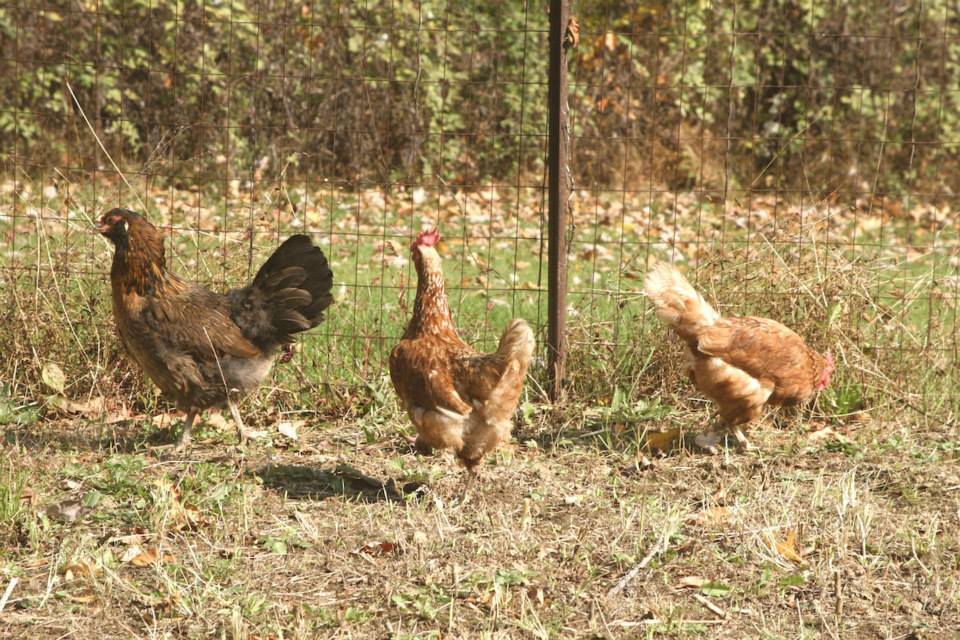
The chickens mill and scratch;
what do they know of their theropod ancestry,
how many millennia it took
to evolve a brain, without neocortex,
capable of amodal completion
immediately upon hatching, a brain
that supplies all they need for survival
until the hatchet, predatory snag, parasite, virus?
Hens in the garden stride through scythed weeds,
make an unhurried ambit of the dead
and dying remainders—
Stumps of stalks, twisted beige grasses
the color of birds’ tail and breast feathers,
brown-speckled hens, rumps dun, red combs.
They cluster in a fence corner,
step on each other’s heads,
snap up bees and beetles during autumn’s
short-limbed days. The clawed foot
extends, grasps, clings to roost.
A Jurassic hinge, rusting, its vitality immured
in the muttered musing of hens.
Dry leaves, blooms gone to seed.
How the mighty have fallen.
~
This is an older poem, going back at least ten years. It seemed suitable for the end of autumn and the looming solstice today. I love that I could use the terms amodal and neocortex in a poem. That kind of poetic vocabulary isn’t everybody’s “jam,” but the thwarted scientist in me enjoys playing around with this sort of fact-meets-art interdisciplinary terminology. And yes, there’s an opportunity for metaphor here, in the virus and in the chances evolution randomly develops as to who’s on top or who thinks they are on top. A lesson for us all.
The virus year has left me questioning the relevance of my poetry practice to the world of literature, such as it is. I have not been sending work to journals. I have not spent much time on revisions nor on going through my work in order to assemble another manuscript (or two).
My father suffered awhile, then died–what can I say? It has been hard to write, especially given the mental challenges of learning a host of new technological platforms and completely redoing my syllabus to adapt to the changed methods of college classroom instruction and tutoring. How does the saying go? “I ain’t as young as I usta be.”
Given that the year has been even more of a media frenzy and social norms chaos than the years preceding it, the word unprecedented has been overtaxed into meaningless syllables; and the word relevance has taken on a sort of socially-annointed value that leaves me certain I have nothing to contribute except more noise. Why bother to write poems? It may be that there are more useful ways I can spend my “senior years.” Reinvent myself as an advocate or mentor in some other field: gardening/environmentalism, education, literacy, hospice care…
Maybe I could just go back to hobbies. Photography, embroidery, sketching and painting, flower arranging, hiking. Or take up some new craft or endeavor. Maybe birding. And am I then somehow engaging in more or less relevant processes?
Garth Greenwellhas an essay in a recent Harper‘s, “Making Meaning,” in which he poses questions about the concept of relevance as it relates to art and concludes that he disagrees with “relevance” as a critique criterion, one “that feels entirely foreign…to the real motivations of art.”
If I had a question like that on my mind as I tried to make art, I would never write another word.
Greenwell
These words, to me, are encouraging; while I may not buy into every point of Greenwell’s essay, the fact that someone other than myself (and a better writer than I) wrestles with aspects of relevance confirms my discomfiture as–well, valid? In his case, critics suggesting the less-than-relevance of his fiction are those who think stories about gay men and their sexualities and their stories are too “niche” to be relevant to readers of literature. A far cry from my own form of irrelevance, which is that my poetry is too tame and nature-oriented and dissociated from the suffering, disoriented, unequal, unjust world of human society to be truly relevant to readers. I am no performer, but a writer:
When I consider the subject matter of a work of art, I want to talk; when I consider its form, I want to contemplate.
~
…I do believe in the universal, that some commonness in human experience can be communicated across gulfs of difference, and I believe that art can give us access to it.
Greenwell
The essay is worth reading in its entirety, as some of its assertions deserve discussion. Especially noteworthy is Greenwell’s anecdote about reading and loving Augustine’s Confessions, a text I re-read and still love for many reasons, not one of which is due to religious beliefs. Greenwell says Confessions is still relevant today because of Augustine’s creative and relentless questioning and the ways he expresses his own confusion, “making bewilderment itself a tool for inquiry.” Yes! Among, of course, many other things.
Why do we make art? Maybe just for the challenges it presents, the inward puzzles we invent for ourselves and must solve for ourselves or leave unsolved. I’m looking out my window at snow coming down just now, a wet snow that sits heavily on the pine branches and lends a “clean” look to the surrounding fields and lawns. Relevant takes a prepositional phrase: the snow, the meadows, the hedgerows are relevant to my experience, if to no one else’s; if so, I suppose I compose/make art for myself…and if others find resonance there, the work is done by the reader, or on the reader’s part.
A good definition of art, it seems to me, might be the science of making meaning-making tools.
autumn
when so much dies
or moves on

toads burrow deeper
after dark covers
sedge and clover

fallen hickory leaves
ice-rimmed gold
at sunrise

I wake too chilly
at my usual hour
forsake my habit of rising

listen to the nuthatch
and house sparrow
mourning dove croon

give me another minute
beside you in bed
shivering yet shimmering
Best Beloveds are again in difficulties. Difficulties abound, it seems.
As do beans. It is that season–the beans have come on mighty sudden. Bounty presents its own challenges, but there’s joy riding along like a kite above it. And when I meditate on things, I realize that all times are “uncertain times,” a phrase bandied about so often these days as to render it a meaningless cliché.
~
Herewith, a very early draft of a new poem, one on which I will need to work (revising…) for some time to come. But it’s a start.
~
Hypothesis
Garden teaches a comfort with uncertainty,
knowing that I cannot know, each plan a guess.
From a clear day, hail spewing.
Tree fall on a windless afternoon.
Influx of virus or insects, invasion
of the burrowing vole. I’m never sure
what to believe, or whom–
each seed, each season a test of my hypothesis,
the hypothesis of the garden,
on which nothing at present depends.
We won’t starve. I can purchase food, certainly,
although the garden demonstrates
how rapidly such certainties may change.
Maybe tomorrow, no oranges, no flour,
no disinfectant soap. We live without guarantees
despite the product labels’ promises.
This year the pear tree bears no fruit:
few bees? late frost? Does it want a reason?
Yet I quiver with my need to know.
Knowing, old as I am, uncertainty means change.
Comfort? That requires a trust not at odds
with what’s ambiguous. I weave for myself
a hammock of my unanswered questions,
settle into it, become seed pod, chrysalis, womb.
I place my trust in change.
Speaking of February, here’s a poem trying to make amends for my dislike of the briefest month. This apology appeared in Prairie Wolf Press Review*, and I may include it in my next collection (whenever that may be).
~
Apology
For years I have held February
answerable to many sorrows
as though the month itself
were responsible for its appearance:
the dour days too short, long nights
steeped in frosty bitterness.
Resigned to hibernation,
February made me sleepy.
Dulled my skin, sucked dream
into a cold vacuum
like a vacant acre of outer space,
a stone of ice upon my chest.
But today, I watch a small herd
of yearling deer file gingerly along
the hedgerow over crusted snow
and sense thaw within.
The days, brief, are nonetheless
beginning their shadowy
stretch into spring. It is the month
owls urge themselves
toward mating, their querying calls
strung along night’s bare branches;
the month buzzards return
from foraging the more southerly dead.
Skunks break dormancy amid
tussocks of snowdrops;
sometimes, the hellebore blooms.
I have been observing February
from all the wrong angles.
No, this is not the wild greening of April
nor the fragrant abundance of June,
but it is something that deserves better
than repudiation or scorn.
To February, which has given me much
besides unhappiness, I offer my apology.
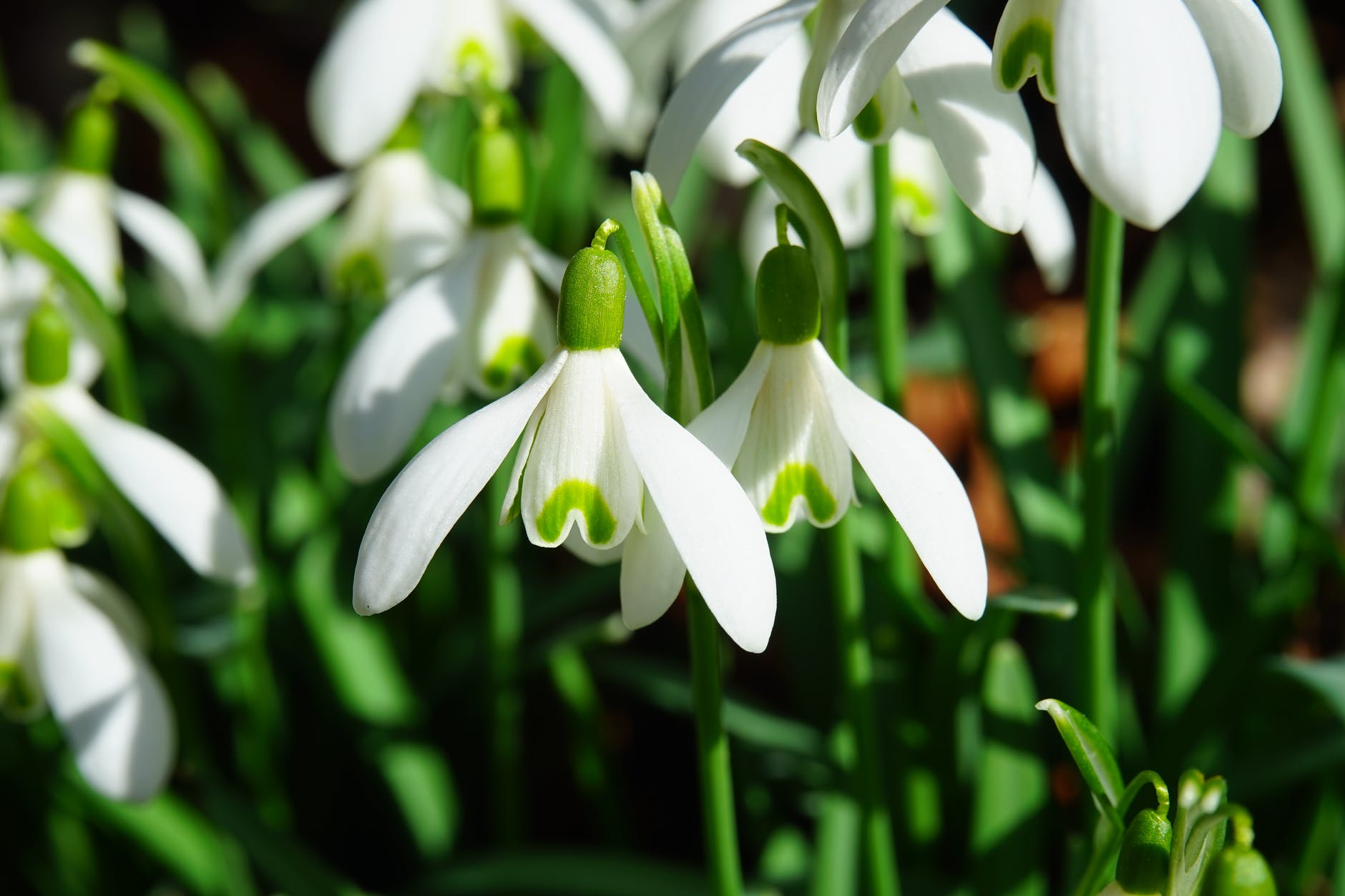
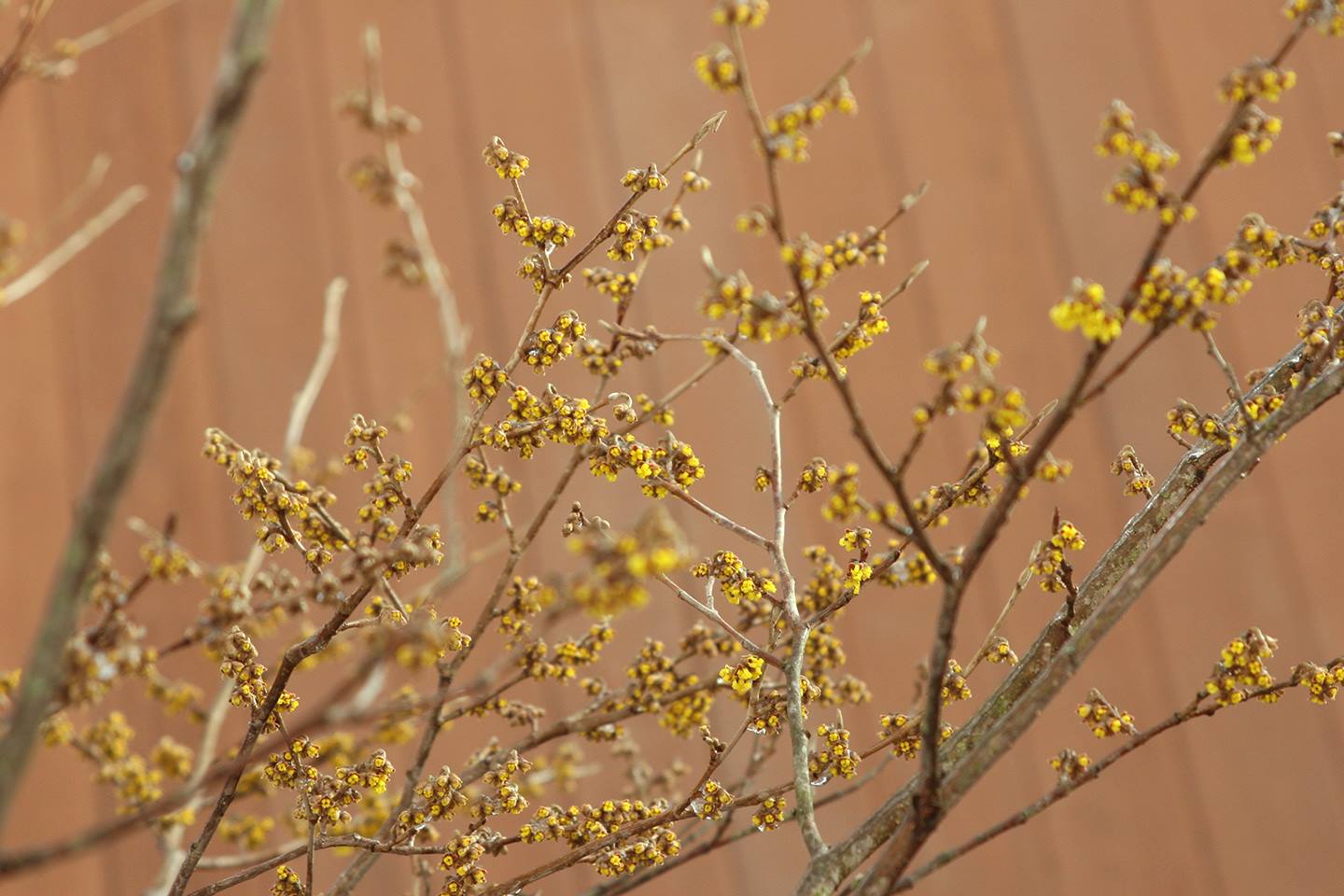
Indeed, the snowdrops are emerging slightly; I see hints of white amid the tufts of deep-green leaves. The winterhazel buds haven’t really swelled just yet, though. Some years, we have hellebore and dwarf irises in February–it isn’t entirely drab, grey, chilly, and wet for 29 days. Reminding myself of that helps a little. Why, we had one warm and sunny day earlier in the week! The flies and stinkbugs buzzed about drowsily, and the birds made a little more noise than usual.
But part of me says–oh, wait a bit. There could be plenty of snow in March.
March, 2018
How to allay the anticipation-stress that sits heavily on me, body and soul, this month?
J. P. Seaton’s translation of Han Shan (I own a copy of this book):
There is a man who makes a meal of rosy clouds:
where he dwells the crowds don’t ramble.
Any season is just fine with him,
the summer just like the fall.
In a dark ravine a tiny rill drips, keeping time,
and up in the pines the wind’s always sighing.
Sit there in meditation, half a day,
a hundred autumns’ grief will drop away.
~
I am not much for sitting in meditation, but Han Shan suggests it might do me some good–so that the griefs fall away, so that any season is “just fine” with me.
The new year has certainly begun with bangs and whimpers.
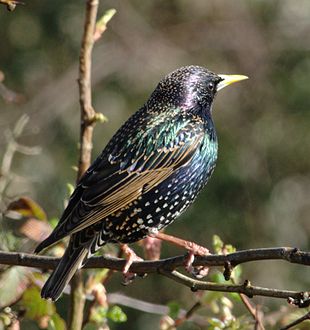
During the strangely mild weather, as snow geese and buzzards return but before the juncos leave us, I have been watching the flocking behavior of starlings.
For lack of anything more relevant to write at this time, I’m posting here my poem “Liturgy,” circa 2002 or 2003, from Small Things Rise and Go.
Peace.
~
LITURGY
We will not know peace.
Hay clogs the thresher,
Snow stoppers thruways.
Starlings haggle out the morning.
Red fox probes her muzzle
Into the voles’ weed bunkers;
Harrier screams over moors.
We will not know peace.
Here, the caterpillar
Tires chew fields into slog;
Here a child’s toy erupts
Into a village of amputees.
Sands shift under an abstraction,
The sea grows warm.
We will not know peace,
During our lifetimes, the tines
Break, the cogs slip,
Polluted slough impedes
Our efforts at contentment.
Our own natures
Bully us down: Peace—
Peace to those who do not know peace.
To the fieldhand knee-deep in grain.
To the broken doll clasped by a broken child.
To the small-time fisherman far at sea.
To my mother with war scrawled through her
To the empty church, the hill of snow, evening—
Scent of needles & sap, the green of early winter.
pond ripples hurried & flattened by the fast cold
wind harsh enough to scatter the mallards
from water’s rough-textured surface. They leap
& flap & huddle on muddy grass, clustered, quacking.
Midday the clouds morph from one grey-white
shape to another, shadows strong, drawn from tall
pines onto the unpaved road. What hours lie ahead
we never know. No Terce or Compline ring here,
no call to prayer but antiphon train horn
& the disturbed ducks.
If I do not bow my head or bend my knee nonetheless
I praise. I praise you in and of this moment
whatever it is you are.
~
This post responds to Cleveland Wall, a poet for whom recitation is part of presentation and who reminded me of an old poem of mine I had written in response to a visual image on a postcard. The image and the poem are below, but what strikes me about recalling the work is that it is one of the few poems I have managed to memorize.
Ms. Wall memorizes much of her work and has presented at performances such as slam poetry events and No River Twice shows [Facebook video link below–you can catch a glimpse of me reading here, too.]
Alas, I have ever and always been terrible at memorization. In Sunday school, my younger sibling earned points for Bible verse memorizing at probably twice my pace. I enjoyed theater but never learned lines well enough to manage more than walk-on roles. Song lyrics came more easily, probably because the music helped cue me to the phrases.
You would think a poet–a versifier!–could commit her own work to memory. But no. Add that to my numerous failings.
~~
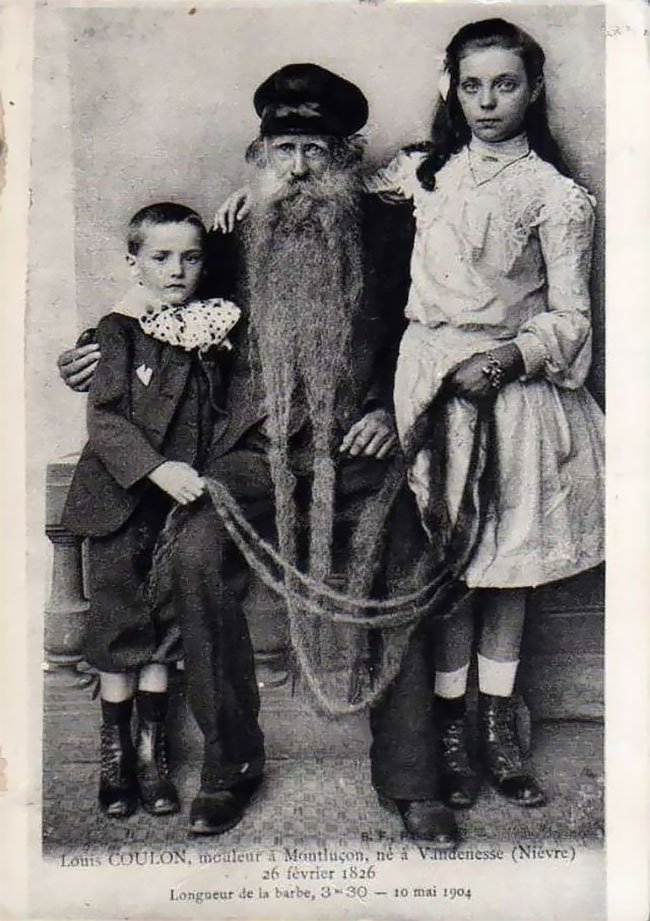
I bought the Louis Coulon postcard in 1980 at a New York City stationer’s. What I did not know then (hey, no interwebs) was that Coulon sat for a number of portraits and was a relatively famous postcard subject at the fin de siecle.
Here’s the poem, first published by the estimable Harry Humes in the now-defunct Yarrow: A Journal of Poetry in 1992.
La Barbe
Monsieur Coulon, my grandfather, wore large mustaches and a beard three meters long. He tied it to the bedposts by night to avoid strangulation in his sleep; as it was, he died of fever in 1904, and the beard grew two centimeters more the day after his death. For years I had nightmares, Grandfather silently choking me in the posterbed I’d inherited from his estate. I bobbed my hair before the style became fashionable; Mama said it was scandalous, but the dreams ceased. I left Nievre for Paris and America, to avoid strangulation.
In 1942, I visited Savannah, Georgia, where trees resemble men, their great beards choking ocean breeze. I dream of trees opening gray coffins into a humid night–
I am an old woman, now, and waiting–
ah, listen:
the wind is speaking French, Grandfather, it takes my precious breath away!