Reading friends’ books

One thing about being a writer is that, after awhile, you meet other writers one way or another: sometimes through social media, Zoom events, or in person at book signings and readings; sometimes through conferences, workshops, or various educational programs; sometimes by finding local writers groups or getting an introduction to someone through a friend. When you meet writers, you get the additional privilege of reading their work. It so happens that lately, many of my writerly friends and colleagues have published books, and I’ve been busy reading them!

First, I want to mention that whenever possible, readers should purchase literary volumes from the writers themselves or from their publishers, or–if it’s an option in your region–from an independent bookseller. I do resort to ABE and Thrift and Amazon when a book has gone out of print or when the publisher prints through Amazon, but I want to remind people that the other sources will support the writers themselves or the independent small bookshops and publishers who launch these books into the world.

Now that my virtuous aside has been accomplished, here are a few of the books-by-friends-&-colleagues I’ve been consuming lately–not all of them newly-published (it takes me awhile to get around to the reading).

~
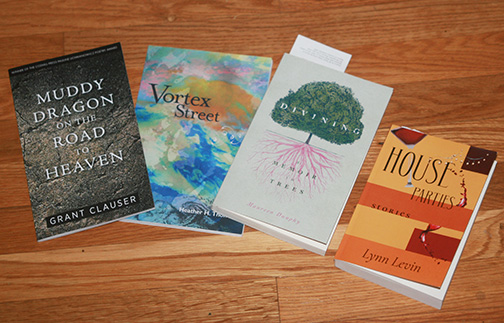
The near-abstract imagery and the concrete place-names and lyricism in Heather H. Thomas’ 2018 Vortex Street appealed to me on several levels, from the scientific (a repeating pattern of swirling vortices, see “fluid dynamics”) to the particular: my husband grew up in Reading, PA, where some of these poems are suspended in recollection. I’ve also loved reading Grant Clauser’s latest, the 2021 Codhill prize-winner Muddy Dragon on the Road to Heaven, a collection of poems that strikes me as both deeply beautiful and tenderly sad. Poet Lynn Levin has published a terrific book of short stories, House Parties, that remind me of the wry sense of humor and wide-ranging knowledge her poems have while proving she’s also a deft hand at plot and character. Maureen Dunphy’s memoir Divining, A Memoir in Trees, brought to mind parallels with Lesley Wheeler’s memoir in poems, Poetry’s Possible Worlds. In both books, the authors have chosen a locus [an American tree, a contemporary poem] and used the exploration of that “trigger” to draw out something personal. What better way to connect with readers than through something we love and value? Which brings me to a shout-out to Jane Satterfield, whose poetry collection The Badass Brontës isn’t in this photo because I’ve already lent it to someone who’s a Brontë fan.

~

In addition to the above books, I am eagerly awaiting new works from a host of other poet-friends: chapbooks by Beejay Grob (forthcoming from Moonstone Publishing) and Lisa DeVuono, poetry collections from Jerry Wemple, Jeanine Hall Gailey, and others that slip my mind at the moment. My only regret is that I have all this reading to do just as gardening season gets really underway!
Information from poems

I tried to attend a poetry event on Saturday afternoon, but the weather was against me.

The rain came accompanied by lightning strikes, high winds, falling branches, flash-flooded roads, sleet, and a little hail, all in the space of two and a half hours. I left home only to turn around after three miles. The highway was blocked with traffic piled up due to various “storm-related events” (said the weather sites). Actually, I was grateful for the storm, since our region has been unusually dry and even warm for April–my trees, shrubs, meadow, and perennials needed rain. And upon my return, I got back to reading books of poetry. This past week these included collections by Marilyn Chin, Elizabeth Metzger, Grant Clauser, Jennifer Franklin, and Natalie Diaz. Some wonderful work there.

Through these books of poems, I also gleaned lots of interesting information. That’s something many people who claim not to like poetry don’t understand: you can learn about so many things through poetry! Poems contain fascinating facts, intriguing perspectives, tons of social and cultural observations, vocabulary and terms I would not have known about otherwise…poems have been the impetus for me to learn more about astronomy, theology, historical events and people, the geography and topography of the earth and its oceans, the life cycles of insects and plants, how metal shops operate, how to catch fish or tie a fly, what it is like to “live with a disability,” how the process of dying has differed from era to era and place to place, what it is like to reside in a war zone, the traditions of people whose backgrounds differ from my own, and other so-called “non-fictional” information.

Facts, in other words. Poems may inhere in the emotional or intellectual realm in many ways, but they also can–and often do–inform. They contain facts as well as multitudes. If people did not get so hung up on trying to decode a secret meaning behind everything they encounter that appears to be a poem, they might be surprised at how much they could learn from such (usually) brief texts. Yes, it might help to look up a word or a reference or two. That can get a reader started on a whole trail of interesting and valuable knowledge, widening the worldview, changing the perspective.

It may even lead a person to recognize that facts can change depending on point of view. Contemporary science acknowledges this, but most human beings haven’t accepted it yet. Anyway, this points to one reason poetry has often been considered unconventional, subversive, even dangerous or radical: Poems can challenge the status quo of what is accepted, received, unquestioned in society’s knowledge base. Terrifying the authorities by means of information.

Go for it. Read a book of poems.

~

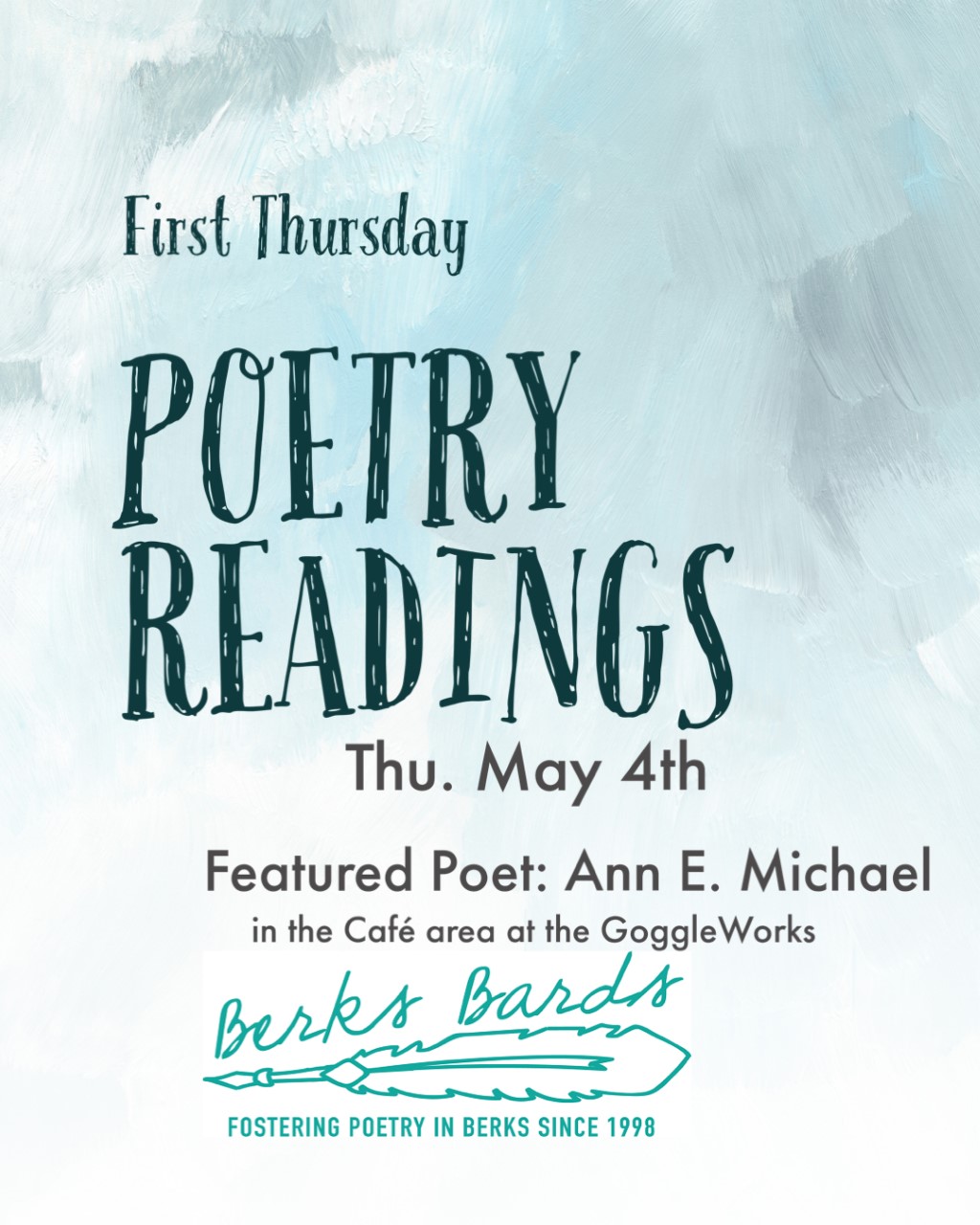
Coming up in May, I’ll be featured once again at GoggleWorks in Reading PA, 6 pm on May 4th…it has been awhile since I was there (2012), and I look forward to it!

Bookish decisions

In the past two weeks, I’ve read two contemporary poetry collections that I didn’t, er…love…or perhaps what I mean is I did not respond to them the way I enjoy responding to poems (and no, I will not be naming titles, though I will be giving these books away). While that is a let-down of sorts, I also started reading naturalist Marcia Bonta‘s Appalachian Autumn–which I do love. The book takes an environmental-diary approach that I have enjoyed in other naturalist writers’ work and which, no doubt, I relate to partly because I am also a near-daily diarist of my own backyard; Bonta has much to teach me, because she has a naturalist’s education and long experience. This is one of four Appalachian Seasons books she’s authored, and maybe I should have started with Spring, since that equinox has just passed. I found myself interested in the story this book tells of her family’s legal struggles with local lumbermen and absentee landlords, however. It’s an experience with which, sadly, my beloveds and I are familiar.

And I also began reading a book of poetry I have found exceptionally compelling–Rebecca Elson’s A Responsibility to Awe. Perhaps more on that in a future post. So books continue to enrich my life. I hope that is always the case, but I’ve seen how changes in human neuroplasticity can affect even the most bookish among us. More reason never to take the joys of reading for granted–and to keep my library card current.

~

In future, I plan to use the library card more than the credit card when it comes to books; but I know I’m weak. Besides, many of the small or indie press poetry books I relish are not easy to find in public library collections. One of my priorities this year is to winnow the home bookshelf stacks, to keep only what I really cannot bear to part with or am sure I will read or refer to again. But how can I be sure? The book lover’s dilemma, isn’t it? Nonetheless, there are definitely texts I can part with if I just take the necessary time to go through the collection. I can donate them to a public library, and even though many of them won’t get curated onto those shelves, at least I will be supporting an institution I value. I have been referring to this process of lightening my bookshelf loads as “culling,” but that word tends to have a negative connotation. I’d like to remind myself of the positive aspects of giving some of my books away: good for me, good for other readers, good for the authors of these books whose work may be discovered by other readers. Less to pack if we ever move, less for my children to deal with when that time comes. Yeah, I’m thinking ahead.

Reading poetry

I find I’m drafting poems again, though most of them fall on the melancholy side of tonality. It’s odd because I’m not feeling exceptionally melancholy myself. Granted, the news cycle’s enough to make anyone feel a bit low; but my internal weather isn’t so bad, and the end of February has arrived with peculiar mildness this year. Last year, we were still covered in snow at Valentine’s Day. Could still happen–but the snowdrops and the crocuses are open, as are the iris reticulata.

~

Spending time reading contemporary poetry books may be a contributing factor to my flurry of new drafts. In the past two weeks or so, I’ve enjoyed perusals of books by Ocean Vuong, Lynn Levin, Jaan Kaplinski, Cleveland Wall, Kim Addonizio. I’m also reading Ian Haight’s newer (unpublished) translations of some Nansorhon poems, a process accompanied by research into the precepts of Taoism and its heavenly denizens and hierarchies. I need some context if I’m going to get as much out of her Taoist poems as I’d like. Thanks to Ian’s research and translations, I did some study of this poet and her work ten years ago; but I focused more on her family situation and constraints and did not examine the most religiously-influenced poems.

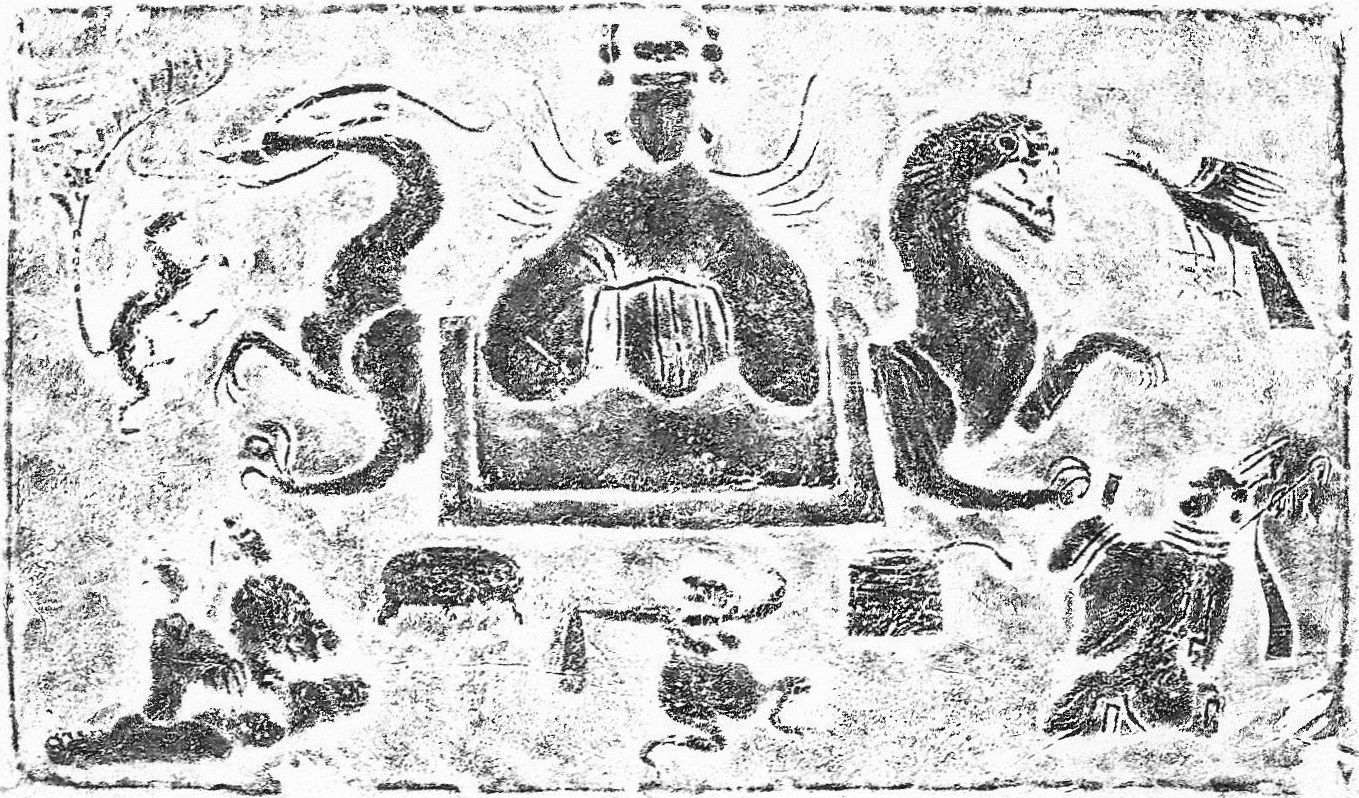
One Taoist goddess whose realms and attributes intrigue me is the Queen of the West, also called Queen Mother of the West, or Xiwangmu 西王母. She’s the mythical source of the peach of immortality and was likely important to Nansorhon as a powerful, much-worshiped female deity. Indeed, she’s invoked in several of the Nansorhon poems.

“Rubbing of a brick relief from the Han period, showing the Queen Mother sitting on her throne. To her right hand, a nine-tailed fox (jiuwei hu 九尾狐) and a dragon are facing each other, and to her left, a three-legged crow (sanzu wu 三足烏) and a tiger are facing each other. Just in front of the Queen Mother, a toad is dancing.” See http://www.chinaknowledge.de/Literature/Religion/personsxiwangmu.html (caption text by Ulrich Theobald, 2010).

~

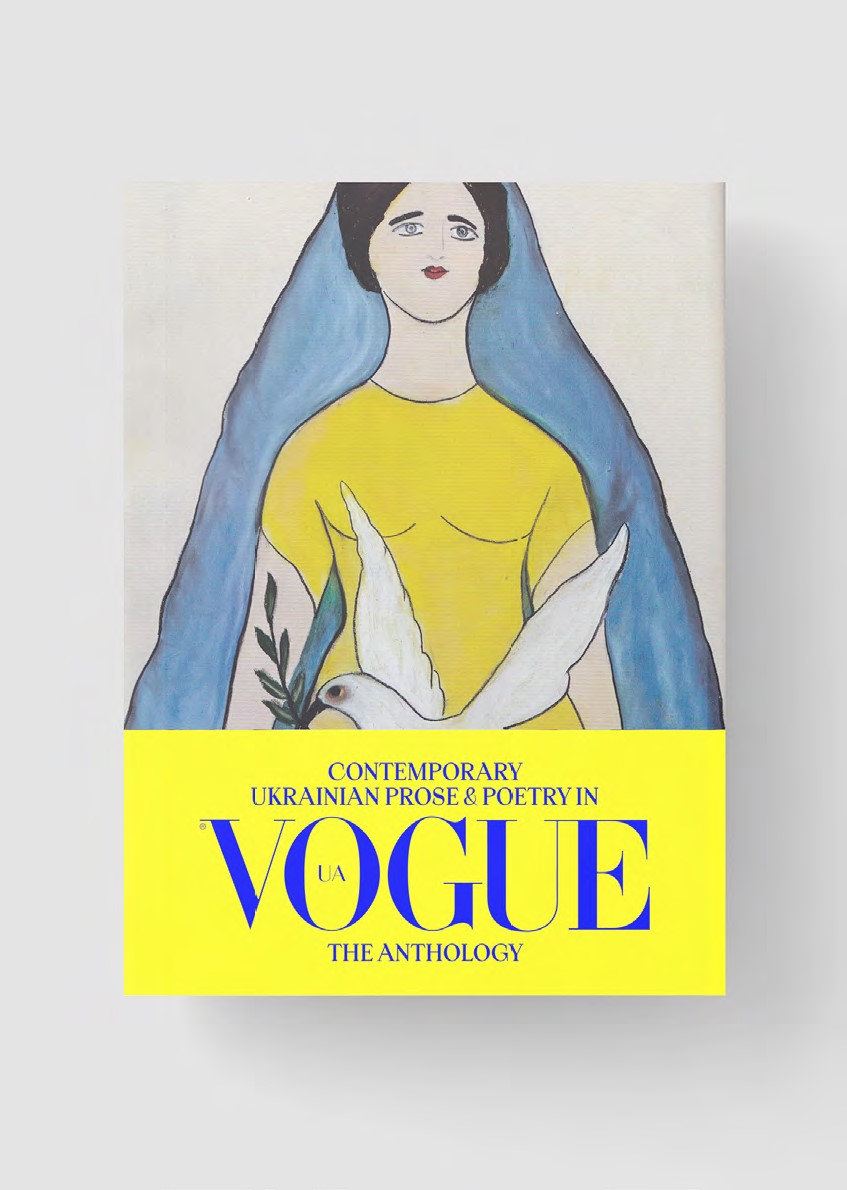
Other translations I’m reading are from Ukrainian. One of my husband’s colleagues is working in exile on Vogue Ukraine, and the magazine plans to publish a print anthology of contemporary Ukrainian writers–as early as next month!–marking the one-year anniversary of the start of the Russian hostilities aimed at Kyiv. She sent me a few selections of the poems and prose that will appear in the book, and I’m impressed by the writing and the breadth and depth of the literature. And also heartbroken.

Vogue UA had been planning its 10-year anniversary celebration when Russia invaded. The magazine rapidly pivoted to online-only, and its editorial team decided to publish a commemorative print book titled, rather significantly, 9 1/2 Years of Vogue Ukraine (and if you are curious, you can purchase it here). Yes, it’s a high-end fashion magazine–not my usual jam. Proceeds support various Ukrainian cultural organizations (museums, libraries) and female veterans.

The forthcoming book, featuring contemporary Ukrainian prose and poetry, will appear on the Vogue UA site in March or April. I’ll keep my readers apprised…from what I have seen so far, the anthology will be well worth reading.

Break-taking

It is a particularly lovely autumn in the region, colorful, clear, dry and mild. This evening at 5 pm: 70 degrees F, crickets and frogs singing. My mood has, however, been unsettled–and I have not been writing much. Indeed, this feels like a good time for a hiatus on a number of fronts and in a number of ways. I recently read Katherine May’s Wintering, which was not terribly memorable but which offers the reader support for, well, resting. Resting one’s bones, mind, endeavors…seasonally apropos.

Mostly I’ve been on a Murakami kick, reading three books that a recently-departed friend had with him in his hospice room. Novels take the place of doing my own creative thinking. I get wrapped up in their worlds and can rest from my own. Thus reading is a form of wintering. (May agrees.)

My poetry output has been minimal recently, and I have hardly sent out any work; mostly, I feel tired and eager for the semester to come to a close (one month or so hence). There are reasons for this it is not necessary to go into. But I miss the writing.

I will return to the “best words in the best order” in my own time. So if you follow this blog, don’t think that I have fallen off a cliff–I have merely oriented differently, for a time.

Meanwhile, please remember that there are books for sale you can find on my ‘My Books’ tab. Support the small-business publishers of poetry now, for poetry is as necessary as ever, and not a luxury.

Poetry mentor: david dunn

Where do I start? With a winter solstice poetry reading in Brooklyn, in a dark room on a dark night; his poem evoking a Di Chirico painting made my head explode, the work was so much more interesting than anyone else’s. But we didn’t speak that night. I met David before the equinox the following year, at a critique workshop run by the people who had set up the solstice reading: Merle Molofsky and Les von Losberg.

David didn’t have a presence; he was a presence. He read in a growl, with a slight lisp and a Brooklyn accent, and he could quiet a room. The poems were not lyrical or narrative, nor formal, nor confessional–they were jazz-like, full of strange images that sounded like surrealism and yet were not. He wrote prose poems and free verse and tiny little aphoristic pieces that sometimes made me laugh and sometimes broke my heart. He was not famous. He had not studied with well-known poets. But he had much to teach me, I thought, from the first time we sat around a table and read our work to one another.

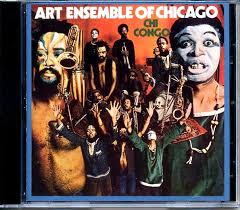
I found I listened more closely to David’s responses to my work than I did to other participants’, though as a fairly novice writer, I valued any critique. I liked that he often mentioned the work of poets he’d been reading, talked about their approaches and influences on his work. We started going to Gotham Book Mart together, searching the poetry stacks to score exciting contemporary writers and out-of-print classic collections. He told me to read Stanley Kunitz and James Lowell, Faye Kicknosway, Denise Levertov, Gerard Manley Hopkins. He had me listening to avant garde jazz, which I’d been introduced to in college thanks to a friend who was into Anthony Braxton and Dave Holland, and expanded my listening to include Don Cherry, the Chicago Art Ensemble, Albert Ayler, and many others.

His analysis of what was working in my poems, and what could work better, helped me to learn how to revise and rethink my work on my own. I gained a bit of confidence in my ability to figure out what sounded clunky, or wordy, or slightly “off.” He taught me not to be so hard on myself and to feel okay with putting a poem away for awhile–or forever–and letting the piece settle down so that, later, I could read it again and review its problematic areas less emotionally. He made me believe that my writing was worth reading, and that I was really a writer. Really. Not just faking it. In so many ways, he mentored me and my poetry. David encouraged me to submit to magazines and to let the rejections happen without feeling doubt about the value of the work. Although the value of that early work was…probably questionable, we’d look at the rejected pieces again and decide whether further revision might be needed or just a different reviewing editor!

As we got to know one another better, I learned about the challenges of his growing-up years, when he lived with his mother behind his grandmother’s millinery shop while his father was in prison for treason, in the US–following two years in a Chinese prison in Korea as a POW. Gradually, I heard about his dad’s release and inability to re-enter society, his parents’ divorce, his mom’s remarriage to a decent man who loved music but whose son, David’s step-brother, struggled with mental illness and died in a suspicious fire when David was about 20 years old. David’s outlier personality, his temper, his size–he was a large man who had been a fat boy, teased and bullied–found release and love through music, poetry, and dogs.

Also baseball, boxing, Star Trek…but we talked about those less often

posthumous poetry collection by david dunn

The other thing we conversed about frequently was frame of mind, particularly depression. Both of us were visited by depression frequently when we were in our 20s and 30s, and it was such a boon to have someone I loved and trusted who understood the “mood” and what a toll it could take on everyday life. When I married and had children, the need to feel less depressed got me to more reliable psych care–and I had better health insurance than David did. Sometimes he was chronically short of income, laid off, on unemployment, taking jobs in record stores, borrowing from his folks. He went a couple of years without health insurance or reliable health care, even though he was diabetic. So getting good therapeutic assistance for his chronic depression fell to a low priority, unfortunately. I tried to be there to listen to him, however, and he was always there to listen to me. We gave one another comfort during the doldrums, lassitude, and weird loneliness depression inflicts. And we reminded one another to write!

I miss him almost every day, though he died back in 1999. My book Water-Rites contains a section devoted to him and tries to convey the devastation I felt at losing him.

But you never really lose a mentor, right? They are always with us/in us.

There’s always a book

Many thanks to Lesley Wheeler for giving my chapbook Strange Ladies a mention on her blog! Given the circumstances of the past month or so, I have not been on the ball about promoting the publication. Word of mouth and social media platforms have helped the sales, but I have been remiss about scheduling readings, book signings, etc. These days, even well-known mid-list authors often have to be self-reliant about promoting their books. Agents for poetry are few and costly, so while getting the book into the readers’ hands may more easily happen thanks to online bookstores, finding an audience of interested readers takes effort and imagination on the part of the poet. Effort and imagination that, at present, I lack.

But–as Kurt Vonnegut reminds us in Slaughterhouse 5–so it goes. (106 times.) At the close of this quick post, I’ll try to remind myself to add the link to Strange Ladies.

As life has afforded few spare moments of uncluttered mind-time in which to write, I’m back to scribbling notes, phrases, and ideas on random pieces of paper and in my journal. This fallback method works well for me, an old-school pen & paper poet. Quite a few colleagues-in-poetry use various smart phones and electronic devices to write notes-to-self and even to draft poems, but when I resort to that–on the rare occasion that I have my cell phone but not a writing implement or bit of paper–I forget about my ideas, which are filed somewhere “in there” (on Samsung Notes’ app). It’s a good thing I am not considered a significant author whose work is worthy of preserving, because my poet-life drafts and mementos would be challenging to archive.

For the moment, my writing has a work-centered locus: curriculum, to-do lists, meeting schedules and agendas, orientation and presentation scripts, group emails to announce this or that Important Thing that likely 80% of the recipients will ignore. I get home, eat dinner, pick beans, tomatoes, zucchini, and zinnias. And I read. The one thing I always seem to have time for!

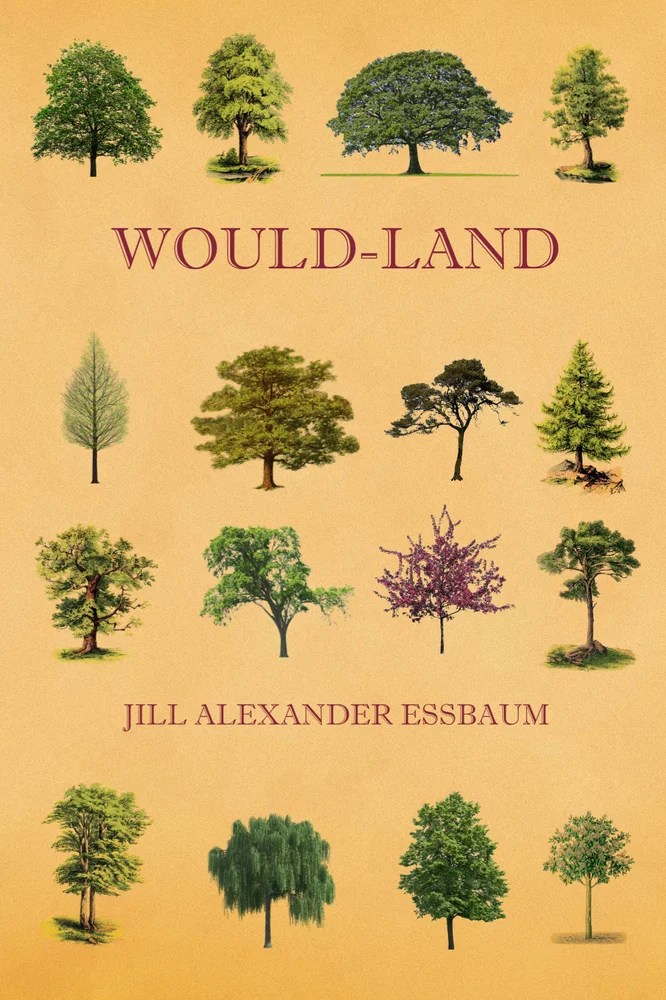
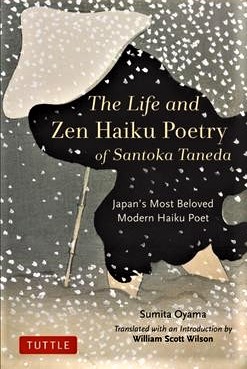
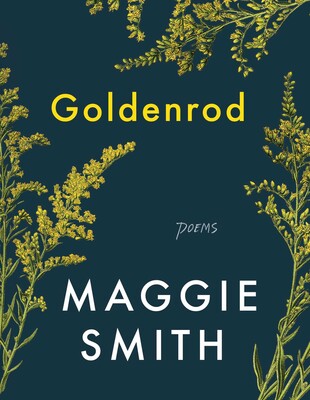
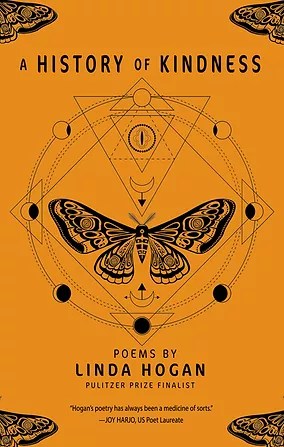
While I didn’t purposely take up the Sealey Challenge, I have continued reading poetry books more than once weekly, mixed in with creative non-fiction of various sorts, histories, and a novel or two (recently re-read Our Mutual Friend, by Dickens, to cheer myself up). Here’s a list of the recent poetry books I’ve perused: Linda Hogan’s A History of Kindness, Maggie Smith’s Goldenrod, Jill Alexander Essbaum’s Would-Land, and Sumita Omaya’s The Life and Zen Haiku Poetry of Santoka Taneda, tr. William Scott Wilson.

The least exciting was Smith’s book–I liked her previous collections Good Bones and The Well Speaks of Its Own Poison better (this is not to say Goldenrod was “bad.”) The most exciting was Alexander Essbaum’s book, which I devoured and have already read a second time. I find Hogan’s work meditative and calming, even when she writes of trauma and disturbance; it’s her style, I believe, that creates that mood in me. And I knew very little about Taneda or his standing in literary Japan, so that’s been interesting.

~

~ And, as promised, there’s always a book! Here’s my latest:

available here: https://moonstone-arts-center.square.site/product/michael-ann-e-strange-ladies/370

Why so strange?

This collection did not begin as a collection. If anything, it originated in the poems that stuck out as not belonging anywhere, poems not quite abandoned (in fact, most of them had been published in journals over the decades) but not fitting in with my other work. Which is in itself an odd statement to make, since my “style” has ever been inconsistent; I try many styles and forms when composing poems: short, long, free verse, rhyming, metrical, prose poems, telegraphic, chatty, narrative, lyric, abstract, broken, experimental, et cetera. So what do I mean when I say these poems did not fit?

From the time I began writing poetry “seriously” (with authorial and craft intent), I developed themes, tropes, and images that I have never stopped employing; but sometimes one topic or lyric current would bob to the surface and occupy my thought-flow for days, weeks, or months on end. When that occurs, I may get a collection out of it. Sometimes several collections create a sort of arc or, in some cases, a thread of resonance that results in a longer collection. Or maybe there are stylistic choices that recur, and those poems seem connected.

Then there are those impulses that just show up for one poem and vanish for a long while. Persona poems. Feminist poems. Political poems. Rants. Love poems. Dreamy poems. Surreal pieces. And so on.

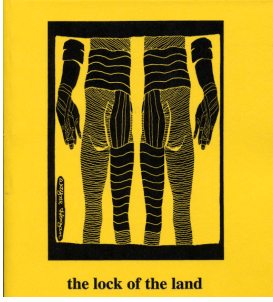
For Strange Ladies, I realized that during the past 45 years I’ve written enough oddly interesting straggler poems about/in the voices of/relating to female “characters” of a mythopoetic variety that they might form a coven. Or at very least, a neighborhood. The strangeness of these women comes from their position as outsiders, exiles, shamans, rebels, goddesses, myths, heroines. A chapbook manuscript materialized, and what surprises me most about this collection is that the poems I ended up choosing date all the way back to some of the first poems I ever got into print. At that time (circa 1981), indie-lit mags were photocopied, stapled affairs often using collages of copyright-free art for graphics. My nostalgia about that era led me to go for a retro look on the cover. And yes, I wrote one of these poems in 1979 while living in New York City…but others are as recent as 2019. A span of 40 years, and yet they seem to belong together in their differences.

Here’s what one of Moonstone Press’ anonymous poetry editorial committee members had to say:

“This chapbook is like a chorus of distinct personae over time and myth and family–Hagar, Icarus’s sister, the mother, the grandmother, the daughter, each poem a character sketch, engaging, memorable. I loved lines like: ‘Women shoulder everything’ and ‘gliding brought more joy/ than soaring.’ The poem ‘Witch’ is so tight and mysterious, like a dream. In ‘Heron Heroine,’ I loved this: ‘and she who balances stands often on one leg, /as what’s precarious for others grounds her, toes clawed deep/in mud.’ Themes such as sailing, water, bones are carried through in a nice variety of forms that never got boring or repetitive. The diction is so interesting, nice use of natural terms and details, words like ‘bittern,’ ’tilth’ and ‘binnacle.’ I think my favorite might be ‘I am a Cloud,’ with its powerful ending, ‘Attached to nothing, I dance the wind.’ I vote yes, enthusiastically.”

~

I hope other readers will find this little collection of poems as rewarding, and I’m thrilled to have it out in the world. Link to purchase: https://moonstone-arts-center.square.site/product/michael-ann-e-strange-ladies/370

Thysanura

The bristletails (order thysanura) are a group of wingless insects that includes Lepisma saccharina, the silverfish–one of the most common “bookworms,” although they are not worms! They nestle between pages, covers, and bindings of books, though books are certainly not all they eat. I must confess they are not among my favorite arthropods. Nonetheless, I class myself as a bookworm, though I’m far less voracious than some folks I know.

Therefore, I ought to note that my office on campus has been moved to my favorite place: the library! As I noted in some long-ago posts, libraries have been among my comfortable places ever since I was almost too young to read, and my maternal grandmother volunteered at her local library (notably as “The Story Lady.”) I still recall the jingle–from the 1960s–that accompanied a PSA for the library I loved as a 5-to-7-year-old.

~

ann e michael
The South Whitley Library as it was in 1967, with my grandmother in her Story Lady attire.

Anyway, it has longed seemed logical that the campus writing center be located where research takes place; we just had to find room. The library staff generously donated one quite spacious office room for the college writing center, and I couldn’t be more pleased!

My colleagues in academic support–my university department–are still housed in the basement of the main classroom building. I miss them, and they envy the fact that I now have a window (and that it’s not freezing up here). But while I would never knock the value of a window after 15 years under the frost line, I’m happiest about having my work office located in my favorite building on campus: the library. Books make me comfortable. When I need a break from my computer screen or from meetings, I can take a deep breath and walk around the stacks in silence. It’s perfectly acceptable to be rather introverted in a library. And the people who surround me are as enthusiastic about books as I am.

I plan to take a short breather from blogging and work-related stuff to visit a far-away Best Beloved and am already plotting which paperbacks to pack for the tedious flights. I hope to avoid silverfish and viral stowaways. Wish me luck.

Meanwhile, embrace your inner bookworm!

I searched for the most attractive photo of a silverfish I could find, and this one came from Encyclopaedia Britannica. Sorry, it was the best I could do. I’m sure another silverfish would find this one quite handsome. To the human bookworms I know: this is not meant to deride those of us who digest books with a healthy appetite. Just a metaphor!

Words fail, & yet–

On December 24, 2012, I posted about a school shooting. So little has changed.

Words fail. And I work in a classroom setting, as do many of my friends and colleagues, and my children’s friends and colleagues (now in their 30s and willing to be teachers–bless them!). These events are not things we can ignore by staying in our own little bubbles of “it can’t happen here.”

~

Words have failed so profoundly that I’m out in the garden instead, or indoors cleaning my bathrooms or reading books. Books–always my solace when my own words fail.

My latest good read is David Crystal‘s 2004 The Stories of English, already out of date in its last chapter–a fact I’m sure he gleefully acknowledges. I adore his love of how language evolves and find his non-prescriptivist approach refreshing and necessary if we are to keep literacy and communication alive. This book gave me so much information, enriched the knowledge I already have about our language, and made me laugh, too. Granted, it is word-geek humor…but that’s how I roll.

And I needed a few laughs this past week or so. My heart aches; I am sore afflicted for more reasons than I care to explain at present, though the headline news certainly has much to do with my mood. Crystal’s book got me thinking about the course I teach (come fall) and how I’ve already toned down the prescriptiveness in order to convince my students they can write and can be successful with written communication; that they are not “wrong,” just that their audience for written work differs, in college, from high school and from text messaging and other forms of writing. Crystal says we who teach English need to get over the concern about split infinitives and pronoun antecedent agreement and focus on clarity and genuine expression. I have no argument with him there–but many people I know would quibble and complain. And the English lexicon offers us so many options for how to say we disagree!

~

A book about words–but no, a book about human communication through the mediation of words, spoken and written, and how we got to the forms (plural!) of English we now use to express ourselves. There’s a kind of splendid optimism in Crystal’s thinking about language that somehow made me feel a little less low in spirit. Ah, yes. The solace of books.